
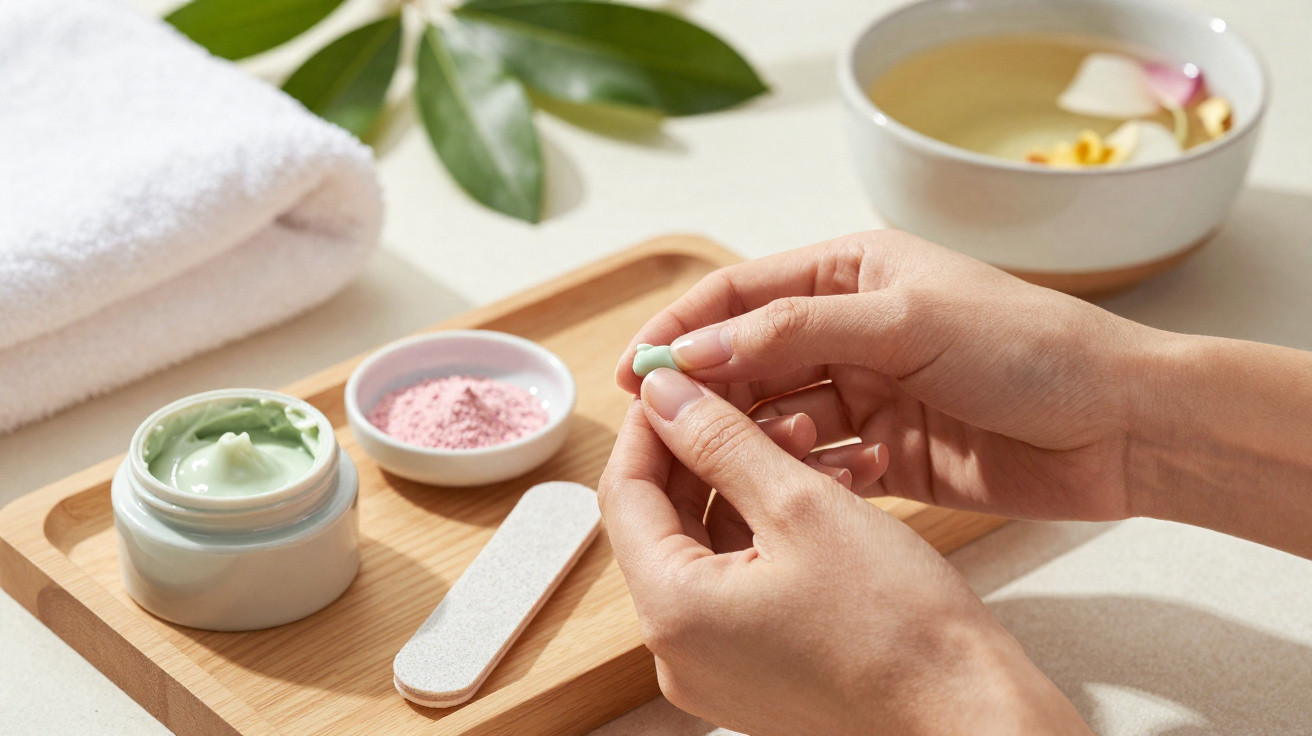
The glossy finish that looks like a coat of polish actually comes from buffing the nail itself. Often called a Japanese manicure or the P.Shine method, the technique uses a cosmetic paste, a finishing powder and gentle movements to create a smooth, satin-like surface-without colour, gel or drying under a UV lamp.
What is a Japanese manicure?
This approach focuses on the natural look of the nail plate. Rather than covering the nail, the technician works in products whose ingredients vary by brand, such as silica, glycerine, ceramides, oils, waxes and vitamin E. The surface is then polished until it develops a pearl-like sheen.
The end result typically makes nails look more even, pinker and shinier, with no risk of polish chipping. The P.Shine system’s own manufacturer presents it as care for natural nails, but there is no strong evidence that these nutrients can rebuild the nail plate “from the inside out”.
How does the shine appear without nail varnish?
The paste temporarily fills tiny uneven areas and leaves an emollient layer on the nail. Buffing spreads the product and smooths the surface so light reflects more evenly. The powder applied afterwards enhances the satin finish and helps reduce any rough feel.
This effect is mainly cosmetic. Because the visible part of the nail is made of keratin with no metabolic activity, it does not absorb nutrients in the way living tissue does. Moisturising ingredients can improve flexibility and appearance, but truly new nail growth comes from the matrix, located under the skin.
How is the ritual carried out?
The process starts with nails that are clean and completely dry. Buffing should be light, with no heavy pressure or repeated rubbing in the same spot. If nails are thin, sore or have recently had gel removed, it is best to wait until sensitivity has settled before doing the technique.
- Remove any nail varnish residue and shape the tips with a gentle file.
- Apply a small amount of paste to each nail.
- Use the buffer with soft movements, avoiding heat or thinning the surface.
- Apply the finishing powder until an even shine appears.
- Finish by moisturising the cuticles and the skin around the nails.
There is no need to soak fingers for a long time or cut back cuticles deeply, as they act as a protective barrier. Tools should be clean and should not be shared without proper sterilisation, especially where there is a risk of small nicks during nail care.
Watch the video shared by the YouTube channel Bernadete Terracciano showing the Japanese manicure technique and how it is done.
Does the technique really strengthen nails?
The look can improve immediately, and moisturising ingredients can help dry nails stay more flexible. A review published in Dermatology and Therapy recognises moisturisers and topical products as part of care for brittle nails, although treatment depends on the reason for splitting or peeling.
However, too much buffing can remove layers of keratin and leave the nail thinner. Anyone with staining, lifting, pain, inflammation or persistent changes should see a dermatologist, as fungi, dermatitis and other conditions can look like simple weakness. Covering up the issue is not a substitute for proper assessment.
Is it worth swapping gel for a Japanese manicure?
For anyone wanting a break from varnish and extensions, the technique offers a discreet, low-maintenance finish. Studies and dermatology guidance indicate that repeated gel applications and aggressive removal processes may be linked to thinning, peeling and breakage, making periods without coverage a sensible option.
The key is not to turn a gentle treatment into another source of damage. Choose clearly labelled products, use minimal pressure and respect your nails’ recovery time. Pay attention to any change now and stop if you feel pain or irritation, because a beautiful shine should go hand in hand with nail health.

Comments
No comments yet. Be the first to comment!
Leave a Comment