
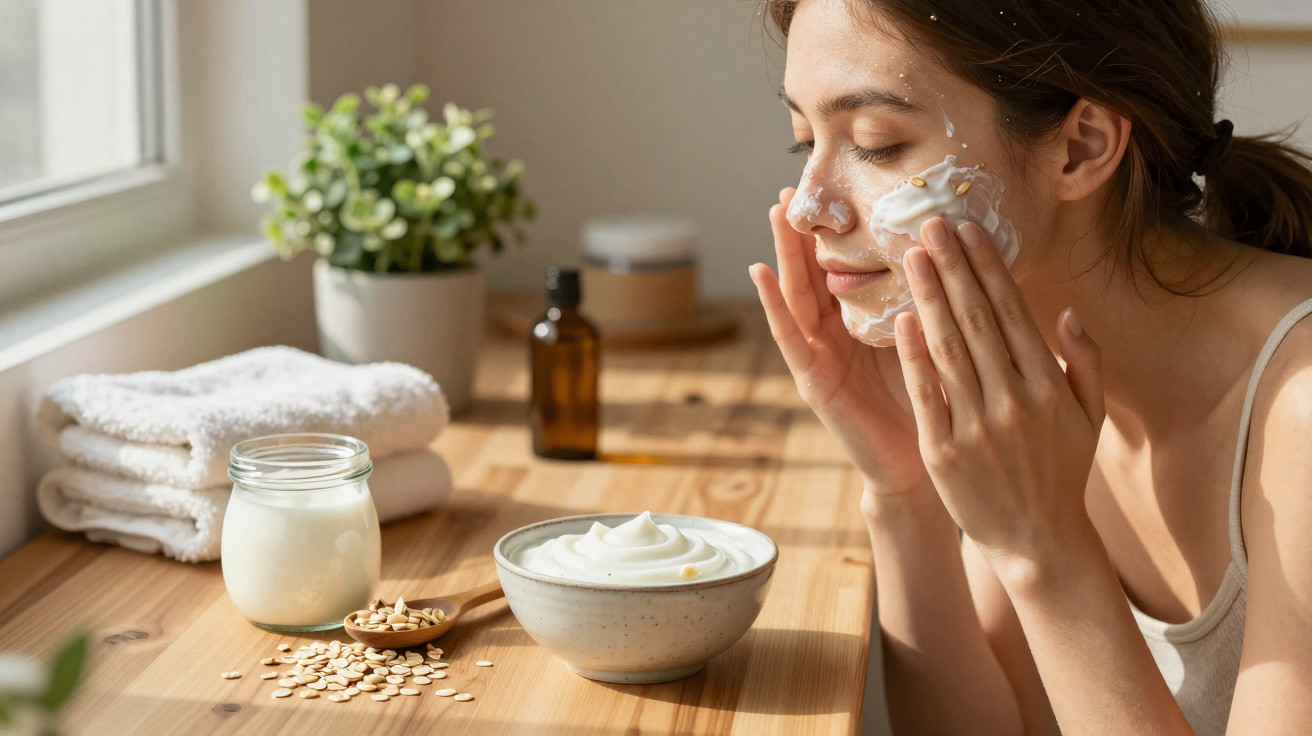
A simple blend of oats and yoghurt can turn a quick self-care moment into a pleasant pause for your skin. With a creamy feel and easy application, this homemade mask can leave your face feeling softer and more comfortable, particularly when it’s looking dull or feels dry.
Why do oats help to soften the skin?
Oats are well known for being gentle and for creating a soothing, comfortable layer on the skin. When the oats are ground finely, they make the mask smoother and can help ease the feeling of roughness, without needing harsh exfoliation or vigorous rubbing on the face.
Oats also contain components that support keeping water at the skin’s surface. That’s why they can be a good choice when you want light hydration, especially on cold or dry days, or after spending time in air-conditioned environments.
What does yoghurt do in the mask?
Natural yoghurt makes the mixture creamier and easier to spread. It also contains small amounts of lactic acid, which may help the skin look more even and radiant-provided you use it carefully and do not leave it on your face for too long.
To avoid unnecessary additives, opt for a yoghurt that is natural, unsweetened, and free from colourings or fruit pieces. Flavoured options may include ingredients that raise the risk of stinging, itching, or redness, particularly if your skin is sensitive.
How to prepare the oat and yoghurt mask?
This takes only a few minutes and should be made using clean utensils. Choose very fine oats or grind them first, as larger flakes can scratch the skin during application. Mix only what you need for immediate use and do not store any leftovers.
- Combine 1 tablespoon of fine oats with 1 tablespoon of natural yoghurt.
- Stir until you get a smooth cream that doesn’t run easily down the face.
- If it turns out too thin, add a little more oats.
Spread a thin layer over a clean face, keeping away from the eyes, lips, and any broken skin. Leave it on for about ten minutes, then rinse with cool or lukewarm water without scrubbing. Pat dry gently and finish with your usual moisturiser.
Watch the video shared by the YouTube channel Dr. Rafael Carvalho, where he discusses the benefits of an oat mask for the face.
What precautions help prevent irritation?
Even familiar ingredients can trigger a reaction. Before using it on your face, do a patch test on a small area of your arm and monitor the skin for a few hours. Do not use the recipe if you notice strong burning, itching, swelling, or redness that doesn’t settle.
This mask should also be avoided on inflamed acne, dermatitis, wounds, or skin that has been sensitised by acids or cosmetic procedures. If you have an allergy to milk or oats, skip the mixture and look for an alternative recommended by a dermatologist.
How can you add this hydration step to your routine?
Use the mask occasionally-about once a week-when your skin is healthy and comfortable. It can work as an extra step, but it does not replace key habits such as gentle cleansing, a suitable moisturiser, and daily sunscreen.
Pay attention to how your face responds and don’t push through if you feel discomfort. The best self-care respects your skin’s limits. Set aside a few minutes today, do the patch test, and make hydration a simple, mindful, and safe habit.


Comments
No comments yet. Be the first to comment!
Leave a Comment