
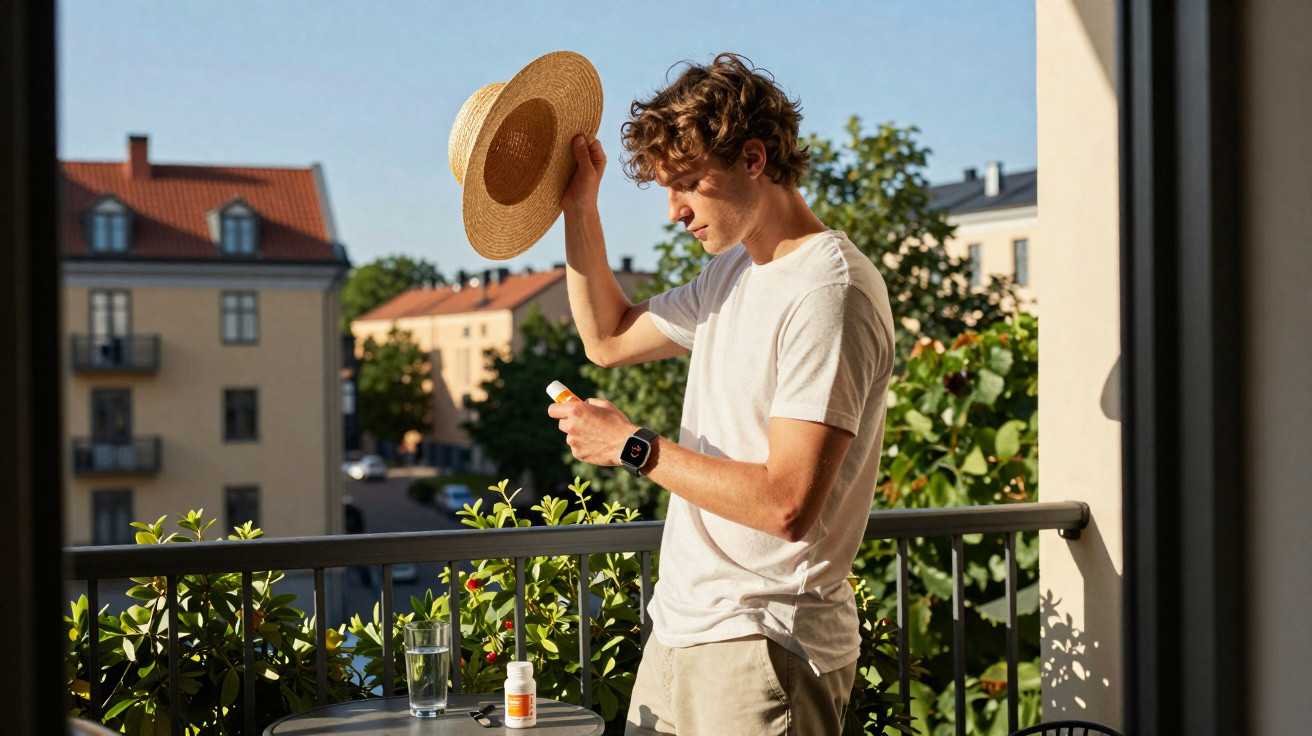
A major Swedish long-term study challenges a cornerstone of many public health messages: avoiding sunburn, yes - but avoiding the sun altogether? Tracking almost 30,000 women over two decades, the findings suggest that complete sun avoidance markedly raises mortality and pushes risk into roughly the same territory as active smoking.
Shock finding from Sweden: shade lovers die earlier
From 1990 to 2010, researchers at Sweden’s Karolinska Institute followed 29,518 women aged 25 to 64. Each participant completed detailed questionnaires about how she approached sun exposure. On that basis, three groups were defined:
- active sun avoiders
- women with moderate sun exposure
- women with frequent sun exposure
The team then analysed deaths from all causes across the 20-year period. The outcome drew considerable attention among specialists.
"Women who systematically avoided the sun had twice the risk of dying in the study compared with women with frequent sun exposure."
A particularly striking pattern emerged: non-smokers who let very little sun reach their skin had a life expectancy similar to smokers who were regularly in the sun. Put in figures, the least-exposed women lost an average of 0.6 to 2.1 years of life compared with those who sunbathed regularly - without getting burnt.
Why some sun exposure appears protective
To account for this unexpected link, the researchers considered several plausible biological mechanisms:
- Vitamin D: Under UVB radiation, the skin produces vitamin D. This hormone precursor affects the immune system, bone strength and - likely - metabolism and the cardiovascular system.
- Blood pressure regulation: UV exposure encourages the release of nitric oxide (NO) in the skin. NO dilates blood vessels, reduces blood pressure and eases the load on the heart and vascular system.
- Body clock: Natural daylight helps stabilise the day–night rhythm. Disruptions to the sleep–wake cycle are considered a risk factor for cardiovascular disease, diabetes and depression.
In Sweden in particular, geography matters. During long winters it can be dim or dark for hours, with the sun staying very low. If people then also avoid every opportunity for natural light, deficiencies - for example in vitamin D - can worsen, and biological rhythms can become even more disrupted.
Statistics with extensive adjustments - yet the trend remains clear
To reduce bias, the team adjusted for a wide range of factors: education level, body weight, physical activity, alcohol consumption and other influences that might affect both sun behaviour and mortality. Even after these corrections, the association persisted: the group actively avoiding the sun died significantly more often.
This was an observational study rather than a controlled experiment. That means it demonstrates a strong association but does not prove a direct cause-and-effect chain. Unknown influences could still be involved. Even so, 20 years of data from many thousands of participants are considered robust and offer a clear health signal.
The heart, above all, suffers when light is missing
The contrast was most pronounced for cardiovascular deaths. Women who strictly avoided the sun more often experienced:
- heart attacks
- strokes
- heart failure and other severe vascular problems
"The data suggest that sunlight acts far beyond the skin - especially as a protective factor for the heart and blood vessels."
At the same time, the study echoed what dermatology and oncology have emphasised for years: as sun exposure increases, so does the risk of skin cancer, including melanoma. Melanoma rates rose with greater sun exposure.
Even so, women with more sun exposure had lower overall mortality on average than the shade group. The likely reason is that cardiovascular diseases are extremely common and often fatal, whereas melanomas are relatively rare in Sweden and - if detected early - are usually treatable.
Not a free pass for sunburn
The authors stress that nobody should now spend hours unprotected in blazing midday sun. The findings point to a healthy middle ground, not to excessive tanning.
A practical compromise could look like this:
- short daily periods outdoors, with face, arms and possibly legs uncovered
- avoiding sunburn, especially between 11:00 and 15:00
- using sunscreen for longer outdoor activities
- being even more cautious if you have a known history of skin cancer or very fair skin
Especially in northern countries, where a large proportion of the population is vitamin D deficient, public health messaging needs more nuance: not every tan is healthy, but total flight from the sun can be harmful too.
What does this mean for people in Germany, Austria and Switzerland?
Central Europe sits between Scandinavia and the Mediterranean - both in terms of available sunshine and lifestyle. Winters with little light are followed by summers that can bring high UV exposure. That makes a graded strategy sensible:
| Season | Recommended sun practice |
|---|---|
| Autumn/Winter | Get outside regularly, make use of daylight, and consider having vitamin D levels checked. |
| Spring | Let the skin adapt gradually; opt for short, frequent periods outdoors without risking sunburn. |
| Summer | Avoid midday sun, seek shade, use sunscreen for longer periods outside, and wear light clothing. |
Anyone who spends most of the week in the office, travels by car and then stays indoors at weekends out of fear of skin cancer could drift health-wise in a similar direction to the sun avoiders in the Swedish study.
Vitamin D, body clock, movement: the sun delivers several effects at once
Light and sunshine have another very simple side effect: once you go outside, you tend to move more. Even a brisk lunchtime walk lowers blood pressure and blood sugar and can improve mood and sleep quality.
In practical terms, using sunlight deliberately as a health factor ideally combines several building blocks:
- 10–30 minutes outdoors, depending on skin type and season
- light activity such as walking or cycling
- sufficient fluid intake to reduce strain on circulation and skin
- medical checks of vitamin D levels if needed, especially in winter
Taken together, the Swedish data provide a clear prompt for reflection: fear of skin cancer must not create a culture of permanent shade. Anyone who manages sun exposure consciously, uses it in measured doses and consistently avoids sunburn appears to give their heart, blood vessels and mental wellbeing a meaningful advantage - on current evidence, potentially on a scale comparable with giving up cigarettes.






Comments
No comments yet. Be the first to comment!
Leave a Comment