
A quietly emerging cut is starting to dominate hair salons, offering a fresher-looking face, lighter features and a noticeable surge in confidence.
First spotted on Hollywood red carpets and now all over TikTok and Instagram, this short, softly undone bob is being positioned as the standout haircut for women over 40 who want to look more defined, more radiant and, yes, visibly younger.
The 2026 anti‑age haircut everyone is talking about
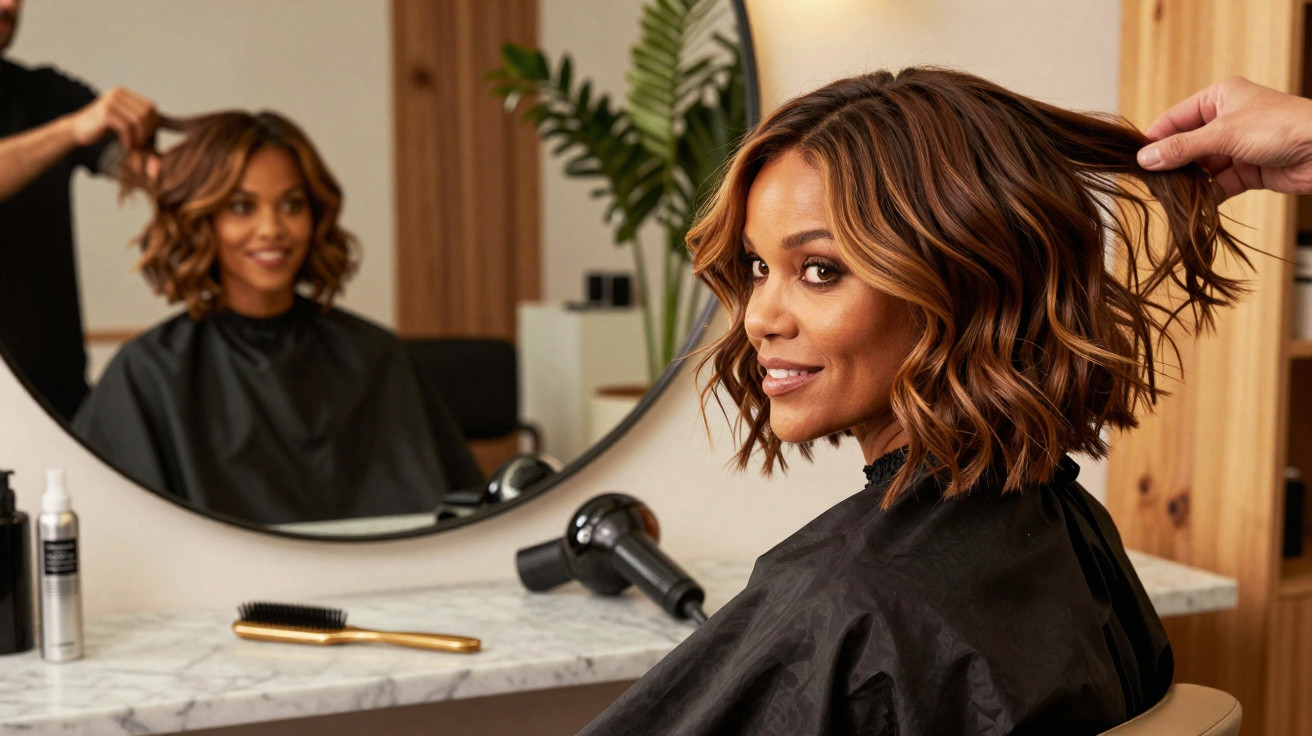
The cut generating the buzz for 2026 takes inspiration from Halle Berry’s recent hair change. She has swapped longer, more shaggy lengths for a very short bob that sits close to the jaw, with natural texture and plenty of movement. It reads as low-effort at first glance, but it is actually a carefully engineered, almost tailored shape that works with your features rather than fighting them.
Its outline nods to 1920s flapper bobs: tidy, slightly squared-off, and defined by a strong perimeter. The finish, however, feels modern-lighter, looser and more breathable. Waves and curls soften the geometry so it never looks harsh. That push-and-pull between crisp shape and softness is exactly why so many hair professionals keep recommending it for women in their 40s, 50s and beyond.
This short, wavy bob blends clear structure with softness, lifting features and softening lines without looking overdone.
Instead of piling on lots of layers, most stylists create a compact foundation first. From there, they customise the look using internal texturising and subtle shaping around the front. The goal is movement and ease, not a rigid, helmet-like finish.
Why this bob can make you look up to 20 years younger
Saying “20 years younger” sounds like a big promise, yet the effect relies on very specific visual tricks. A shorter length forms a horizontal line around the jaw, which can make contours appear firmer. And when the cut finishes above the shoulders, attention shifts upwards-away from the neck and any heaviness through the lower face.
Volume placement matters just as much. By creating height and fullness at the crown and across the upper sides, the overall look reads as lifted. Cheeks can appear fuller, the under-eye area can look less sunken, and fine lines fade into the background because the haircut becomes the focal point.
Well‑placed volume at the crown and around the cheekbones creates a visual “face lift” that reads as rest rather than work.
Soft curls and gentle waves also help by diffusing expression lines rather than spotlighting them. Movement breaks up strong shadows around the mouth and nose. Very long, very straight hair can pull features downward and amplify a tired look; this shorter, more mobile bob tends to do the reverse by framing the face and adding brightness.
Why it flatters women over 40 in particular
As we age, hair texture often shifts. It may feel drier, sit flatter at the roots and look thinner through the ends. Long, weighty cuts put pressure right where the hair is most fragile. A Halle-inspired bob removes the weakest lengths and focuses attention on the stronger, healthier hair closer to the scalp.
That usually means more lift, more spring and a simpler blow-dry. It can be especially flattering on naturally curly or wavy hair, because the built-in movement keeps the shape airy instead of heavy. The softly squared outline brings structure, while curls help soften any angularity along the jaw.
How the cut is built in the salon
Even though the end result looks relaxed, it is not an improvised chop. Hairdressers often describe it as a “sartorial” bob-precise, considered and tailored to the individual. A standard appointment might involve:
- Reviewing face shape, neck length and natural texture
- Choosing an exact length, typically between cheekbone and jaw and rarely lower
- Keeping a slightly squared perimeter to define the overall shape
- Using internal thinning or slice-cutting to remove bulk without losing length
- Adding gentle shaping or a deliberately broken line through the fringe area or front pieces
Depending on the client, a stylist may add a micro-fringe or a curtain fringe. In other cases, they may keep the front longer so it skims the cheekbones. The intention remains consistent: draw attention to the centre of the face and make the eyes look more open.
The success of this haircut comes from precision at the perimeter and freedom in the interior, which gives that airy, effortless feel.
Styling it at home without a glam squad
A haircut only earns its place if it can be styled in an everyday bathroom, not just on a shoot. This 2026 bob performs well on that front. Most stylists suggest keeping the routine simple and achievable:
| Hair type | Styling tip | Products to favour |
|---|---|---|
| Wavy/curly | Scrunch while drying with a diffuser on low heat. | Light cream, curl gel, anti-frizz serum. |
| Straight and fine | Blow-dry with a round brush to create lift at the roots. | Volumising spray, lightweight mousse. |
| Thick or coarse | Rough-dry first, then refine the ends with straighteners into soft waves. | Smoothing cream, heat-protect spray. |
It is not meant to look immaculate. A lightly mussed, finger-combed finish fits the personality of the cut. That easy texture also helps it stay flattering after 40, whereas ultra-sharp, perfectly set bobs can sometimes age the face.
Who should ask for this haircut – and who might skip it
With small adjustments, most face shapes can wear this bob. Round faces often suit slightly longer pieces at the front to visually narrow the cheeks. Square faces typically benefit from extra texture through the ends. Heart-shaped faces can look more balanced with a little added fullness at the nape.
Women with very tight curls can still choose a version of the style, but they will need a stylist who understands curl shrinkage. In that case, the bob may be cut slightly longer when wet so it does not spring up too high once dry.
If you love wearing your hair in a high ponytail, this length may feel limiting, as it is too short for most updos. Low mini-buns or half-up looks can still work, but this cut suits someone who is happy to show their neck on most days.
How to talk to your stylist so you do not regret it
Turning up with only a celebrity photo can set you up for frustration. A more useful discussion could cover:
- How often you are willing to return for trims (ideally every 6–8 weeks).
- How much time you realistically spend on your hair each morning (five minutes or half an hour).
- Whether you usually air-dry or rely on heat tools.
- Which features you would like to emphasise or soften, such as the jaw, nose or forehead.
Rather than asking for a “Halle Berry bob” alone, spell out the building blocks: jaw length, a softly squared silhouette, natural movement, no heavy fringe, and lightness around the face. A skilled stylist can then translate those details into a version that suits your proportions and your routine.
The hairstyle that truly rejuvenates does not copy a celebrity exactly; it borrows the structure and adapts the details to you.
Ageing, self‑image and why haircuts like this matter
This trend is landing at a time when conversations about ageing feel more straightforward. Women over 40 are often less focused on trying to pass for 25 and more interested in looking current, feeling seen and dressing-and styling themselves-for the age they are. Hair has a powerful psychological role in that change.
A shorter, more defined cut communicates intention. It suggests you made an active choice rather than hanging on to the same hairstyle you had in your twenties out of habit. That decision can shift posture, self-assurance and the way other people read your confidence-well beyond what you see in the mirror.
There is a practical benefit too. Short, textured bobs can be very forgiving with grey hair, because varied tones blend more naturally across a compact shape. For women moving away from frequent colour appointments, this type of cut can make the transition feel less awkward.
If you are unsure, try a no-commitment test first: tuck longer hair into a faux bob, pin it at the nape, and look at your face under different lighting. That quick experiment can show you how much lift and brightness a shorter line can create-before you go anywhere near the scissors.



Comments
No comments yet. Be the first to comment!
Leave a Comment