
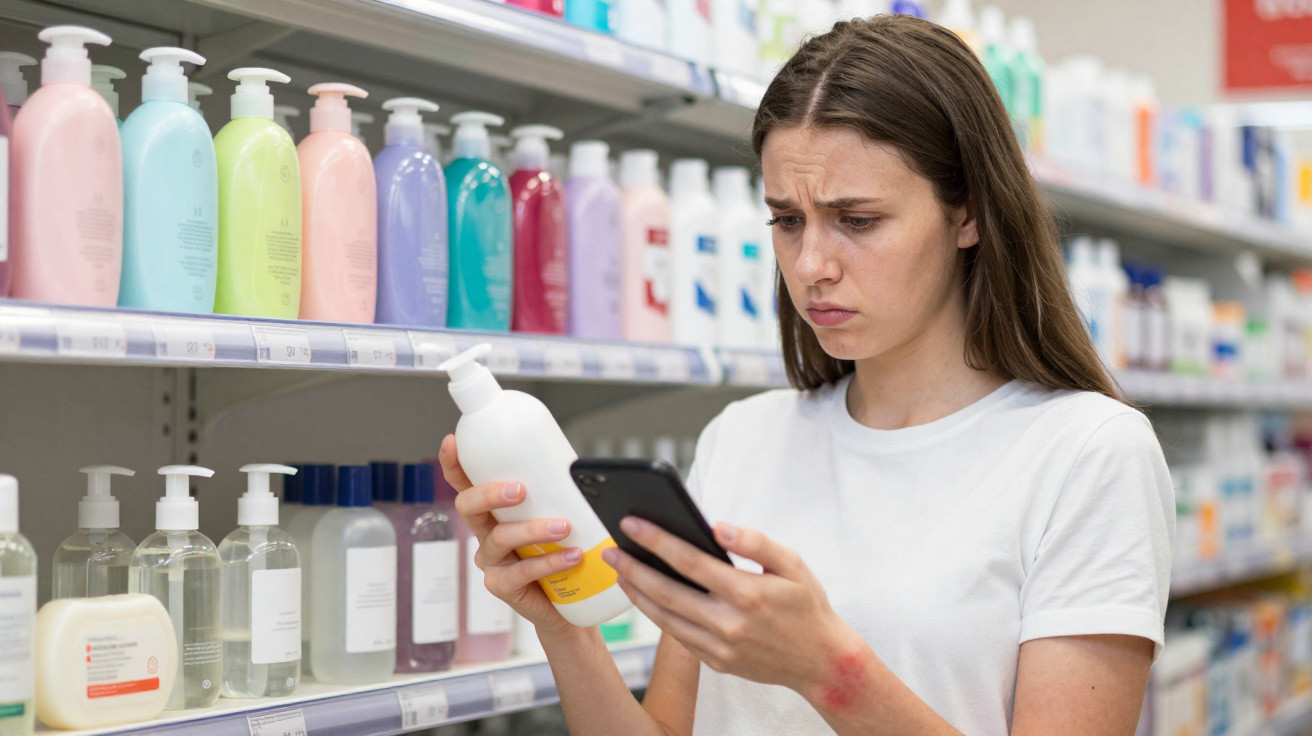
Among the bright, eye-catching bottles lining the toiletries aisle, few people feel any sense of risk. Shower gel is widely seen as a harmless everyday staple-almost a small wellness treat. A recent review of products in the Yuka ratings app challenges that assumption: hundreds of popular options contain two preservatives that dermatologists have been warning about for years.
Why shower gel has long replaced the soap bar
The traditional bar of soap has disappeared from many bathrooms. Shower gel tends to lather more readily, smells stronger, and sells itself with claims such as “nourishing oils”, “sensitive formula” or “dermatologically tested”. Add convenient pump bottles, colourful packaging and constant new releases-from exfoliating gels to vegan coconut editions-and it is easy to see the appeal.
It is no surprise that brands such as Le Petit Marseillais, Dove, Axe, Nivea, Palmolive and Sanex dominate the shelves. Standing in front of them can feel overwhelming: exotic fragrances, “for men”, “for sensitive skin”, “organic” or “natural cosmetics”. Many shoppers simply choose what smells good or what is on offer, and rarely study the tiny ingredient list on the back.
"Ingredients matter more than scent, colour and advertising promises-especially for products that go on your skin every day."
Yuka analysis: over 300 shower gels with problematic preservatives
This is exactly where Yuka comes in. The app rates food and cosmetic products based on their ingredients, assigns a score, and highlights substances it considers concerning. In its latest review of shower gels, two ingredients stand out in particular: Methylisothiazolinone and Methylchloroisothiazolinone.
Both belong to the isothiazolinones group. They are strongly antimicrobial and help stop bacteria or fungi multiplying inside the product. From a manufacturer’s point of view, they play a practical role: keeping shower gel stable, hygienic and usable over time.
However, these same ingredients are widely regarded by specialists as highly potent contact allergens. Yuka cites the assessment of a toxicologist specialising in chemical risks: in the European Union, these preservatives have been banned since 2016 in leave-on products (for example creams and lotions) because the allergy risk is considered too high. In shower gel-which is rinsed off-they are still permitted, and they remain commonly used.
What makes these two preservatives so concerning
Isothiazolinones can prime the skin’s immune system to react. With repeated exposure, some people develop what is known as contact allergy. The reaction usually appears where the substance has touched the skin directly-such as the neck, arms, legs or torso.
- Methylisothiazolinone (MI): a strong contact allergen, previously widely used in shampoos, shower gels and household cleaners.
- Methylchloroisothiazolinone (MCI): a chemical “partner” to MI, often used alongside it.
- The MI/MCI combination is common-and is usually buried in the long INCI list on the packaging.
If you turn the bottle around, you will typically find these listed under “Ingredients”. They are often near the end, because they are added in small amounts-yet that does not reduce their allergy potential.
Typical symptoms: when shower gel suddenly becomes a skin trap
According to the expert quoted by Yuka, reactions to MI and MCI can be quite noticeable. For those who do not tolerate them, symptoms may creep up gradually, and are then easily blamed on “dry winter skin” or “stress”.
Common signs include:
- redness after showering that lingers
- itching or a burning sensation, especially on sensitive areas
- small spots or weeping patches
- flaking, tightness and pronounced dryness
"Once the allergy has been triggered, the sensitivity usually remains long-term-so even tiny traces can cause reactions."
If you repeatedly notice these symptoms after washing, it is worth taking a critical look at your shower gel and discussing it with your dermatologist. An allergy test (patch test) can clarify whether you have become sensitised to isothiazolinones.
Double burden: irritation for skin, stress for the environment
Concern about MI and MCI is not limited to their effects on the skin. After every shower, these preservatives flow into the wastewater system, through sewage treatment works, and in some cases on into rivers and seas.
The expert referenced by Yuka describes both substances as highly toxic to aquatic organisms. Even at low concentrations, they can affect fish, insect larvae and other aquatic life. Because cosmetic products are used globally every day and in vast quantities, these inputs add up.
For consumers, that creates a double opportunity: switching to alternatives without these preservatives can be gentler on your skin while also reducing the overall chemical load in the water cycle.
How to spot gentler shower gels on the shelf
For many people, an ingredient list looks intimidating at first glance. A few simple habits can make choosing much easier.
Checklist for a quick in-store scan
- On the back, look specifically for Methylisothiazolinone and Methylchloroisothiazolinone and put products containing them back.
- If your skin is itchy or very dry, choose “fragrance-free” or “without perfume”-fragrance can often intensify irritation.
- Favour products with shorter, easier-to-understand ingredient lists.
- Use apps such as Yuka or CodeCheck to flag potentially problematic substances more quickly.
- Try ranges aimed at sensitive or atopic skin-but still read the INCI list.
In its review, Yuka highlights both poorly rated products and alternatives that avoid the preservatives in question. Even within well-known brands such as Le Petit Marseillais, Sanex, Palmolive or Topicrem, there are versions with more straightforward formulations-quality is not only about the brand name, but about the exact product.
Table: common preservatives and irritants worth watching for
| Substance name (INCI) | Function | Why controversial? |
|---|---|---|
| Methylisothiazolinone | Preservative | strong contact allergen, EU ban in leave-on products |
| Methylchloroisothiazolinone | Preservative | toxic to aquatic organisms, high allergy risk |
| Parfum / Fragrance | Fragrance blend | can further irritate sensitive or already damaged skin |
| Sodium Laureth Sulfate | Surfactant (foaming agent) | strongly degreasing, can be drying with frequent use |
Practical alternatives: from bar soap to minimalist shower gel
If you want to change your shower routine, you do not need to become a “pure natural” devotee overnight. Even small tweaks can make a real difference.
- Solid soap with clear labelling: bars with only a few ingredients and no fragrance or colourants can suit sensitive skin well.
- Replenishing shower oils: these cleanse more gently and leave a light protective film that helps prevent dryness.
- Minimalist shower gels: some brands deliberately use short ingredient lists and avoid isothiazolinones.
- Less can be more: if you shower very frequently, consider using only water on some days, or cleansing only “key areas”, to reduce strain on the skin.
People with atopic dermatitis (eczema), psoriasis or generally reactive skin often benefit noticeably from these changes. Many dermatologists have long advised keeping wash and care products as low-irritant as possible.
Why cosmetic-related allergies are increasing-and what habits have to do with it
Contact allergies develop through repeated exposure. The more often-and the longer-an ingredient sits on the skin, the more likely the immune system is to develop hypersensitivity. Modern personal care routines revolve around daily, sometimes multiple uses: a morning shower, an evening bath, plus hand soap, facial cleanser and body lotion.
In that context, using products containing potent preservatives and fragrance increases your personal “exposure dose”. Some manufacturers point out that legally permitted levels are regarded as safe. Allergists, however, focus on the cumulative effect of all the products someone uses over years.
For consumers, the takeaway is practical: every switch to a milder product reduces the risk a little. Anyone thinking long-term about skin health may gradually question the whole bathroom shelf-from shower gel and shampoo to body lotion.
How to keep an eye on your own skin
A practical approach is to test any new shower gel deliberately for a few days. If itching, redness or dry flaking appears, stop using it and try something else. If you already have known allergies, write down the exact names of problem ingredients (for example Methylisothiazolinone) and check for them when shopping.
"The ingredient list may look dull, but it often determines whether a shower feels refreshing-or becomes a burden for skin and environment."
Apps such as Yuka can be helpful, but they do not replace common sense or medical advice. Ultimately, the choice remains personal: how much chemistry do you want on your skin-and how much effort are you willing to invest in using everyday cosmetics more consciously?




Comments
No comments yet. Be the first to comment!
Leave a Comment