

A mirror-like finish on your lengths doesn’t have to come from an expensive intensive treatment or a glossy salon conditioner. The real reason hair can look so reflective is an old-fashioned household staple found in almost any kitchen. With one small tweak to your routine, dry, dull hair can look noticeably smoother, feel easier to detangle and appear far shinier - without using a traditional conditioner.
How I completely sent my hairdresser down the wrong track
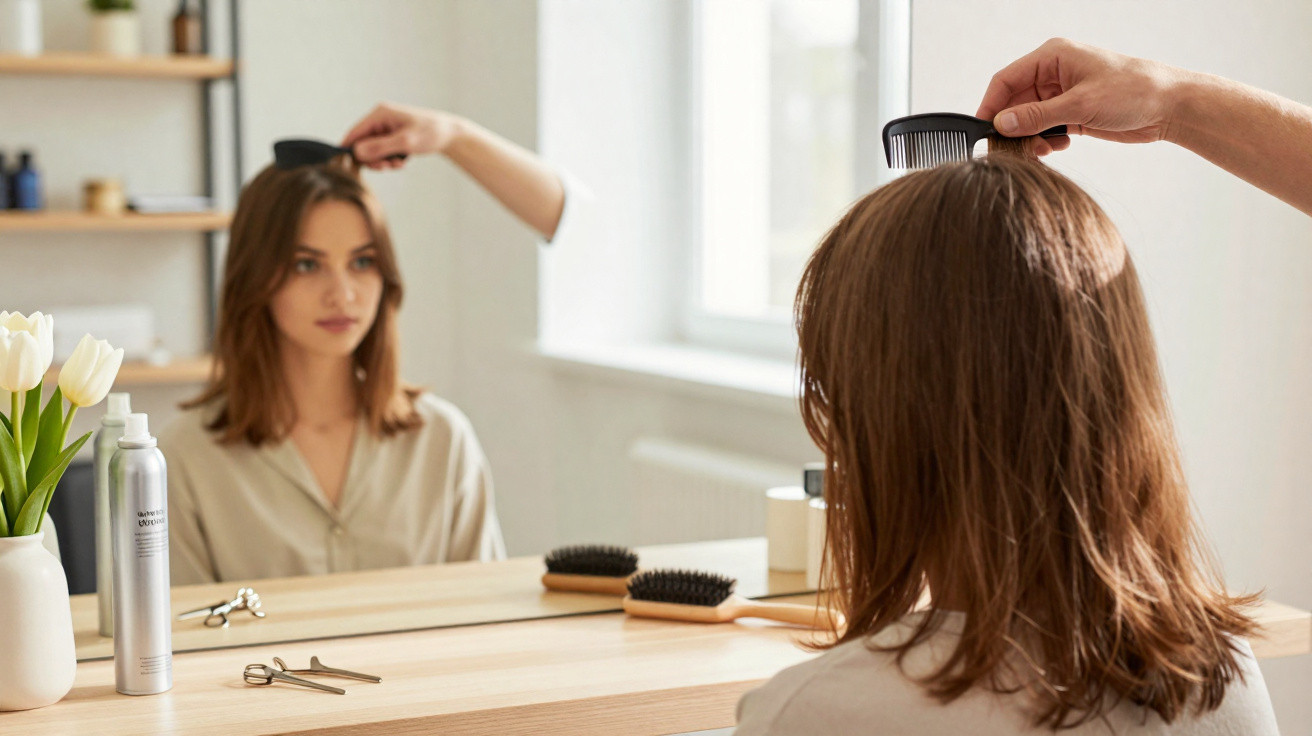
After winter, many people know the familiar professional verdict: dry ends, flat-looking lengths and a tired scalp. This time, though, the appointment went differently. My hair felt sleek and soft, combed through without snagging, and caught the light as if I’d just had a luxury in-salon treatment applied.
My hairdresser assumed I must be using an expensive brand range - but the answer was in the food cupboard, not on the bathroom shelf.
That moment highlights a common misconception: that only pricey, high-tech products can deliver visible results. In reality, hair biology is much simpler. Hair tends to respond most to pH, residue left behind, and the condition of the cuticle layer - not the price tag on the bottle.
Why traditional conditioners often leave hair heavy and lifeless
If you’re prone to dry ends, it’s almost automatic to reach for rich post-shampoo products and masks. The short-term feel improves, but over time many people run into the same pattern: weighed-down lengths, less volume, and roots that become greasy more quickly.
A big reason is what’s inside many formulas. Common examples include:
- silicones that coat the hair in a film
- plant-based and synthetic waxes
- film-formers derived from petrochemicals
These ingredients can wrap each strand like a coating. At first that can create slip, smoothness and shine, but gradually an invisible layer develops that becomes difficult to fully rinse away. Professionals call this “build-up” - essentially a gradual accumulation of layers.
The more coating products you add to your routine, the more your hair can start to feel heavy, dull and in constant need of ‘care’.
That can trigger a vicious circle: dull lengths lead to more product, hair looks greasy sooner, washing becomes more frequent, the scalp dries out, and the ends continue to suffer. Many people respond by increasing how much conditioner or mask they use - and in the long run, they intensify the very issue they’re trying to fix.
The underestimated household staple: what apple cider vinegar has to do with luxury haircare
The real “secret weapon” that surprised my hairdresser wasn’t an exotic oil at all - it was apple cider vinegar. This everyday kitchen ingredient (more often poured over salad than hair) is regaining popularity in haircare.
Apple cider vinegar is produced by fermenting apples. During that process, it contains, among other things:
- acetic acid
- minerals such as potassium and magnesium
- trace elements and plant compounds
That combination can support hair and scalp on several levels. The mild acidity helps shift and loosen residue without stripping aggressively, while the skin’s natural protective barrier is largely left intact. That’s where many “clarifying” shampoos can fall short - they cleanse thoroughly, but can irritate quickly.
Calcium, pH and shine: the science behind the vinegar trick
Anyone living in a hard-water area knows what limescale does: it builds up everywhere - including on hair. With every wash, tiny mineral deposits can remain on the surface. They roughen the structure, reduce shine, and amplify the feeling of dryness.
A fine veil of limescale is enough to seriously dull light reflection - even the best shampoo can’t fully compensate for that.
Here, apple cider vinegar works like a gentle descaler. Its acidity can help dissolve mineral deposits without attacking the hair fibre. At the same time, pH matters. Healthy hair sits in a slightly acidic range, yet many shampoos - and tap water in particular - can push the balance towards alkaline.
When that happens, the cuticle lifts. The result:
- hair looks frizzier and feels more brittle
- it tangles more easily
- conditioning ingredients penetrate unevenly
A mildly acidic rinse nudges the pH back towards the ideal range. The cuticle can settle again, the surface feels smoother, and smoother hair reflects light more effectively - so it looks healthier even without a silicone coating.
How the “1-to-4” method with apple cider vinegar works
You don’t need a complicated DIY routine for this to work. The key is simply the ratio. Undiluted vinegar can be too strong for the scalp, but diluted vinegar is more than enough.
The basic recipe for a shine rinse
- 1 part apple cider vinegar (ideally cloudy and organic)
- 4 parts cool water
Apply it like this, step by step:
- Wash your hair as usual with shampoo and rinse thoroughly.
- Slowly pour the vinegar-and-water mix over your scalp and lengths.
- Massage in gently, especially at the roots and through the ends.
- Leave it on for about two minutes.
- Rinse very well with cool to cold water.
If you finish with a brief cold rinse, you can noticeably enhance the cuticle-smoothing effect.
Cool water encourages the outer layers of the hair to contract and lie flatter. Hair tends to look less “fluffy”, falls more neatly and appears glossier. Any typical vinegar scent disappears completely once the hair has dried.
Who the vinegar trick suits - and where you should be cautious
This approach can be particularly helpful for people with:
- dull lengths that are hard to detangle
- hard water at home
- a scalp that gets greasy quickly alongside dry ends
- curls that have lost bounce due to coating and residue
If you have a sensitive scalp, you can often tolerate the rinse well - especially if you’re prone to flakes or itchiness. It’s sensible to patch-test first and dilute a little more strongly, for example using a 1-to-6 ratio.
If your hair is freshly coloured or heavily lightened, shorten the processing time for your first try and watch how it reacts. Apple cider vinegar doesn’t pull colour out of hair, but on very over-processed lengths it can initially feel more stingy or drying if there is already significant damage.
What this trick means for your wallet and the bin
Depending on hair length, many people get through several bottles of conditioner each year. Every bottle adds packaging, transport and cost. Apple cider vinegar is often sold in glass, can be used sparingly, and does double duty: it belongs in both the kitchen and the bathroom.
If you replace most conditioners, you can quickly save several plastic bottles a year - and a noticeable amount of money.
Premium hair ranges often cost many times more per litre than simple apple cider vinegar. And because the rinse is diluted, one bottle can last surprisingly well. Many people say they end up using any remaining masks only in a targeted way - for example as a spot treatment for badly damaged ends - rather than at every wash.
How to fit the new routine into everyday life
In many cases, using the vinegar rinse once a week is enough. If you suspect very strong build-up or deal with extremely hard water, you can schedule it twice weekly if needed. In between, a gentle shampoo is usually sufficient, without an additional conditioner.
At the start, it can help not to drop conditioner overnight but to taper it down gradually, for example:
- Weeks 1–2: use the rinse in addition to your usual conditioner
- Weeks 3–4: use conditioner only every other wash
- From week 5: rely mainly on the rinse, using conditioner only on specific areas
This makes changes easier to track. Many people notice after two or three uses that hair feels lighter, dries faster and stays fresher for longer.
Why fewer products often lead to better hair
The vinegar trick shows how much marketing and habit can shape a routine. Hair structure often responds better to clear, simple steps than to complicated layering. When you strip things back, you give yourself room to notice what your own hair is actually doing.
A pared-down routine might look like this:
- a gentle shampoo suited to your hair type
- an apple cider vinegar rinse once or twice a week
- a pure oil (e.g. argan or jojoba) on the ends only, when needed
Especially during transition periods such as spring and autumn, it’s worth rechecking your habits. Many people find they get better results from three straightforward products than from an entire collection of bottles and tubs. To a hairdresser, only the outcome is visible: smooth, glossy lengths - and a mystery about which luxury brand could possibly be responsible.





Comments
No comments yet. Be the first to comment!
Leave a Comment