
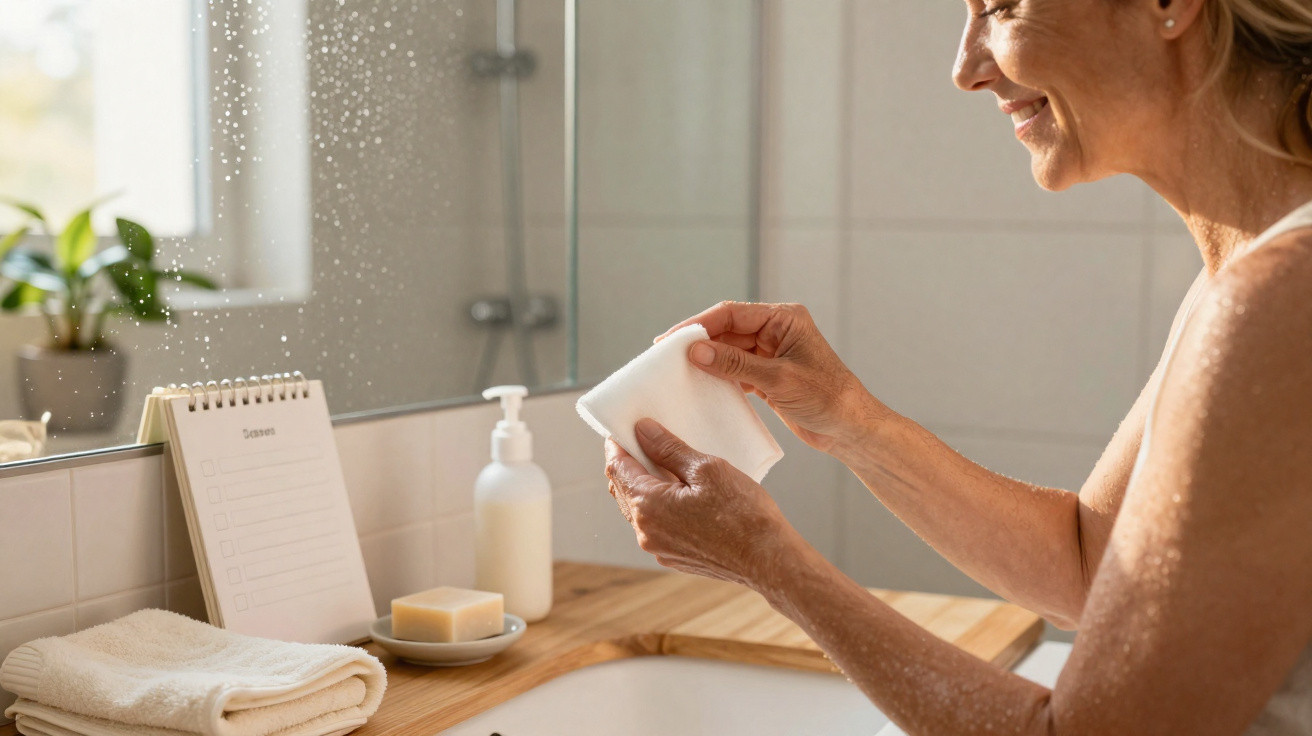
Margaret, 72, stops cold in front of the bathroom mirror.
The towels are neatly folded. The non-slip mat is down. The grab rail is ready. She jokes that water isn’t the problem. What scares her is the exertion. The chill. The unsteady moment when she steps out. Her daughter keeps saying, “Mum, you need to shower every day,” like it’s a warning. Her GP advises, “Don’t dry out your skin.” Her arthritis counters, “Pick your battles.”
In houses, care homes and small flats across the world, the same quiet bargaining takes place. After 65, how often is “enough” to stay clean, healthy and dignified-without turning every shower into a miniature endurance test?
Here’s what rarely gets said out loud: showering every day is a rule built for younger bodies. Once you’re past 65, the maths changes. And the answer may not be what you expect.
The real shower rhythm after 65
Ask five people over 65 how often they shower and you’ll get five different answers. Some insist on a morning wash “to feel human”. Others slide into a once-a-week routine-part habit, part sheer tiredness. Between those ends sits the pattern that tends to keep ageing bodies well: typically 2 to 4 showers a week, supported by targeted “mini-washes” at the sink.
Dermatologists in Europe and the United States increasingly come back to the same message. Older, thinner skin generally doesn’t do well with hot daily showers. The protective natural oils reduce with age, and soap removes even more. So the goal isn’t “as often as possible”. It’s “as often as your skin, mobility and lifestyle can manage… without wearing you down”.
That’s a very different view of hygiene-and a far gentler one.
A French survey of older adults living independently found that fewer than 45% said they showered daily. In care homes, staff will often quietly say that a full shower three times a week is already a success. On the other days, they rely on what they call “a wash at the sink”: face, armpits, intimate areas, feet. Focused, fast, and less draining.
One carer spoke about a 79-year-old man who flatly refused daily showers. His daughter became anxious about “poor hygiene”. The team proposed a different plan: shower on Monday, Wednesday and Saturday. Every other day, a warm flannel, a mild cleanser, clean underwear and a quick foot check. Smells reduced. Skin irritation settled. And, most importantly, he stopped fearing the bathroom.
When you look at evidence around skin tears, bathroom falls and dehydration, a clear pattern shows up. Washing delicate skin too much-and pushing painful joints too far-can cause more harm than a slightly less “perfect” timetable. After 65, the body follows a different rulebook.
There’s straightforward reasoning behind that 2-to-4-shower sweet spot. Mature skin makes fewer lipids, so its natural barrier becomes more porous. Daily hot water plus soap means more dryness, more itching, and more tiny cracks where bacteria can get in. Meanwhile, circulation often slows, so injuries take longer to heal. Add diabetes or blood-thinning medication, and every minor graze becomes more significant.
A shower every other day (or three times weekly) usually keeps sweat, bacteria and odours in check without continually stripping that vulnerable barrier. On non-shower days, a five-minute top-and-tail wash helps prevent build-up in the areas that matter most: under the breasts, between skin folds, around the groin, under the arms, and between the toes. Hygiene becomes practical and targeted rather than obsessive.
For many people over 65, this kind of routine also fits real energy levels. A full shower can feel like exercise: undress, step in, wash, rinse, step out, dry off, get dressed again. It’s a lot. Spreading the effort across the week makes it more achievable. And hygiene only works when it’s sustainable.
From exhausting chore to safe, simple ritual
One of the simplest ways to protect health after 65 is to treat hygiene as layers. Begin by choosing shower “anchor days”: for example, Monday, Wednesday and Saturday. On those days, prioritise ease. Use warm-not hot-water. Keep a non-slip mat down. Add a shower stool if your balance isn’t reliable. Use a gentle, fragrance-free wash mainly for armpits, intimate areas and feet. For the rest of the body, water alone is often sufficient.
On the in-between days, keep things minimal. A bowl of warm water. A soft flannel. A mild cleanser for the same key zones. Clean underwear and socks. A quick look at skin folds and heels. Ten minutes, no contortions. With this rhythm, hygiene happens daily even when the full shower doesn’t. Your body gets consistency, not punishment.
One practical habit makes an outsized difference: moisturising immediately after your skin has been washed-even on “mini-wash” days. A basic cream (nothing fancy) applied gently to legs, arms and back if you can reach. Hydrated skin is less likely to tear, itches less, and copes better with the next shower.
On a personal level, the pressure around hygiene and ageing can be intense. Adult children push for “proper” showers. Doctors mention infection risks. Carers do what they can with limited time. The end result is often shame on every side. People over 65 can feel judged when daily routines become too hard. Relatives can feel guilty if they “let it slide”.
Most of us have had the moment of sniffing our own T-shirt and wondering whether it passes the social test. After 65, that worry can feel heavier: neighbours, carers and even people on the bus can be unforgiving. Yet forcing daily showers on someone who is exhausted, in pain or dizzy increases the chances of falls and refusal. Let’s be honest: hardly anyone truly manages it every single day.
If you shift the question from “daily or not?” to “clean where it counts, as safely as possible”, everything changes. It creates space for practical aids such as grab rails, handheld shower heads, shower chairs and long-handled sponges. These aren’t “old people gadgets”. They’re tools that help people stay in control of their bodies for longer.
One geriatric nurse put it bluntly:
“I’d rather see my patients shower well three times a week, calmly and safely, than rush through a ‘mandatory’ wash every day and end up with a broken hip.”
That kind of plain speaking can feel uncomfortable, but it’s also freeing. It tells you: your value isn’t measured by daily showers. It’s measured by comfort, dignity and whether your routine fits your real life.
Here is what that can look like day-to-day:
- Shower 2–4 times a week, prioritising the highest-risk areas.
- On non-shower days, do a quick sink wash of armpits/groin/feet.
- Moisturise after every contact with water, even partial washes.
- Inspect skin folds, heels and between toes at least twice a week.
- Adjust water temperature, lighting and bathroom safety to match energy levels.
Rethinking “feeling clean” after 65
Many people over 65 quietly change their shower pattern on their own-and then feel oddly guilty about it. They miss days when their knees are screaming, choose a flannel when they feel lightheaded, or wait an extra day in winter when the bathroom is freezing. On paper, it can look like “decline”. In practice, it’s often sensible self-protection.
When you listen to what sits behind these decisions, the same themes recur. The day someone installs a solid grab rail, they relax in the shower. The day they swap to a gentler cleanser, the itching eases and the night-time scratching reduces. The day a daughter suggests a shower stool “just to sit while washing feet”, one whole part of the routine stops feeling like gymnastics.
The real shift is psychological: recognising that “clean enough” at 30 and “clean enough” at 75 are not the same picture. And that difference isn’t failure-it’s biology, lived honestly.
For some, speaking openly about smell, sweat and skin folds still feels taboo. But odour rarely comes from not showering every day. More often, it comes from three sources: bacteria held in warm folds, synthetic clothes that trap heat and moisture, and small skin infections that aren’t spotted early. Addressing those points is usually more effective than rigid daily shower rules.
People caring for a parent or partner often ask the same quiet question: “How do I know if it’s not enough?” The useful warning signs aren’t the shower count. They include recurring urinary or skin infections, red or white patches between the toes or in folds, clothing that stays damp near the body, and someone avoiding getting undressed because everything hurts or feels unsafe.
Raising the topic with an older loved one takes tact. Instead of “You need to shower more,” try “What makes shower days harder for you?” It might be stepping on to cold tiles, fear of slipping, or simply being more fatigued at certain times. Once the barrier is named, practical solutions become much easier.
Sometimes the biggest improvement is tiny. A thicker bath mat so the floor doesn’t feel icy. A bathroom timer to keep showers brief and less tiring. A hook at shoulder height so towels are easy to reach. These details can sound trivial on paper; in everyday life, they often decide whether that 2-to-4-shower rhythm becomes a lasting habit-or falls apart within a week.
| Key point | Detail | Why it matters for the reader |
|---|---|---|
| Ideal frequency | 2 to 4 showers per week, with targeted washes on other days | Reduces fatigue, protects skin, stays socially comfortable |
| Skin protection | Warm water, gentle cleanser, moisturiser after every contact with water | Helps limit itching, irritation and infection risk |
| Safety and independence | Grab rails, shower seat, non-slip mat, choosing your own pace | Lowers fall risk, supports dignity and freedom of choice |
FAQ:
- How often “should” someone over 65 shower? Most geriatric and skin specialists agree that 2 to 4 showers a week, plus quick daily washes of armpits, private parts and feet, is usually enough for good hygiene.
- Is it unhealthy to shower every day after 65? Daily showers are not automatically dangerous, but very hot water and strong soaps can dry and damage mature skin, especially if there are already issues like eczema, diabetes or blood thinners.
- What if there is body odour even with regular showers? Focus on breathable clothing, careful drying and washing of folds, and checking for fungal infections under breasts, in the groin or between toes; a doctor can treat these quickly.
- How can I help an older parent who resists showering? Start by asking what part feels hardest (cold, fear of falling, fatigue), then offer concrete help: safer equipment, different timing, or shifting to more frequent “mini-washes” plus fewer but better showers.
- Are bath wipes or no-rinse products a good alternative? They can be very useful on low-energy days or after surgery, as long as they’re gentle and unscented; they don’t fully replace showers forever, but they keep hygiene going when water is just too much.





Comments
No comments yet. Be the first to comment!
Leave a Comment