
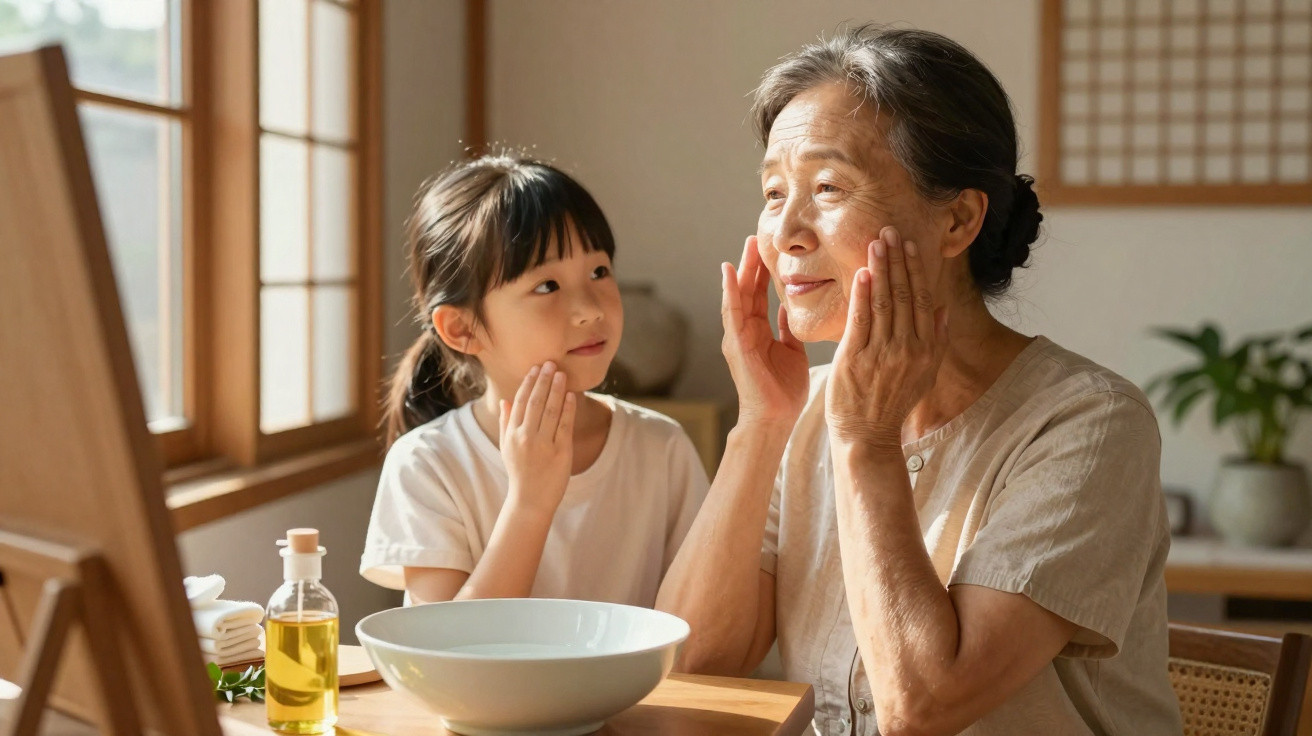
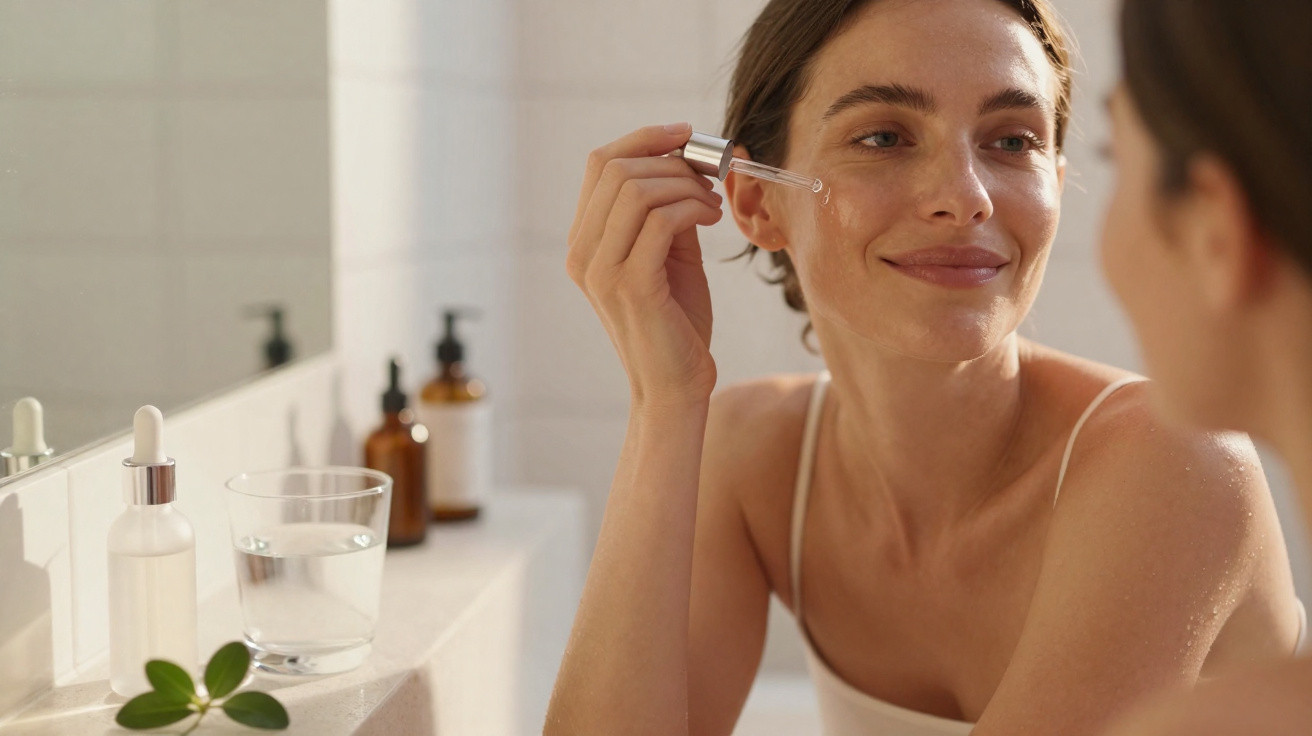
No filter, no blur. I catch myself noticing that she uses almost the same motions my grandmother used years ago when she moisturised her face in the evening: gentle patting, steady pressure along the cheekbones, a tiny metal pot. Two worlds, one gesture. Today we talk about “K-Beauty”, glow, glass skin - in Korea, this was considered well-kept normality long before Instagram existed. And plenty of the “tips” going viral now come from a time when not every home even had reliably running hot water. The real question is: what actually works - and what is just TikTok theatre?
The old Korean ritual TikTok discovered far too late
It may sound like yesterday’s trend, but the foundation of the Korean skincare “secret” is surprisingly old: layering hydration, without any high-tech gadgetry. In many Korean households, people were already applying products in layers throughout the 1960s and 1970s: first a light “skin” (a toner-like step), then a watery serum, then a simple cream - often with rice or ginseng extract. Nothing was flashy, yet everything was applied with calm, almost meditative movements. If you’ve ever watched an older Korean woman in a bathhouse, you don’t forget it in a hurry. That composure - that “I’m taking five minutes just for my skin” - is a quiet luxury no product name ever captures.
In Seoul, people were thinking about skincare at a time when, here, Nivea in the blue tin was meant to fix everything. By the 1980s it was entirely normal for even teenagers to pat three or four liquids into their faces at night, while their mothers still trusted homemade rice masks. A later study by the Korean Dermatological Association showed that women who were already consistent with hydration and sun protection in the 1970s had significantly fewer deep wrinkles in old age than their mothers’ generation. Picture a 75-year-old with plump, almost translucent-looking skin, laughing and saying: “I never smoked and I never sought the sun.” That is anti-ageing in practice - without ever needing to use the word.
At the heart of this “secret” is almost boringly straightforward: protection, hydration, repetition. None of those elements creates the effect on its own - it’s the combination that produces that signature, almost glassy complexion beauty blogs rave about. Where Europe relied for years on rich, heavy creams, Korean tradition works more like getting dressed in layers: thin, thinner, then seal. That way, water stays in the skin rather than evaporating. And here’s the plain truth no one wants to hear: the earlier you start, the less you need to “fix” later. Preventing wrinkles isn’t a sprint; it’s a very quiet marathon.
The 5-minute ritual: how Korean grandmothers really cared for their skin
Imagine a Korean grandmother in the early 1970s: a small bathroom, a mirror fogged with steam. She washes her face with lukewarm water and a mild bar of soap that smells more of grains than perfume. Then comes step one: a runny “skin” or rice water, pressed and patted in with hands - not scrubbed off with a cotton pad. Next, a light extract - historically often ginseng or green tea - tapped into still-damp skin. Finally, a plain moisturising cream, sometimes mixed at home. It doesn’t take ages. Five minutes, returning every evening, quiet as a prayer. In this routine, consistency matters more than any expensive ingredient.
Most of us know the idealised 10- or 12-step routines from social media and feel tired just reading them. Let’s be honest: hardly anyone truly does that every single day. And the truth is, the original Korean approach was far more practical. What stayed consistent was this: sunscreen in the daytime, layered hydration at night, gentle cleansing. What changed were the home remedies. One week it might be a mask made from boiled rice water; another day, honey dabbed on dry patches; in winter, a little sesame or camellia oil. Mistakes our grandmothers rarely made - but we make constantly - include washing too hot, scrubbing too hard, and trying too many products at once. Skin isn’t a test bench; it’s more like a delicate piece of silk.
A Korean dermatologist I spoke to in Seoul put it so plainly that I’ve had the line in my head for years:
“Skin forgets nothing - not the sun at 20, and not the sunscreen at 30.”
Once you understand that principle, the traditional routine suddenly makes a slightly startling amount of sense. Here are the three pillars grandmothers lived by - and that still work today, even if the jars look prettier:
- Gentle, brief cleansing - not a foaming assault, but a mild wash that respects the skin barrier.
- Light, layered hydration - watery textures first, creamy last, always applied to slightly damp skin.
- Sun protection as a daily habit - not only on summer holidays, but like brushing your teeth, every morning.
What we can take from grandmothers - and what we can safely ignore
The most valuable lesson in this old Korean skincare tradition has nothing to do with products. It’s about time. Many older Korean women don’t treat evening skincare as a “to-do list”, but as a transition ritual between day and night: a way to come down, while the hands touch the face and you briefly register, this is me. That emotional framing changes things. If you treat skincare like wiping down the kitchen quickly, you’re more likely to reach for aggressive options just to be “done”. If you see it as a small pause, you naturally act more gently. You can adopt that mindset whether your routine has three steps or eight.
Of course, nobody today needs to boil rice in a pan just to get fermented water. Many of grandmothers’ home remedies have been replaced by modern formulas that are more stable and usually easier to tolerate. What is worth carrying forward is the focus on hydration and protection rather than drama and “erasing” things. The common traps of our time are chasing every trend, stacking retinol, exfoliants and vitamin C on top of each other, and hoping speed will do the job. Skin often answers with redness or micro-inflammation, which in the long run can mean even more wrinkles. Sometimes the smartest move towards smoother-looking skin is removing a product, not adding one.
When you talk to very elderly Korean women, one sentence comes up again and again:
“I treated my skin like a little plant: not too much sun, never let it dry out, water it regularly.”
From that, you can distil simple, almost old-fashioned rules that feel surprisingly modern:
- Cleanse only as strongly as necessary, never as strongly as possible - foam is not the same as cleanliness.
- Always apply hydration to slightly damp skin - lock water in rather than just laying product on top.
- Introduce one product at a time - don’t replace your entire routine in one go.
- Wear sunscreen even on grey days - UV rays don’t wait for blue skies.
- Accept patience as part of skincare - visible texture changes often take weeks, not days.
Open thoughts: perhaps “secret” is just another word for patience
It’s tempting to treat the Korean skincare secret like a magic formula: a special ingredient, a special order, problem solved. But if you look more closely, what sits underneath is much more grounded. A generation of women who couldn’t afford to run to a dermatologist regularly found strategies that were sustainable - over decades. Less sun, a bit of discipline, lots of hydration, minimal drama. It may feel unimpressive because it doesn’t promise a “wow effect in three days”. Yet that’s precisely why it has such quiet strength.
We live in a time when every pore can become content. Filters, soft lenses, “skin smoothing” features - all of it makes imperfect skin look like a failure. Then you meet an older Korean woman whose face has very few wrinkles but still shows pigment marks and laugh lines, and you understand: being wrinkle-light is not the same as being perfect. It’s more like the outcome of small gestures repeated over and over. Perhaps the real gift of this old care tradition isn’t just fewer wrinkles. It’s permission to meet yourself kindly for a moment each day - with warm hands, a little patience, and the quiet belief that skin remembers care.
| Key point | Detail | Value for the reader |
|---|---|---|
| Layered hydration | Light textures in layers instead of one heavy cream | Better hydration, plumper skin, less tightness |
| Gentle care rituals | Short, regular, with mild products and calm movements | Stronger skin barrier, fewer irritations and redness |
| Consistent sun protection | Daily use, even when cloudy, inspired by the K-Beauty approach | Fewer wrinkles, fewer pigment marks, younger-looking skin over time |
FAQ:
- Question 1 Can I follow a Korean-inspired routine if my skin is very sensitive? Yes, as long as you choose mild, low-fragrance products and add new steps slowly. Begin with cleansing, a hydrating fluid and sunscreen, all without harsh acids.
- Question 2 Do I really need 10 steps to get “Korean” skin? No. The traditional routine was relatively short but consistent. Three to five well-chosen steps are enough if you do them every day.
- Question 3 What’s the single most important anti-wrinkle step from Korean tradition? Over the long term, it’s clearly daily sun protection, closely followed by regular layered hydration.
- Question 4 Are home remedies like rice water actually worthwhile? They can work if you make them hygienically and your skin tolerates them. Modern products usually offer more stable, safer alternatives with a similar effect.
- Question 5 How quickly will I see results if I stick to this ritual? A fresher glow often appears after one to two weeks. Smoother, more wrinkle-light skin is more of a project over months to years - exactly as it was for the grandmothers.
Comments
No comments yet. Be the first to comment!
Leave a Comment