
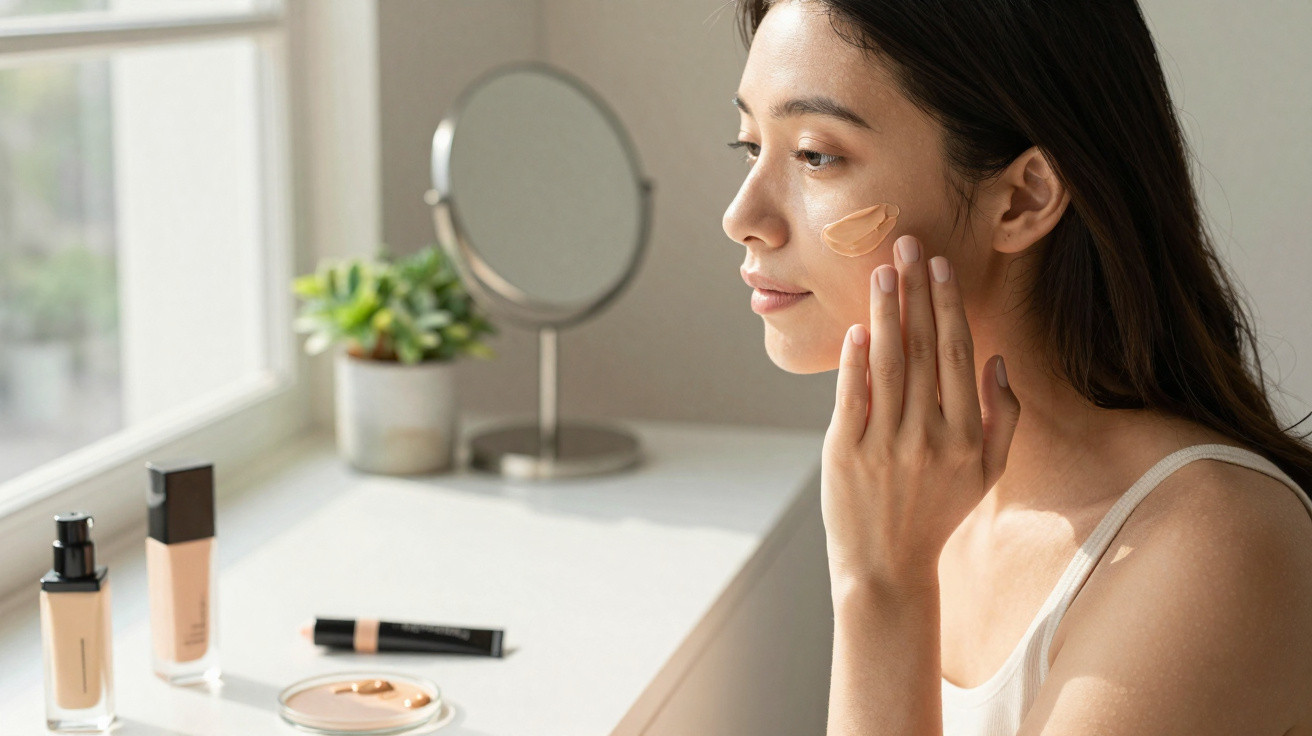
A technique from Japan is doing the rounds in the beauty world right now. An internationally working make-up artist explains how four precise steps can make even an ordinary foundation look so skin-like that it’s barely noticeable in everyday life and in high-resolution photos - without replacing your entire make-up bag.
Why foundation in Germany often looks mask-like
Many make-up routines here still follow the same formula: lots of product, maximum coverage, and everything has to look “perfect”. The result can quickly be:
- emphasised dry lines
- a visible edge along the jaw
- a chalky “mask effect” in photos
- a heavy feel on the skin
Under LED lighting, in the office, or on selfies, every layer shows. Foundation is meant to disguise blemishes, but it can end up highlighting only one thing: how much make-up you’re wearing.
“The Japanese approach flips this on its head: rather than hiding the face, the complexion should look like real, well-cared-for skin - just a little more even.”
What’s behind the Japanese complexion ideal
In Japanese beauty culture, skincare comes before make-up. Foundation is treated more like a fine filter than filler paste. Many formulas are:
- extremely lightweight in texture
- enriched with skincare ingredients such as hydrators
- often made with integrated sun protection (SPF)
Coverage is built in thin layers, not applied thickly in one go. Dermatologists tend to argue along similar lines: if you cleanse properly and use skincare that suits you, you need less coverage - and you look younger and fresher because product doesn’t collect in pores and fine lines.
The four Japanese steps for a “second skin” complexion
1. Hydration exactly where foundation fails
The first tip sounds simple, but it noticeably changes the finish: targeted hydration before any make-up touches your face. Instead of spreading moisturiser everywhere and hoping for the best, you treat the driest areas separately.
Practical method:
- Cleanse your face as usual.
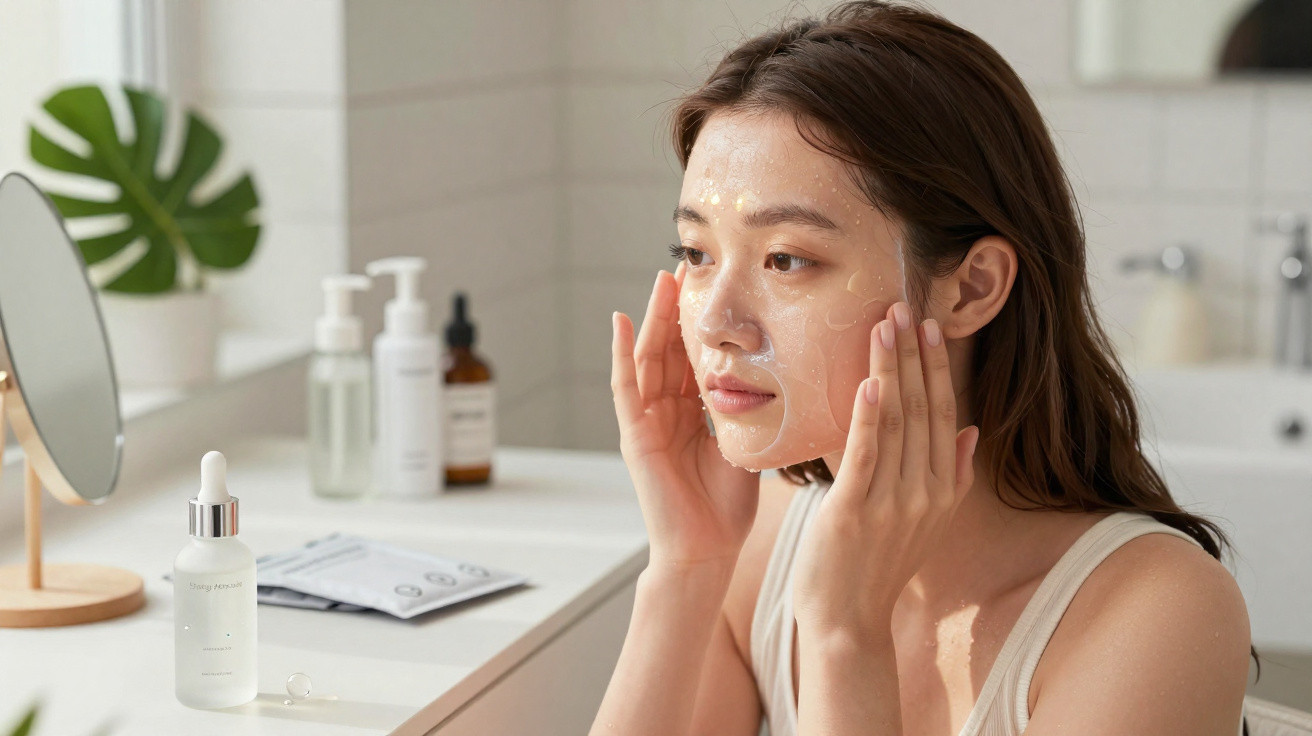
- Apply toner or lotion to cotton pads.
- Place the pads on dry zones for three to five minutes (often cheeks, forehead, and around the nostrils).
Your skin drinks in the moisture, tiny flakes settle down, and later the base can glide over the surface rather than catching.
2. A quick facial massage trick for softer-looking contours
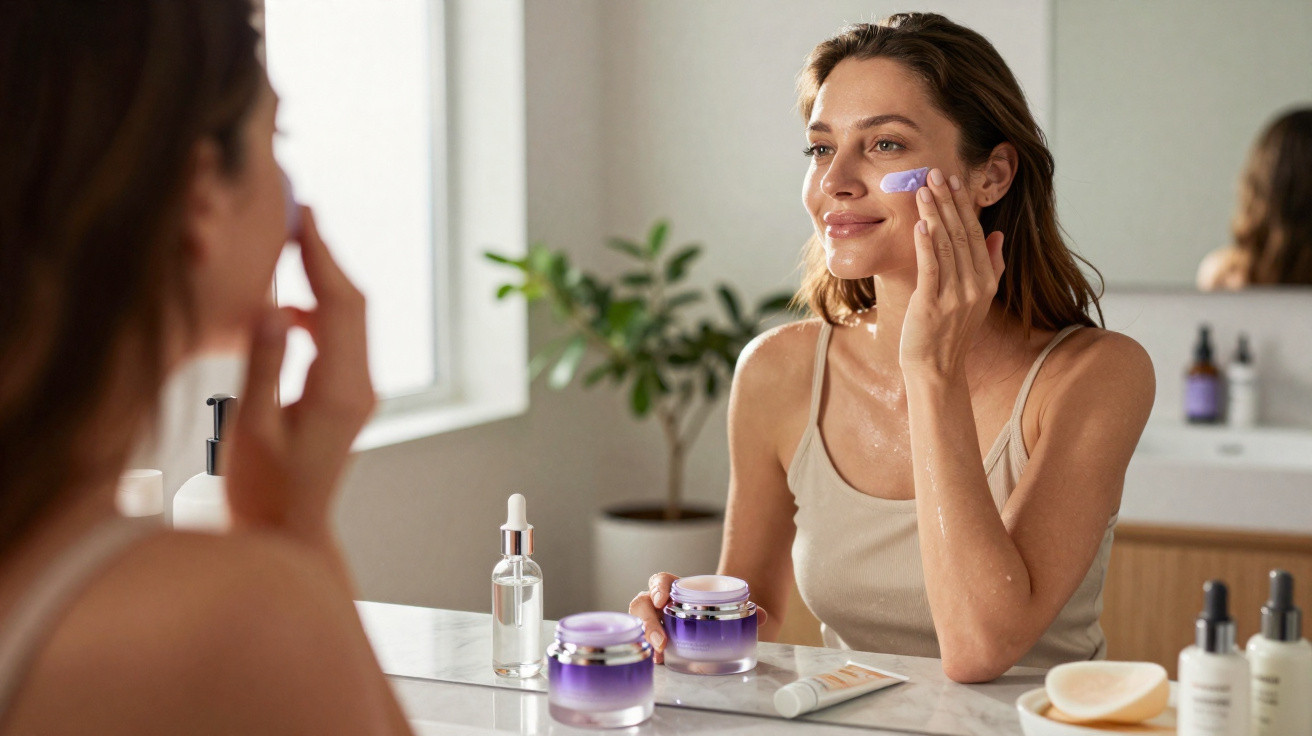
Next comes a mini massage. Using a light cream or serum, work in circular motions from the centre outwards: from the nose towards the cheeks, from the chin towards the jawline, and from the middle of the forehead towards the temples.
This does a few things at once:
- circulation improves, so the skin looks more awake
- puffy areas (for example, under the eyes in the morning) appear smoother
- foundation is less likely to settle into expression lines because the skin feels more supple
“Five minutes of massage can do more for a beautiful complexion than another layer of coverage.”
3. Mix foundation and concealer instead of layering
Step three is about how you use what you already own. Rather than packing on concealer over redness or under-eye darkness, blend a small amount of concealer into your foundation - ideally in your palm or on a spatula.
This creates a more finely pigmented mix that:
- evens out redness and shadows more seamlessly
- is less noticeable than harsh concealer edges
- is less likely to crack into fine lines
Apply the mixture in a thin layer only where it’s genuinely needed - for instance around the nose, on the chin, or beneath the eyes. The rest of the face often needs very little.
4. Use two shades for a more natural result
The final step is standard in Japan, but still relatively uncommon in Europe: instead of relying on one foundation colour, you use two very similar shades.
| Area | Shade | Effect |
|---|---|---|
| Centre of the face (forehead, nose, cheeks, chin) | A tone that matches your skin exactly | The complexion looks calm and balanced |
| Contours (hairline, jaw, outer cheeks) | A slightly warmer or minimally deeper tone | Natural-looking definition, no flat “mask face” |
This builds depth without obvious contouring. Your face still looks like a face, with proportions that read as “three-dimensional” - like real skin rather than a single, painted-on oval.
How to adapt the method to your skin type
Dry or mature skin
If you struggle with dryness, tightness, or fine lines, this approach can be particularly effective. Helpful choices include:
- foundation with a creamy, melting texture
- ingredients such as hyaluronic acid, glycerin, squalane
- glowy or satin finishes rather than a powder-matte effect
With this skin type, powder should be used very sparingly - for example only around the nostrils or in the T-zone. Setting the entire face can quickly emphasise every line.
Combination and oily skin
Here, the common worry is that “natural” quickly turns shiny. The Japanese-inspired version tends to favour fluid or gel textures that:
- offer light coverage without stripping the skin
- leave a soft, satin sheen
- can be paired with mattifying primers in the T-zone
If you get very shiny, use only half a pump of foundation and focus it on the centre of the face. A transparent, very finely milled powder should fix only the areas where it’s truly needed during the day.
Mistakes that ruin the “second skin” effect
Many routines fail not because of the foundation itself, but because of small details:
- applying too much product at once, especially with a beauty sponge
- ignoring the transition at the neck, creating a visible line
- using the same heavy coverage everywhere, which makes the face look flat
- neglecting skincare: rough patches will break up even the most expensive textures
“Complexion looks most natural when not every pore is ‘airbrushed away’ - a little transparency keeps the face looking alive.”
Practical tips for everyday wear
If you don’t have much time in the morning, you can do a stripped-back version of the Japanese-inspired method. A realistic ten-minute routine:
- Cleanse quickly with a gentle gel or cleansing milk.
- Apply a thin layer of hydrating serum, optionally leaving it to sink in briefly.
- Do a short massage with day cream, especially through the centre of the face.
- Mix a small amount of foundation with concealer.
- Work from the centre outwards, blending transitions carefully.
- Tap the warmer shade along the contours, then soften it out.
Even this shorter routine can make selfies and team photos look more natural - and helps you avoid that “made-up like someone else” feeling in the mirror.
Why less product often looks more youthful
The effect is especially noticeable on more mature skin. Every thick layer sits on top of facial movement like a film. Smile lines, corners of the mouth, forehead creases: with too much foundation, these can look deeper and more rigid. Thin, well-worked layers move with the face and settle less.
If you’re dealing with pigmentation or stronger redness, you can correct selectively with a high-coverage concealer - but only where it’s truly needed. Keep the rest light. This gives a calmer-looking complexion without losing the expression that makes your face yours.
What terms like “second skin” mean in practice
In marketing, you’ll often see the phrase “second skin” finish. In real terms, it describes make-up that:
- doesn’t look like a visible layer when you’re close to the mirror
- doesn’t feel sticky or heavy
- doesn’t immediately crease into fine lines when you laugh or talk
Whether a product really delivers usually becomes clear after a few hours: if your complexion still looks fresh, lightly luminous, and mobile, the combination of skincare, technique, and foundation works. If everything turns dull, grey, or cracked, the priority was probably too much coverage and not enough preparation.
The Japanese-inspired four-step method shows you don’t need to be a professional to achieve it. With targeted hydration, a little massage, a smart foundation–concealer mix, and two closely matched shades, you can create a complexion that doesn’t feel like make-up - but like your own skin on a good day.
Comments
No comments yet. Be the first to comment!
Leave a Comment