
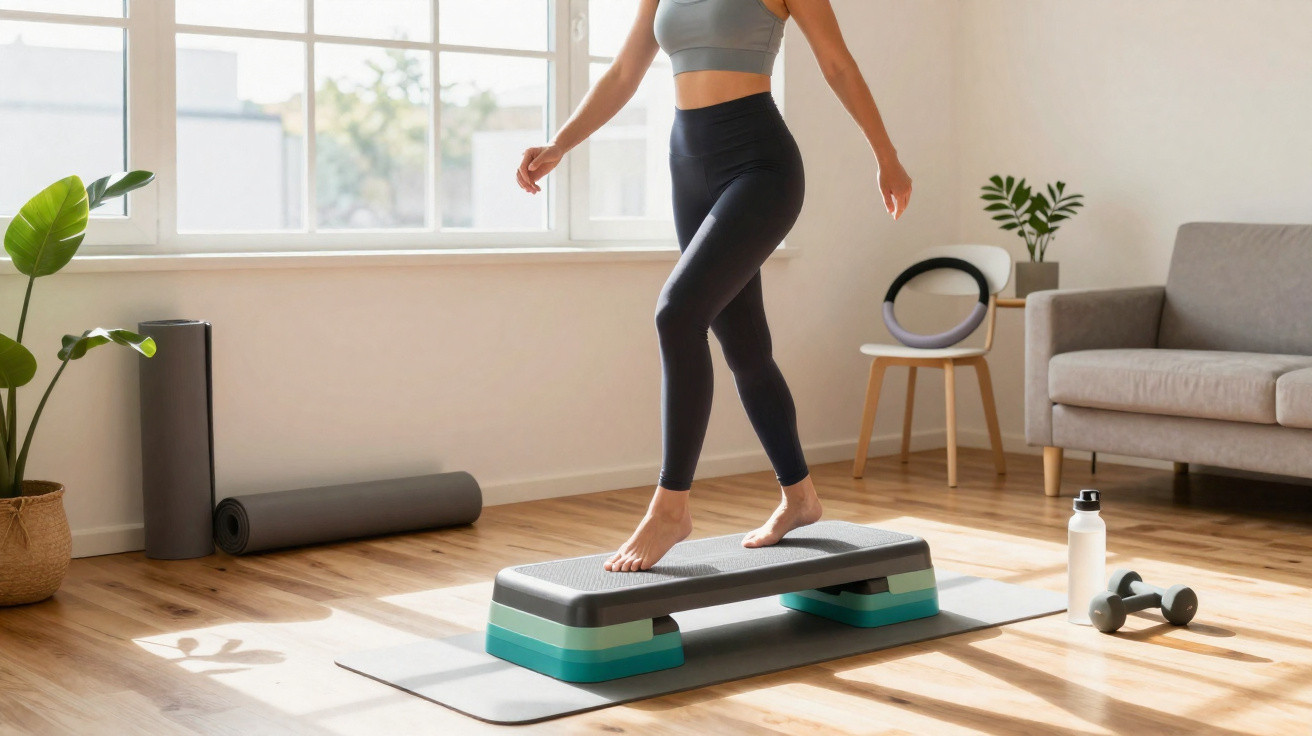
No gym, no costly subscription, yet still a proper workout: an affordable fitness tool from Lidl is currently attracting attention among home exercisers.
Plenty of people want to improve their fitness but do not fancy crowded gyms or expensive membership fees. Lidl’s compact Crivit training device is aimed squarely at them: a stepboard available for a modest price. Costing less than a monthly gym membership, it fits beneath almost any bed and can be used for cardio, strength work and balance exercises.
What Lidl’s affordable fitness board offers
At the centre of the deal is a straightforward but sturdy step platform. It may look unremarkable at first, yet proves highly adaptable in everyday workouts. The board costs €22.99, roughly comparable with the price of a single Pilates class at many studios.
Its main purpose is traditional step training: stepping up and down repeatedly, either slowly or at pace. This can raise the heart rate effectively without taking up much room in the living room. The platform can also serve as a:
- step for demanding cardio sessions
- balance board for stability exercises
- base for strength moves including squats, lunges, dips and supporting exercises
A particularly useful feature is the set of integrated resistance bands, which can target the upper body, including the shoulders, arms and back. That makes it more than simply a piece of equipment for leg workouts, turning it into a compact all-round home gym.
“For just under €23, you get a multifunctional fitness tool that combines cardio, strength and stability training in one piece of equipment.”
Lidl Crivit stepboard height adjustment: from gentle starts to intense sessions
To suit different levels of fitness, the board has two adjustable height settings. Changing between them takes only seconds, requires no tools and can significantly alter the challenge of a workout.
Two levels, two distinct workout options
The lower setting is around 10 centimetres high. It is well suited to:
- beginners
- gentler cardio workouts
- rehabilitation-style movements with moderate intensity
At the higher setting, the board reaches approximately 15 centimetres. That may not sound like a major difference, but it means that:
- the thighs and glutes have to work considerably harder
- the heart rate rises more quickly
- more calories are burned during each session
Anyone doing step-ups, squats or side-to-side stepping movements at the higher level will notice the difference quickly. The glutes and front thigh muscles in particular are challenged, which can improve day-to-day stability over time, for example when climbing stairs or carrying heavy shopping bags.
Why step training is so effective
The key benefit of step workouts is their blend of endurance and strength training. They use a natural movement pattern-walking up and down stairs-but at a faster, more controlled pace.
Typical exercises on the board include:
- stepping up and down in time with music
- lateral steps, alternating legs
- squats with one foot on the board for extra intensity
- lunges with the rear foot positioned on the board
- supporting positions such as planks, with the hands or feet resting on the raised platform
Combining step movements with core holds works not only the legs and glutes, but also the abdominal and back muscles. For people who spend a great deal of time sitting down, this may help to prevent discomfort in the lower back.
“Regular step sessions improve fitness, tone the muscles and add variety to home workouts that can otherwise become repetitive.”
Stable, non-slip and practical for everyday use
According to customer reviews, Lidl’s board performs surprisingly well. Its average rating is 4.9 out of 5 stars, with users especially often praising its stability and non-slip surface.
Weighing around 2.8 kilograms, it is light enough to carry around yet heavy enough not to slide about with every movement. The textured top provides reliable grip for both shoes and bare feet. Rubberised feet beneath the base help the board stay secure even on smooth flooring such as tiles or laminate.
It is also useful in small flats: the board can be stood upright against a wall or slid beneath a bed. Anyone needing to quickly reclaim their living-room space after a workout is likely to value this feature.
How does it compare with Pilates?
The price comparison is straightforward. One Pilates session with an instructor often costs between €15 and €25, whereas this provides a piece of equipment that can be used repeatedly for a similar sum. The question is whether the board can fully replace a Pilates class.
Pilates places strong emphasis on controlled movement, breathing and the deep core muscles. The stepboard, by contrast, focuses more on dynamic exertion and cardiovascular training. Even so, several Pilates-style elements can be adapted for it, including:
- support variations for the core
- controlled leg movements in a lunge position
- single-leg balance drills
Training regularly with the board therefore offers a combination of cardio and functional strength work. However, it can only partly replicate the targeted training of deep muscles provided by mat-based classes. For many recreational exercisers, though, that is entirely sufficient to become fitter, develop better posture and move more easily in everyday life.
Who can genuinely benefit from the Lidl stepboard?
It is particularly suitable for people who:
- want an uncomplicated way to exercise at home
- do not want to rely on gym equipment
- want to fit short, intensive sessions into daily life
- have limited space and need flexible options
Those who are already relatively active can pair the board with free weights, such as dumbbells or kettlebells. This makes it possible to create more complex full-body exercises, for instance weighted squats followed by a step-up onto the board. Interval workouts are another option: 30 seconds of fast stepping, 30 seconds of a strength exercise, a brief rest, then repeat.
How often should you train with the board?
A realistic starting point is three sessions each week. Each workout can last 20 to 30 minutes, combining step movements with strengthening exercises. Beginners are better off starting at the lower setting and gradually increasing both speed and duration.
Anyone with knee or hip problems should begin carefully and seek medical advice if in doubt. Step training can place demands on the joints, especially when the height is increased too quickly or when too many jumping movements are included.
What to consider when training at home with a step
A few basic rules can help keep workouts enjoyable over the long term and reduce the risk of injury:
- Always place the entire foot on the board rather than stepping on with only the toes.
- Keep your eyes looking forwards instead of constantly watching your feet.
- Begin with slow movements and only increase the pace later.
- Wear shoes with firm soles if your joints are sensitive.
- Stop exercising immediately if you feel dizzy or experience pain.
There are plenty of free step workouts online that can be followed using this type of board. A coach can guide each session virtually, while Lidl’s equipment provides the physical platform.
Used cleverly, the board can be combined with simple equipment such as a mat, a resistance band or light dumbbells. Over time, this creates a small home gym that remains considerably cheaper than ongoing subscriptions and specialist classes, while still offering enough options to train the heart, muscles and balance.


Comments
No comments yet. Be the first to comment!
Leave a Comment