
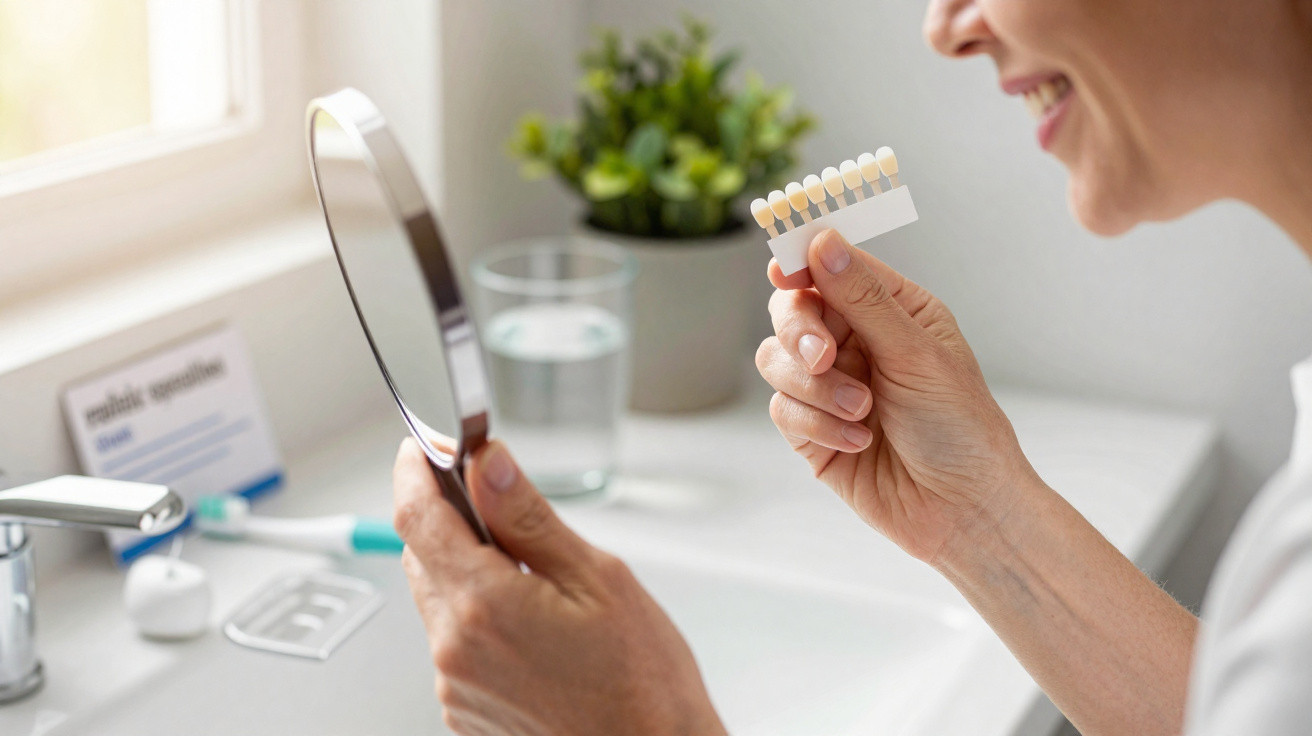
Beyond a certain age, your smile may begin to look less fresh, even when you brush daily and steer clear of sugary foods.
For many people, age-related yellowing only becomes apparent in a photograph, on a video call or during a dental appointment. Then comes the question: is it genuinely possible to make older teeth look whiter again, and what separates sensible care from unsafe quick fixes?
Why teeth naturally yellow as the years go by
Teeth do not age in quite the same manner as skin or hair, yet they still undergo changes. Even a smile that is brushed thoroughly can alter in colour over the years.
Enamel, the outer tooth layer, is mildly translucent. Beneath it sits dentine, a tougher tissue that is naturally yellower or greyer. Over time, enamel slowly becomes thinner through wear. Dentine may also thicken following repeated minor trauma, causing it to become more noticeable.
With age, enamel gets thinner and the yellower dentine underneath shows through far more clearly.
This internal process is only one reason for discolouration. Daily habits gradually stain teeth as well:
- Coffee, tea and red wine deposit dark pigments in tiny flaws within the enamel.
- Smoking and nicotine vaping create persistent brown and yellow staining.
- Some medicines and mouthwashes may gradually change tooth colour.
- Dry mouth, which is more common with age and certain medicines, limits saliva’s natural “cleaning” effect.
Gums commonly recede a little as people get older, revealing the darker root surface, which has no enamel covering it. Even if the tooth crowns have changed very little, exposed roots can make the overall smile look yellower.
Good habits that slow down age-related yellowing
Before considering bleaching gels or light-activated procedures, getting the basics right can make a noticeable difference, particularly when good habits begin early.
Brushing that actually works for older teeth
Two rushed brushes each day may not be sufficient. How you brush matters more than how forcefully you do it.
Gentle brushing for at least two minutes, twice a day, with a soft-bristled brush removes stains without damaging enamel.
Some useful practical steps include:
- Choose a fluoride toothpaste with low-to-medium abrasivity. Aggressive use of “whitening” toothpastes may scratch enamel.
- Change your toothbrush every three months, or earlier if its bristles begin to splay.
- Position the bristles towards the gumline, where staining often accumulates.
An electric toothbrush may be useful for older adults with arthritis or limited hand dexterity. Most have a pressure sensor to lower the likelihood of excessive brushing and gum recession.
Professional cleanings: the forgotten whitening tool
A scale and polish at the dental practice removes tartar and ingrained stains that home care cannot shift. Tea, coffee and tobacco pigments adhere to calculus, which can develop more quickly with age.
Dental associations generally recommend professional cleaning every six to twelve months. Those who smoke, consume substantial amounts of tea or coffee, or use partial dentures may require appointments more frequently.
A single thorough cleaning can make teeth look one to two shades lighter by stripping away years of surface build-up.
At-home whitening: what works and what to avoid
Whitening treatments are far more likely to work once plaque and tartar have been managed. However, products sold in chemists do not all provide the same level of effectiveness or safety.
Whitening toothpastes and pens
Whitening toothpastes mainly use gentle abrasives, sometimes alongside a small quantity of peroxide. They can lift surface staining, but they do not alter the tooth’s inherent colour.
Whitening pens generally contain a low level of carbamide peroxide or hydrogen peroxide. When placed on dry teeth for several minutes each day, they may mildly brighten newer staining from sources such as coffee or red wine.
Non-prescription products improve brightness for some users, but they cannot fully reverse decades of age-related yellowing.
Whitening strips and trays
Shop-bought whitening strips and pre-filled trays contain peroxide gels at higher concentrations. Outcomes differ, although many users see teeth become one to three shades lighter after two to three weeks.
Typical problems include sensitive teeth, irritated gums and inconsistent results where strips do not cover curved teeth completely.
| Method | Expected effect | Main risks |
|---|---|---|
| Whitening toothpaste | Slight stain removal | Enamel wear if too abrasive |
| Whitening strips | 1–3 shades lighter | Sensitivity, gum irritation |
| Custom trays from dentist | More even and predictable lightening | Sensitivity, temporary gum soreness |
Anyone with numerous fillings, crowns or veneers should speak with a dentist beforehand. Man-made materials cannot be bleached, so natural teeth may become whiter beside older restorations, creating a patchy appearance.
Professional whitening for an ageing smile
For many people over 50, professional whitening offers more distinct and predictable results than kits bought in shops. Before bleaching, dentists can check for decay, gum disease and cracked teeth, helping to reduce the chance of painful reactions.
In-office whitening with strong gels
Chairside whitening involves placing a high-concentration peroxide gel directly on the teeth, frequently with activation from a dedicated light or laser. Treatment generally takes about an hour.
Professional bleaching can lighten teeth by several shades in a single session, especially when yellowing comes from internal dentine changes.
Dentists shield the gums using barriers or rubber guards before the gel is applied. Short-term tooth sensitivity is frequent, particularly in people already sensitive to ice-cold drinks. It normally settles within several days.
Custom trays for home use
Another approach, which is often paired with in-office treatment, uses individually fitted trays. Your dentist takes impressions or digital scans of your teeth before making slim, flexible trays.
You fill the trays with a prescribed gel and wear them for a few hours daily or overnight across several weeks. Although slower, this option gives more gradual control over the eventual shade.
Many patients favour this gentler route because treatment can be paused or modified if sensitivity develops. It also makes later “top-ups” possible without having to begin again from zero.
When whitening is not the best answer
Bleaching does not respond equally well to every kind of yellowing. Some discolouration is caused by antibiotics taken during childhood, trauma or developmental issues affecting enamel and dentine.
For these situations, cosmetic treatments including bonding, veneers or crowns may be more suitable. They conceal the tooth’s front surface behind a new surface with a controlled colour.
Whitening can brighten healthy teeth, but it cannot repair cracks, erosion or deep structural defects.
People with untreated gum disease or major enamel loss may be advised to delay whitening. Bleaching can worsen irritation in inflamed tissues and on exposed roots. Dealing with underlying dental problems first supports comfort and longer-lasting results.
Food, drink and lifestyle tweaks that protect a whiter smile
A handful of everyday changes may extend the period between whitening treatments and slow down the development of fresh staining.
- Cut back on strongly staining drinks, including black tea, coffee, cola and red wine.
- Drink water alongside coloured beverages and rinse your mouth afterwards.
- Use a straw for iced coffee or cola to reduce how much liquid contacts the teeth.
- Stop smoking or nicotine vaping, both of which are major causes of stubborn brown stains.
- Eat snacks less frequently to support saliva production and reduce acid attacks on enamel.
Crisp fruit and vegetables such as apples and carrots are not a magic eraser, but they encourage saliva flow and lightly clean tooth surfaces. Dairy foods supply calcium and phosphates, which can help reinforce enamel.
Myths, home hacks and what dentists warn against
Internet remedies often claim to whiten teeth with cupboard ingredients, but many can cause harm, particularly to older, thinner enamel.
Acidic fruits, vinegar and baking soda pastes can strip and scratch enamel, leaving teeth weaker and sometimes even darker over time.
Lemon juice and apple cider vinegar soften the enamel surface. Scrubbing that softened layer with baking soda or coarse salt can then wear it away. This leaves a smoother but thinner surface, allowing dentine to show through more strongly. It is the reverse of the result most people seek.
Charcoal powders and toothpastes are another popular trend. Their dark appearance can create striking contrast in before-and-after pictures, yet their particles may be abrasive. For older adults with existing enamel wear, that abrasion may accelerate yellowing rather than prevent it.
Setting realistic expectations for an ageing smile
Teeth in your 60s or 70s are unlikely to resemble those in a teenage orthodontic advertisement. The whole mouth changes with age: gums recede, lips become thinner and jaw shape shifts slightly.
A sensible aim is a healthier, brighter and more consistent shade that complements your hair and skin colour, rather than an even Hollywood white. Many dentists now use digital shade guides to show likely outcomes before you commit to a treatment plan.
For instance, an older patient with substantial tea staining but sound enamel may see a dramatic improvement after one in-office appointment. Someone else with enamel wear, several fillings and receding gums may gain only a few shades; for them, pairing bleaching with bonding on visible front teeth could offer a better cosmetic outcome.
Key terms and scenarios that help decisions
Hydrogen peroxide and carbamide peroxide are two terms often found on whitening products. Both break down to produce the same active ingredient that lightens stains within the tooth. Carbamide releases peroxide more gradually, explaining why it is commonly used in home trays worn for extended periods.
Sensitivity after whitening usually comes from fluid movement inside tiny tubules in the dentine, not from permanent damage.
People with sensitive teeth may ask their dentist about desensitising gels or fluoride varnishes for use before and after bleaching. Leaving a few days between treatments can help too. Anyone who drinks large quantities of acidic beverages may need to reduce them temporarily, because acid-softened enamel responds more intensely to bleaching agents.
Age-related yellowing need not mean abandoning a confident smile. Careful oral hygiene, moderate lifestyle adjustments and, where suitable, dentist-supervised whitening can reduce the appearance of the years without harming already vulnerable enamel. The most successful approach is usually tailored to the teeth you have now, rather than those you recall from old photographs.


Comments
No comments yet. Be the first to comment!
Leave a Comment