
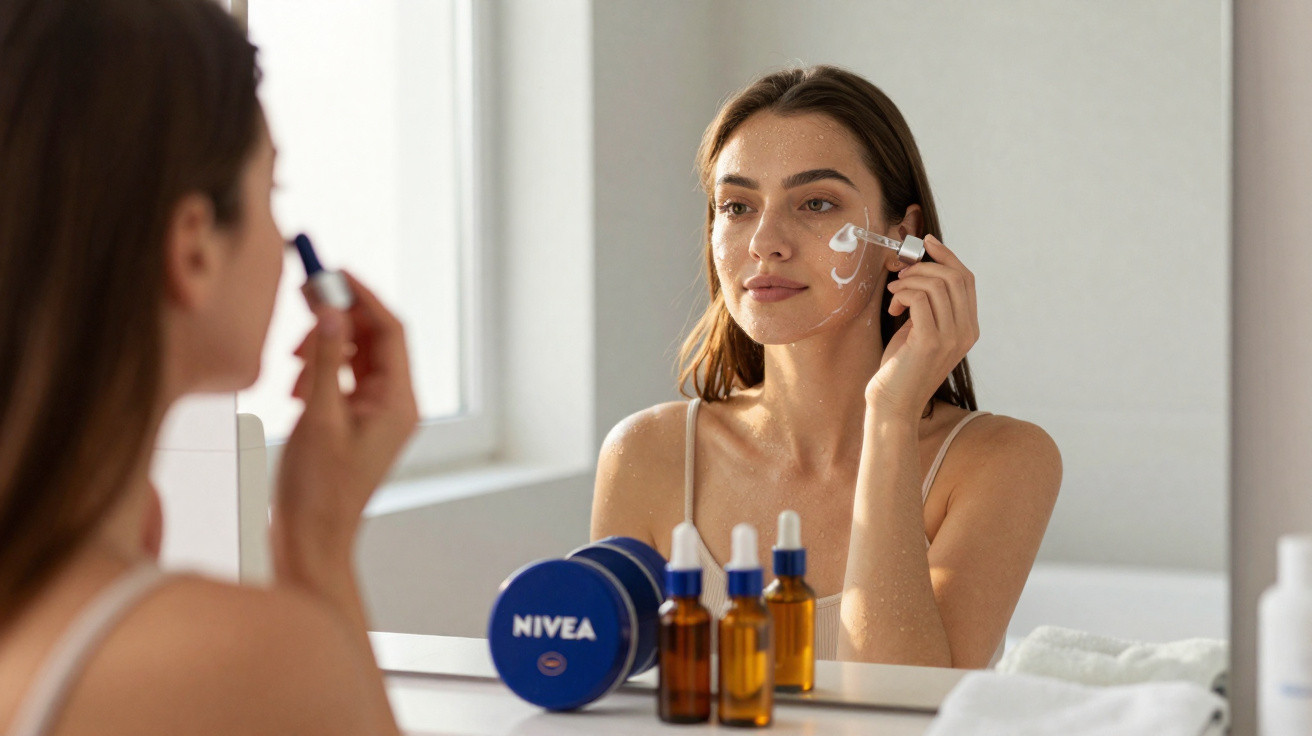
Can a simple, affordable high-street cream stand up to modern high-tech serums? That was precisely what a beauty editor set out to discover, applying the Nivea classic to just one half of her face for seven consecutive evenings. The other side followed her usual skincare routine – without the blue tin.
The bathroom staple: what is inside the famous blue cream?
For decades, the blue Nivea cream has been a fixture in countless bathrooms. Many people use it on their hands, elbows or dry patches of skin, while others still rely on it as an all-in-one face cream. Its biggest strengths are that it is rich, straightforward and available almost everywhere.
Its formula is based on a water-in-oil emulsion and includes, among other ingredients:
- Occlusive lipids that form a protective layer over the skin
- Glycerine, which draws in moisture
- Panthenol, which may have a soothing effect
- Waxes that give the cream its characteristically thick, creamy consistency
This particular blend is what makes the classic so flexible: it can serve as hand cream, care for rough knees, an after-sun treatment, a foot mask or a protective layer in cold, windy weather.
The experiment: Nivea on only one side of the face
The existing routine remained the same, with one crucial addition. Each evening, the steps were as follows:
- Thorough make-up removal followed by a double cleanse
- A serum for hydration and active ingredients
- Eye cream
- The usual night moisturiser over the entire face
- Nivea cream applied only to one side of the face as a thick final layer
The Nivea layer worked as a form of occlusion – effectively a “lid” over the skincare already applied. In trend terminology, this is called “slugging”: a technique in which a rich layer is intended to prevent moisture from evaporating.
“Even after the first few nights, the treated side of the face looked smoother, plumper and less dry – especially in the morning.”
The first days: noticeably more hydration on one side
After only a handful of applications, obvious differences appeared between the two halves of the face. By morning, the side treated with Nivea looked:
- visibly more hydrated
- smoother to the touch
- less dull and slightly more plumped up
The rich texture reduced the skin’s overnight moisture loss. Natural repair processes are especially active at night, but the skin also loses considerable water during this period. The cream’s occlusive film slows that loss and keeps the active ingredients beneath it in the skin for longer.
The effect was most noticeable in the usual dry areas, such as the cheeks and around the nostrils. Flaky patches appeared calmer, while fine dehydration lines were less prominent.
Limits of the experiment: when rich skincare becomes too much
The tester used this method for seven evenings in a row. By the end of the week, it became clear that, however impressive the hydration boost was, the technique is not suited to long-term daily use for every skin type.
In particular, the pores in the T-zone – the forehead, nose and chin – were more prone to congestion on the Nivea-treated side. Small blemishes appeared there that were absent from the other half of the face.
“Anyone prone to combination skin, oily skin or blemishes should use the Nivea mask trick carefully – and not every evening.”
The tester therefore considers the method an effective tool rather than an everyday routine. It can be used:
- once a week or every two weeks over the whole face,
- selectively on very dry areas only, such as the cheeks,
- or as an “emergency treatment” after a long flight or a winter walk.
Who is a Nivea overnight mask suitable for – and who should avoid it?
Dry and normal skin
People with dry or normal skin may benefit significantly from the effect. In these skin types, the skin barrier is often compromised, moisture is lost easily, and the skin can react sensitively to cold weather or central heating. The Nivea film can temporarily support the protective barrier.
Combination and oily skin
Those whose skin tends to shine and develop blackheads should proceed with caution. An occlusive layer can more effectively trap sebum residue, dirt and dead skin cells. If cleansing is not completely thorough, blemishes may develop more quickly.
For these skin types, it is worth treating only individual dry patches or using the cream as a mask that is removed again after an hour.
Sensitive or rosacea-prone skin
Sensitive skin often reacts less to rich lipids themselves and more to fragrance or preservatives. Anyone unsure should first patch-test the blue classic on a small area, such as the neck or jawline.
How to get the most from the blue Nivea tin
A few straightforward rules can help ensure that a Nivea overnight mask delivers benefits rather than triggering spots:
- Cleanse carefully: Remove all make-up, sun protection and dirt.
- Apply lightweight hydration underneath: Use a serum or gel cream first, then apply Nivea solely as the final step.
- Start with a thin layer: Test a smaller amount before applying a thick coating straight away.
- Take breaks: Do not use this technique every evening.
- Avoid the T-zone: With combination skin, treat only the cheeks and dry areas.
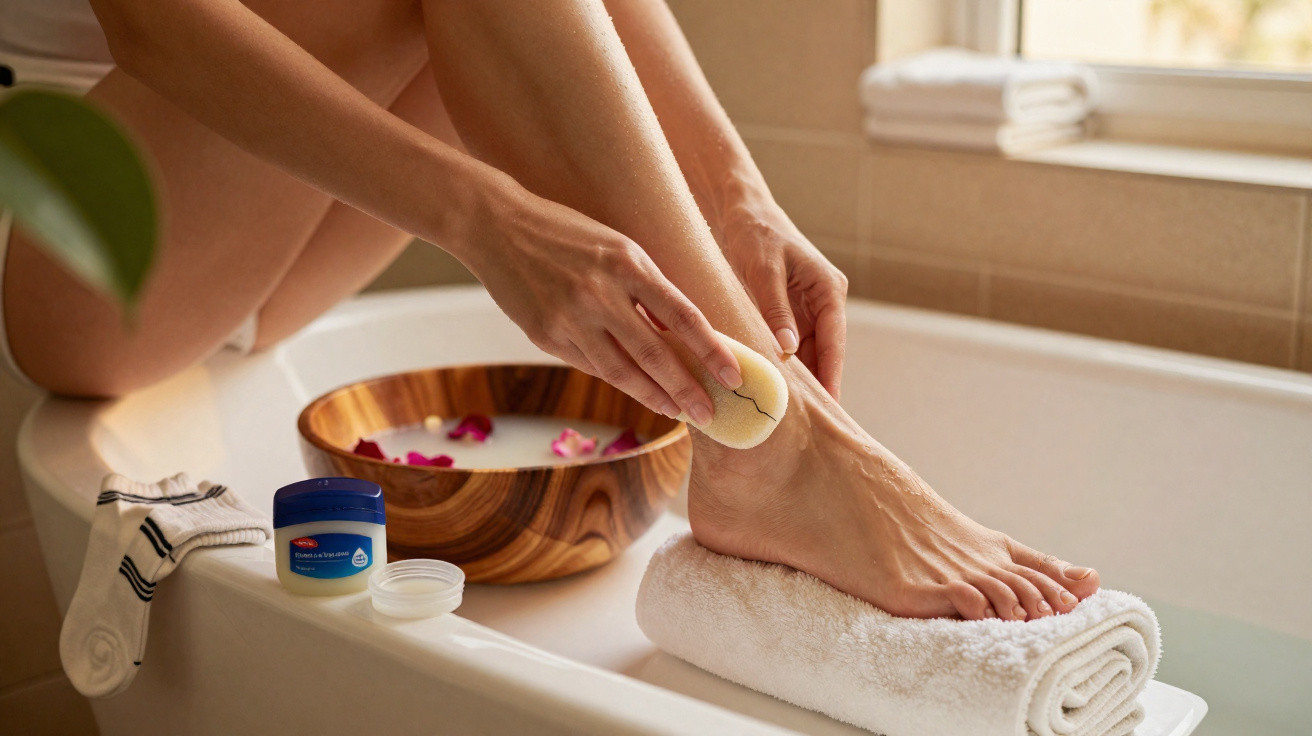
The blue classic can also be repurposed if desired: use it as a rich overnight hand or foot mask with cotton gloves or socks, as a protective film on chapped lips in a thin layer, or as protection against cold on a winter walk. For the latter, however, use it only during the day and apply sun protection underneath.
How slugging with Nivea actually works
The principle behind the trend is straightforward: a thicker, oilier layer seals in moisture, meaning the skin releases less water into the air. This is known as occlusive skincare. Many people use petroleum jelly or specialist balms for this purpose; in the test, Nivea cream performed that role.
Importantly, the occlusive layer adds very little moisture itself. Its primary purpose is to retain what is already present in the skin. The technique is therefore most effective when a good hydrating serum or lightweight cream has been applied beforehand.
What the test means for everyday skincare
After one week, the result was clear: classic Nivea cream can produce visibly noticeable results as an overnight mask on one half of the face. The skin looks plumper, smoother and less dehydrated. For ongoing nightly use across the entire face, however, the trick is better used selectively and tailored to the individual skin type.
For people with dry, stressed skin, the blue tin remains a surprisingly effective tool – provided it is used in sensible amounts and incorporated into a considered routine. Anyone who already has a tin in the cupboard has a simple way to test its effects more deliberately, without having to overhaul their entire skincare regime.



Comments
No comments yet. Be the first to comment!
Leave a Comment