
Candida auris is a yeast that takes up residence on human skin and hair and is notoriously hard to shift. Most people have never heard of it, yet hospitals often find they cannot wash it off.
That tenacity is what makes it dangerous. People who are colonised can pass it on to others, and they themselves may later face a high risk of a bloodstream infection. When those infections occur, they are fatal for 30% to 70% of patients.
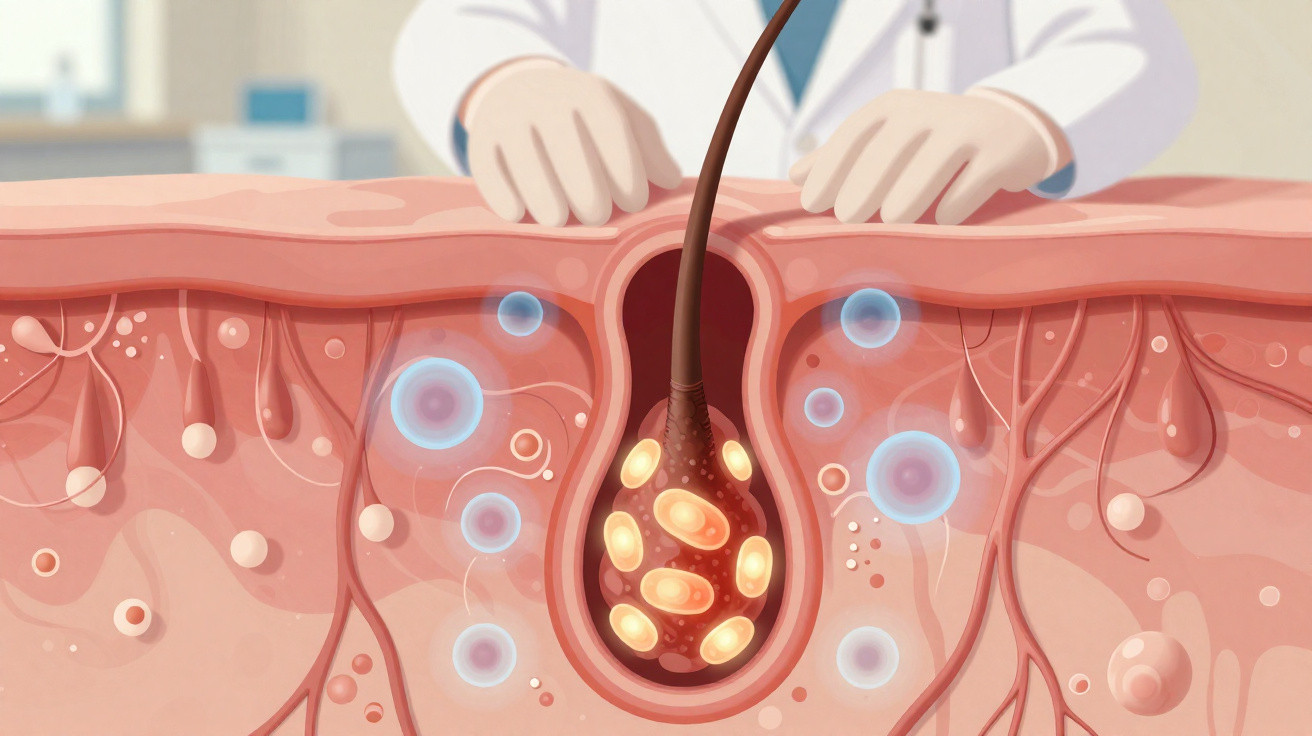
Scientists at the University of California, San Francisco (UCSF) have now pinpointed where this pathogen lurks and why the body struggles to remove it. The yeast can lodge inside hair follicles.
Hospital fungus spreads on skin
Although it was first identified in 2009, Candida auris has since appeared in patients on every inhabited continent. It can withstand multiple classes of antifungal medicines, and a small number of isolates are resistant to all available classes.
The worst impact is seen in hospitals and long-term care homes. Time and again, outbreak tracing returns to the same source: patients whose skin carries the yeast without any symptoms.
Both the CDC and the WHO rank it among the pathogens they monitor most closely. Despite that attention, there is still no dependable way to clear it from the skin of a colonised person.
Silent colonization spreads infection
Dean Merrill, an assistant professor in the UCSF Department of Dermatology, contributed to the study and answered questions from Earth.com.
“What makes Candida auris particularly challenging is that it can quietly colonize the skin for months without causing any symptoms,” Merrill said. “For most healthy people, that colonization may never cause a problem.”
When colonisation does become a problem, it is usually in people already in a hospital bed or living in a care home. Merrill noted that severe illness, central lines and catheters, surgery, and weakened immune defences can all give the yeast a route into the bloodstream.
Until this work, the reason the organism could linger for so long was mostly unclear. Researchers had identified only two fungal proteins that help the yeast adhere to skin at all.
Other studies had also pointed to an enzyme that enables the fungus to feed on carbon dioxide diffusing through the skin surface. Even so, it remained uncertain where on the body the yeast actually resides.
Hair follicles anchor the fungus
To investigate, the UCSF researchers tested Candida auris alongside its much better-known relative, Candida albicans, using shaved but uninjured skin on the backs of mice. Each yeast was applied in the same way.
After that, their behaviour diverged sharply. C. albicans disappeared within five days. C. auris remained detectable 30 days later, and repeated applications did not alter that overall pattern.
Thin tissue sections revealed the difference. Aggregates of C. auris cells were found inside hair follicles, attached to the hair shaft, the follicle opening, and the follicle cavity. By contrast, C. albicans was largely confined to the flatter surface.
A simple dish experiment reinforced this preference. When human hair fragments were incubated with each yeast, the fragments accumulated much more C. auris than C. albicans.
Hair, in other words, acts as an anchor. In colonised mice, about 30% of hair follicles contained C. auris yeast cells; removing the stubble with depilatory cream reduced this to roughly 10 percent. C. albicans never exceeded 5 percent.
Fungus evolved for life on skin
“What surprised us was how perfectly adapted C. auris appears to be for life on mammalian skin,” Merrill said.
“It binds directly to hair, preferentially colonizes hair follicles, senses skin-specific environmental cues, and remodels its cell wall in response to those cues to create a more favorable immune environment.”
Although the species was only recognised as a human pathogen about two decades ago, Merrill argues that such specialised traits point to a much longer period spent living on mammalian skin, potentially on a non-human host.
Immune response helps it survive
The skin typically combats fungi through a programme centred on a signal called IL-17. This signal recruits immune cells, thickens the barrier, and promotes antifungal peptides.
That approach is effective against C. albicans. Mice that lacked IL-17 were unable to clear the yeast, and their skin showed extensive damage.
For the response to begin, the signal must be received by keratinocytes-the barrier-building cells that also line each follicle. When mice had keratinocytes that could not recognise IL-17, the yeast similarly took over.
Candida auris triggered a very different reaction. Rather than provoking IL-17, it induced a type 1 response dominated by interferon gamma, a cytokine the body typically deploys against viruses and infected cells.
This was not limited to a single lineage. Clinical isolates representing four C. auris clades-from South Asia, East Asia, Africa, and South America-each pushed the skin towards the same interferon-driven response.
Hair follicles become a refuge
To determine where these immune signals were focused, the researchers created three-dimensional images of whole pieces of cleared mouse skin. The distribution was unexpectedly orderly.
Type 1 lymphocytes and a dendritic-cell subgroup known as cDC1 clustered around the upper section of each hair follicle. Cells that produce IL-17 were located elsewhere, in the dermis between follicles.
Following colonisation, the follicle-associated cluster became more prominent. The images captured yeast positioned at follicle openings, encircled by cytotoxic T cells, while helper T cells and dendritic cells pressed against the outer follicle wall.
Keratinocytes within follicles also showed they were responding. Stat1-a protein activated by interferon-increased markedly in those cells, and its level rose with the number of T cells adjacent to each follicle.
Hair follicles are not a neutral setting. They serve both as reservoirs for epithelial stem cells and as open conduits linking surface microbes to deeper tissue.
Interferon helps the fungus persist
These immune patterns would be less important if they eliminated Candida auris from the skin. Instead, the response appears to do the reverse.
Mice bred without interferon gamma carried much less C. auris. Mice engineered to produce extra interferon gamma carried far more, with yeast concentrated at hair follicle openings.
In otherwise normal mice, blocking antibodies produced the same reduction. A similar effect was seen when researchers removed the interferon receptor only from keratinocytes, indicating that barrier cells-rather than immune cells-are central to the mechanism.
Gene-expression readouts suggest why. Under interferon signalling, follicle keratinocytes reduced expression of genes linked to barrier repair and antifungal defence, while increasing stress responses and antigen-presentation programmes.
This profile inverted the response observed with C. albicans, which activates those same defence genes. IL-17 still restrained C. auris slightly, but interferon exerted a stronger influence in the opposite direction.
Fungus reshapes immune defenses
Merrill argues that the yeast is doing more than simply staying out of sight.
“Candida auris doesn’t simply evade the immune system, it appears to actively reshape how the immune system responds to it,” he said.
“We found that when C. auris encounters skin-like conditions, it remodels its cell wall and deliberately exposes much more of its own chitin.”
Chitin is the rigid sugar that strengthens fungal cell walls. For a long time it was regarded as a structural component hidden beneath the outer wall layers, rather than something a fungus might intentionally display.
Limits of the mouse study
All findings on persistence and immune signalling in this research come from mouse experiments. Because mouse skin has far more hair follicles than most human skin, the scale of the effect in patients remains uncertain.
The human evidence is also limited. It relies on C. auris binding to human hair fragments in a dish, rather than direct observations in colonised patients.
Interferon is not universally harmful either. In systemic infections, both interferon gamma and IL-17 can be protective against Candida, so broadly blocking either pathway would pose genuine risks.
“One finding that I think is especially interesting is that the same immune molecule can have completely different effects depending on where the fungus is located,” said Merrill to Earth.com.
In the bloodstream and deeper tissues, interferon gamma helps defend the host. In the thin outer layers of the skin, the team found the same pathway helps keep C. auris in place.
Hospital options and treatments
From a practical standpoint, the study highlights where on the body the fungus resides. If follicles act as the reservoir, areas with hair may warrant more scrutiny than sampling methods such as a fingertip swab.
It also changes how decolonisation should be viewed. Antiseptic washes primarily affect the surface, while yeast positioned within a follicle can sit below the reach of many such products.
Merrill emphasises that a dependable therapy to eliminate the yeast from skin is still several steps away, and the obvious candidates have not succeeded.
Echinocandins such as caspofungin are effective for many bloodstream infections. However, they do not penetrate the skin well and have never cleared colonisation.
There may be an additional drawback.
“Because echinocandins can trigger compensatory increases in fungal chitin, they may inadvertently reinforce one of the mechanisms that promotes persistent skin colonization,” warned Merrill.
New targets for treatment
For drug developers, the challenge persists even as new antifungal compounds advance through testing. Resistance in this species is already extensive and continues to expand.
The study also provides a potential target that was previously missing. Interferon signalling in follicle keratinocytes functions like a lever, and reducing it locally is not the same as suppressing the pathway throughout the body.
Merrill notes that approaches aimed at chitin synthesis or broader cell-wall remodelling are already being explored. Alternatively, the immune response itself could be adjusted.
Reducing the type 1 pathway in a localised way, or strengthening IL-17 barrier immunity, might shift conditions towards clearance, though Merrill stresses that both ideas remain speculative.
A broader question is whether other fungi use similar tactics. “Our work suggests that fungi may regulate which components of their cell wall they expose depending on the environment they’re in,” Merrill said.
None of this constitutes a treatment yet. But it does offer a clearer map of where the organism resides and which host responses make that niche hospitable-more insight than clinicians have previously had into a yeast that hospitals have been unable to scrub away.



Comments
No comments yet. Be the first to comment!
Leave a Comment