
The orthopaedic waiting room carried a faint scent of disinfectant and ageing magazines. A woman in leggings massaged her knee through the material as she scrolled on her phone, while an older man adjusted himself in his seat, grimacing whenever he moved his leg. Once the doctor called them through, the response felt predictable before it was even delivered: “You should try swimming. Maybe some Pilates.” They nodded politely, took the leaflet, booked a class they would cancel twice, and went home with the same knee, the same pain and the same sense that something had been overlooked.
What if the answer is not in a swimming pool or exercise studio after all?
The quiet activity knee experts whisper about, not shout
Speak privately to several experienced physios and many will acknowledge the same point. The activity that frequently benefits knees most is not Pilates or swimming, but straightforward, unglamorous strength training. This is not bodybuilding or gym selfies; it is progressive, targeted exercise that provides genuine support for the legs and hips.
It may not appear “gentle”, but it can quietly transform how your joints cope.
Sophie, a 43-year-old runner I met, had given up jogging after her doctor diagnosed “runner’s knee”. She worked through the usual options: aqua aerobics, yoga and lengthy walks. They calmed her mentally, yet every staircase still felt like a difficult bargain.
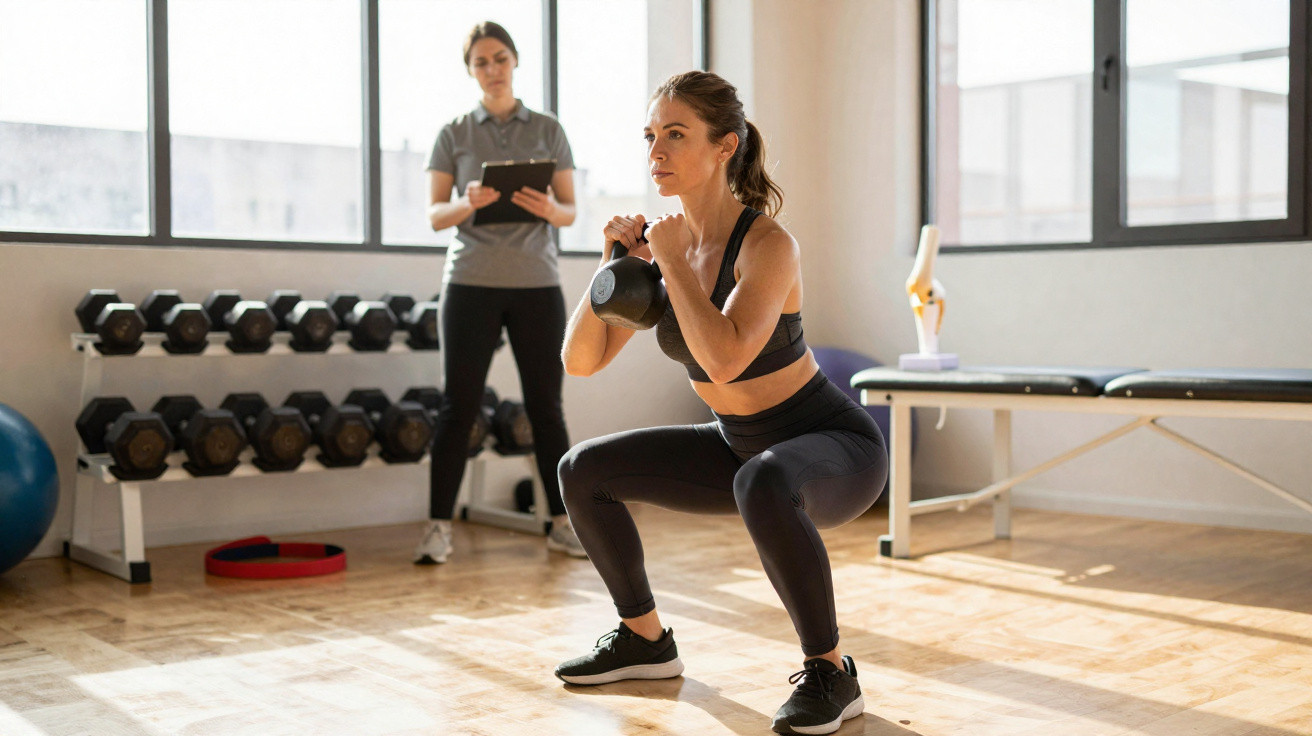
Her situation changed only when a young sports physio said, almost apologetically, “We’re going to load your legs. Squats. Deadlifts. Step-ups.” She laughed, then panicked, and then gave it a go. Three months later, she was climbing Underground station stairs focused on her podcast rather than her patella.
Why does this idea provoke some therapists and trainers? It disrupts an established comfort zone. For years, the prevailing message for knee pain has been “low impact, low load, be careful”. Swimming pools, exercise bikes and stretchy bands all sound safe. They reassure insurers and seldom alarm patients.
But the knee is a hinge positioned between the hip and ankle, relying on the strength and coordination of the structures around it. If that support system is weak, each step becomes a negotiation. Load, done right, is not the enemy of your knee. It’s the language your tissues understand.
How to actually use strength training when your knee already hurts
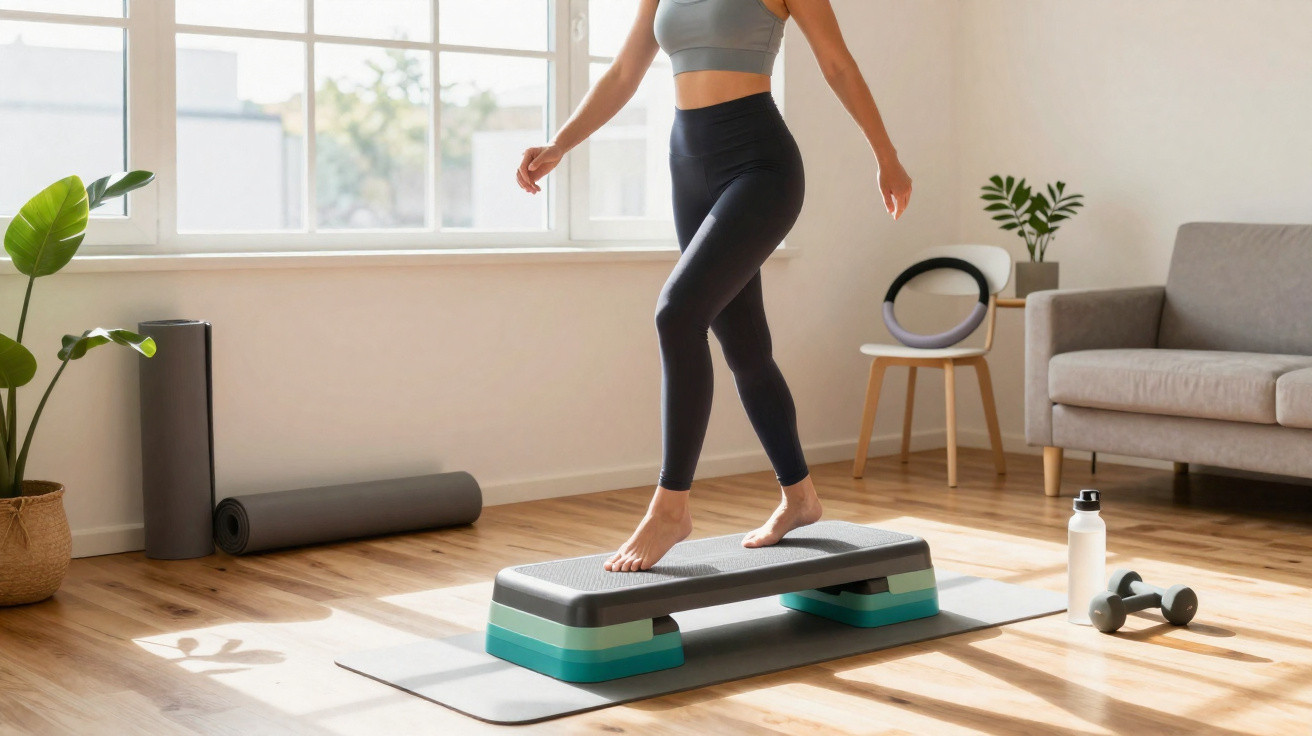
The answer is not to put yourself under a barbell on your first day. Begin by selecting exercises that work the muscles above and below the knee without sending a sharp bolt of pain through the joint. Keep it basic: slow chair sit-to-stands, mini-squats while holding a kitchen worktop, step-ups onto a low step and glute bridges on the floor.
Do one or two sets two or three times weekly, at an intensity that feels demanding without being punishing.
People usually make one of two mistakes: they do absolutely nothing, or they do far too much far too soon. Most of us know that moment when the knee feels slightly better and we decide to jog 5 km “to test the knee”. That is usually when it makes you pay.
Tissues adjust gradually, and your brain requires time to stop treating every load as a danger. Increase repetitions or weight steadily, remain just below the point where symptoms flare up, and do not race beyond it.
“Patients are told to protect their knees so aggressively they end up de-training everything that could protect them,” a frustrated physical therapist told me. “Then they’re sent back with a pool program and a prayer.”
- Choose controlled movements that account for pain instead of pursuing “no pain at all”.
- Prioritise the hips and thighs: the quadriceps, hamstrings and glutes take on much of the knee’s workload.
- At the start, use outside support - a chair, handrail or wall - so that you feel secure as confidence develops.
- Advance only one factor at once: slightly more weight, several extra repetitions or a marginally deeper bend.
- Do not obsess over videos demonstrating flawless technique; consistent, “good enough” reps beat heroic, rare workouts.
Why this makes some professionals uneasy – and why your knee doesn’t care
There is an awkward truth behind the scenes: gentle activities are easier to sell than difficult realities. People enjoy the thought of floating in a pool, stretching on a mat or “activating” small muscles with pastel resistance bands. Strength training seems heavier, more old-fashioned and less suited to Instagram. It also challenges a whole ecosystem of cautious, reassuring advice.
Your knee, however, does not read Instagram captions. It responds only to load, repetition and time.
Some therapists worry they will be blamed if a patient’s symptoms worsen after beginning strength work. Others trained during a period when rest and protection were the rule. That legacy still influences treatment plans, even though recent research repeatedly indicates that carefully loaded exercise often outperforms passive treatments. Let’s be honest: nobody really does this every single day.
Yet training two or three times a week with a plan will often achieve more than months spent floating and hoping.
So what does this mean for you, limping downstairs while trying to reconcile advice from Google, friends and rushed doctors? It means finding a position between courage and caution. You do not have to become a gym person, wear perfect leggings or have a coach shouting motivational clichés. You need a quiet space, something firm to hold, and a readiness to load your legs a little more than you did yesterday.
The discomfort some therapists feel is genuine because the approach reverses the usual story: you are not a fragile joint requiring protection for ever. You are a whole body that can become stronger.
| Key point | Detail | Value for the reader |
|---|---|---|
| Strength beats “gentle only” | Focused strength training for the hips and thighs often eases knee pain more effectively than endless low-impact cardio | Offers a practical route to restoring function rather than only short-term relief |
| Start small, progress slow | Start with chair stands, mini-squats and low step-ups, then build intensity gradually | Lowers fear of injury while helping prevent painful flare-ups |
| You’re not fragile | The knee adapts to sensible loading, rather than lifelong rest and protection | Restores confidence in your body and everyday movement |
FAQ:
- Question 1 Can I do strength training if my knee already hurts a bit?
- Answer 1 Yes, provided the pain remains manageable and does not rise sharply during or after the session. Work at a “tolerable” level that settles within 24 hours, and avoid movements that produce stabbing pain or locking sensations.
- Question 2 What if I don’t have access to a gym?
- Answer 2 You can complete many exercises at home: chair sits, wall squats, stair step-ups, glute bridges and calf raises using body weight alone. Later, simple weights such as water bottles or backpacks can be added.
- Question 3 How often should I train for knee pain improvement?
- Answer 3 Two to three strength sessions each week are generally sufficient. Your joints need rest days to adapt, so heavy daily training is unnecessary and may even hold you back.
- Question 4 Is swimming or Pilates useless for knee pain?
- Answer 4 No. Both can support mobility, circulation and overall fitness, and some people genuinely enjoy them. The problem arises when they replace all meaningful strength work rather than complement it.
- Question 5 When should I see a doctor or specialist instead of training alone?
- Answer 5 Seek a medical assessment if your knee locks, gives way, swells dramatically, pain wakes you at night, or symptoms follow a serious fall. A proper diagnosis can exclude problems needing more than exercise alone.




Comments
No comments yet. Be the first to comment!
Leave a Comment