
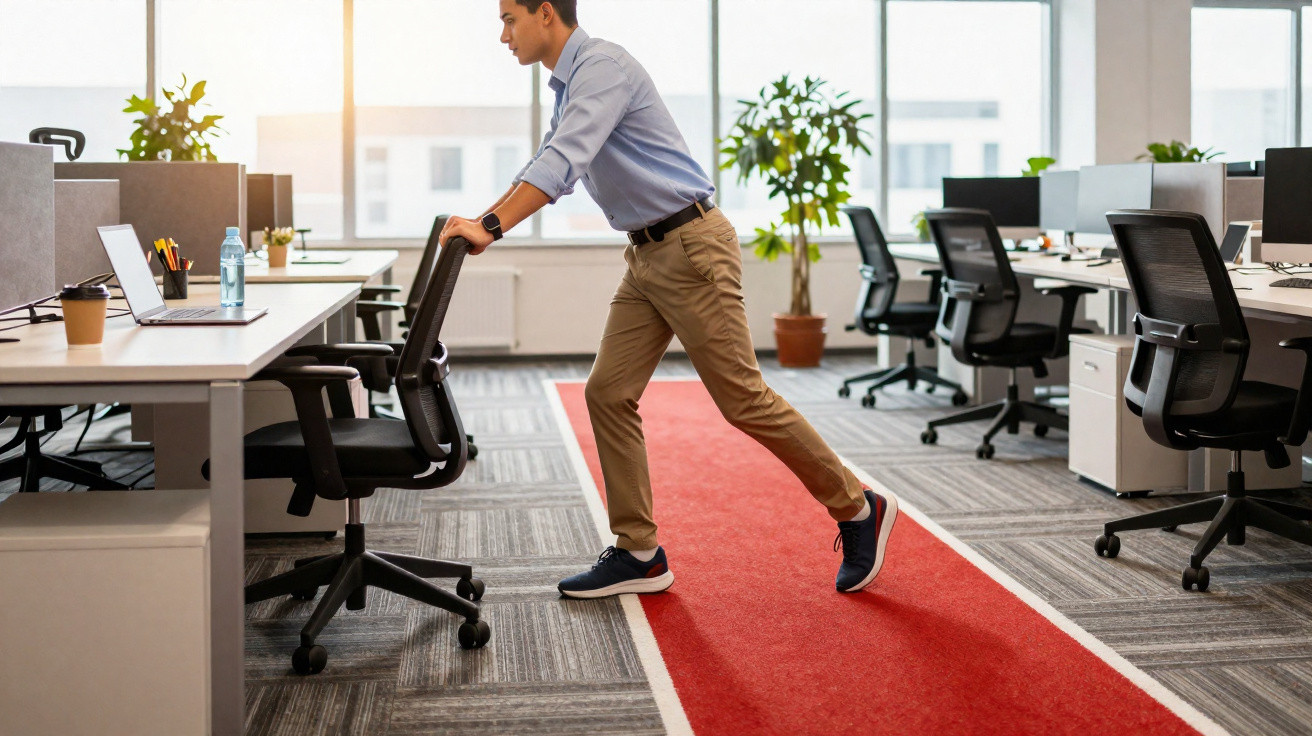
Strength training, running or walking remain essential for health, but a workout session does not automatically make eight hours spent sitting consequence-free. Sedentary time and physical inactivity are connected issues, but they are not the same thing. Evidence suggests that high levels of exercise can substantially reduce the risks linked to sitting for many hours; however, the most comprehensive approach is still to combine regular training with brief breaks from being still.
Why is sitting different from simply not exercising?
Sedentary behaviour refers to waking time spent sitting, reclining or lying down with very low energy expenditure. In practice, someone may complete a morning workout yet still build up many sedentary hours while working at a computer, driving or watching television.
Over these lengthy spells, the large muscles in the legs do very little and energy expenditure falls. This is why researchers have begun examining sitting time separately from exercise participation.
- Working out does not necessarily mean spending little time sitting;
- An active person may have a highly sedentary job;
- Walking around the home also breaks up sedentary behaviour;
- Light activities count when they replace time spent sitting;
- Structured exercise and everyday movement have complementary roles.
Can an hour at the gym offset eight hours on a chair?
The answer is more nuanced than a straightforward no. Large observational analyses suggest that around 60 to 75 minutes a day of moderate physical activity can greatly weaken the association between prolonged sitting and higher mortality. It is therefore wrong to say that exercise cannot offset anything at all.
Why can breaking up sitting time also help?
Brief interruptions reactivate the muscles and temporarily raise energy expenditure and blood flow. Experimental studies show that breaking up long sitting periods with light walks or other activities may improve metabolic and vascular responses within the day itself.
There is no need to turn the office into a gym. Simply standing up regularly already cuts down the total time spent in the same position.
- Take a short walk during a break;
- Stand up to get some water;
- Make phone calls standing when possible;
- Take the stairs for short journeys;
- Alternate seated tasks with activities that require movement.
Is there an exact number of minutes someone can sit for?
No. International guidance advises adults to limit sedentary behaviour and replace some of that time with physical activity of any intensity, but it does not set a universal threshold such as six, eight or ten hours. The evidence does not yet allow for one figure that applies to everyone.
- Cut down sitting time whenever practical;
- Replace part of it with light movement;
- Keep doing aerobic exercise regularly;
- Include strength training during the week;
- Do not treat a workout as permission to remain inactive for the rest of the day.
The best strategy is not choosing between exercise and getting up from the chair
Both measures work together. Moderate and vigorous physical activity brings important benefits for the heart, muscles, cardiorespiratory fitness and metabolism, while reducing sitting time increases the amount of movement spread across waking hours. The longer a person's sedentary time, the more important it becomes to maintain high levels of physical activity.
That is why eight hours at a desk need not be viewed either as unavoidable harm or as something that an evening run simply erases. The most favourable pattern combines structured training, walking, everyday tasks and chances to stand up during work. Rather than concentrating all movement into 45 minutes and staying still for the remainder of the day, the aim is to make exercise part of a routine that also includes movement between one session and the next.





Comments
No comments yet. Be the first to comment!
Leave a Comment