
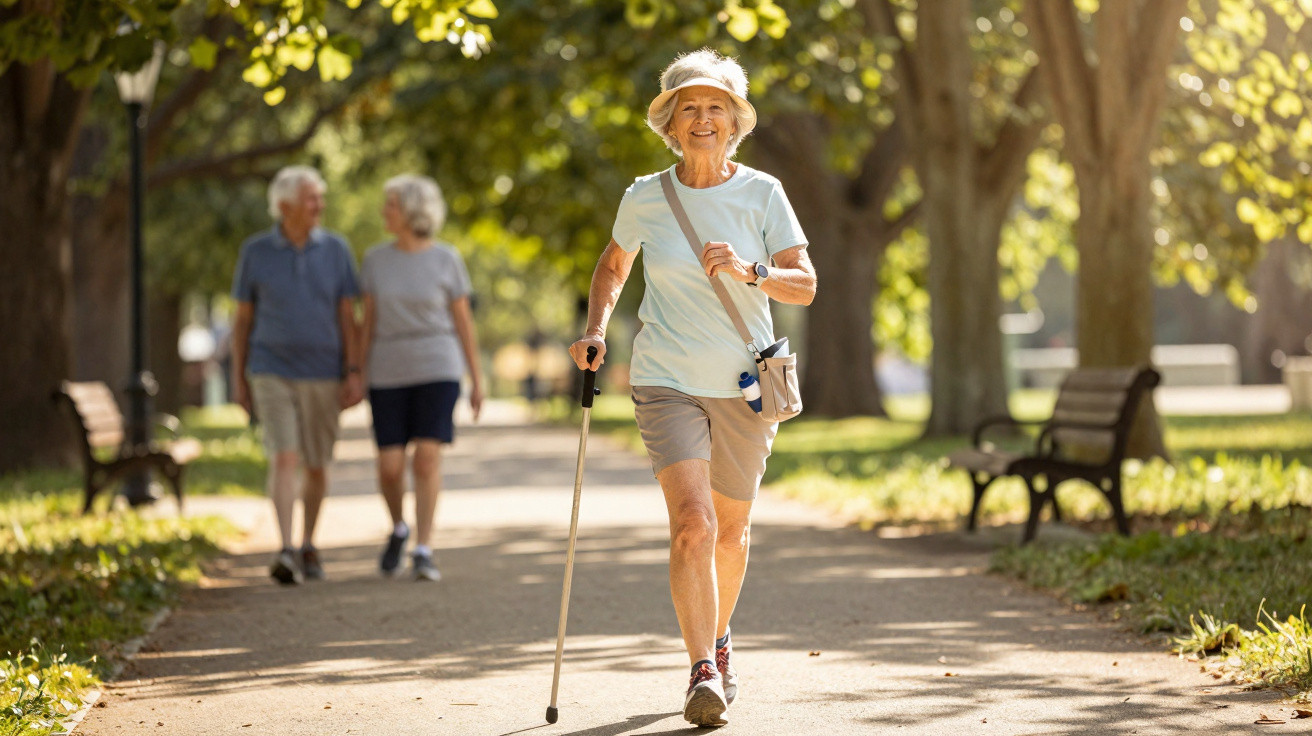
Walking after the age of 70 can be one of the most straightforward ways to maintain mobility, strength and independence. According to personal trainer Rafael Hidalgo, people over this age can begin to gain benefits by walking for 20 to 30 minutes on around 5 days each week. Consistency matters more than intensity.
Why does walking after the age of 70 work so well?
Walking is particularly effective because it engages the legs, glutes, abdominal muscles and postural muscles without placing the body under heavy impact. For anyone experiencing stiffness, reduced fitness or a dislike of the gym, walking at a comfortable pace can be an initial way to rebuild confidence in their body.
After the age of 70, moving regularly can help preserve the ability to climb stairs, rise from a chair, carry light shopping and leave the house more safely. These may seem like minor actions, but they are closely connected to everyday independence.
How much walking time makes a difference?
The guideline of 20 to 30 minutes, 5 times a week, brings a routine close to the 150 weekly minutes of moderate activity recommended for older adults. There is no need to start with long routes. What matters most is maintaining the habit throughout the week and matching the pace to your breathing.
- Beginners can start with 10 to 15 minutes, then build up gradually.
- Those who already walk can aim for 20 to 30 minutes per session.
- The pace should allow a brief conversation without severe breathlessness.
- Short breaks are acceptable, particularly at the beginning.
- Chest pain, dizziness or unusual tiredness require an immediate stop.
Once walking feels comfortable, some sessions can be extended to 40 or 60 minutes. This progression should happen gradually, without turning a safe activity into excessive exertion.
How does walking support the heart, muscles and brain?
Regular physical activity improves circulation, stamina and body-weight management. Walking can also support sleep, mood and cognitive function, especially for someone moving away from a highly sedentary lifestyle. These benefits arise because the body receives frequent stimulation, even without demanding training.
For the muscles, walking helps retain functional strength. Every step calls for balance, coordination and trunk stability. Over time, this may make walking feel more secure, improve posture and lessen the fear of falling during everyday journeys.
What precautions make walking safer?
Walking should be uncomplicated, but it still requires care. Comfortable footwear, hydration, a level route and awareness of the weather all matter. On very hot days, it is best to go out early in the morning or later in the afternoon. Uneven surfaces raise the likelihood of tripping.
- Wear trainers with good grip and cushioning.
- Choose level streets, firm pavements or well-lit parks.
- Take water if the route is long or the weather is warm.
- Keep an upright posture and allow your arms to move naturally.
- Avoid walking alone in isolated or slippery places.
Anyone with heart disease, frequent shortness of breath, significant joint pain or a recent history of falls should speak to a healthcare professional before increasing the amount they walk. Safety must come before a target number of minutes.
Why should strength and balance also be part of the routine?
Walking greatly improves endurance, but it does not replace every type of stimulus needed for healthy ageing. Simple strength exercises, such as sitting down and standing up from a chair, stepping onto low steps and using light resistance bands, help maintain the muscles that support the knees, hips and spine.
Balance also needs attention. Standing on one leg for a few seconds with support close by, walking in a straight line or practising movements guided by a physiotherapist may lower the risk of falls. Combining walking with strength and balance work protects independence more effectively than simply increasing step counts.
A regular habit matters more than an isolated effort
Walking is effective because it fits into everyday life. It can be done close to home, in a park, along a block’s corridor or in a shopping centre when the weather is unsuitable. For someone over 70, being able to repeat this movement 5 times a week already provides valuable stimulus for the heart, muscles and mobility.
The aim is not to compete with anyone or reach a perfect number of steps. The best outcome comes from a routine that respects personal limits, avoids pain and keeps the body active. With 20 to 30 minutes spread well across the week, walking becomes more than a stroll: it is a practical tool for ageing with greater independence.





Comments
No comments yet. Be the first to comment!
Leave a Comment