
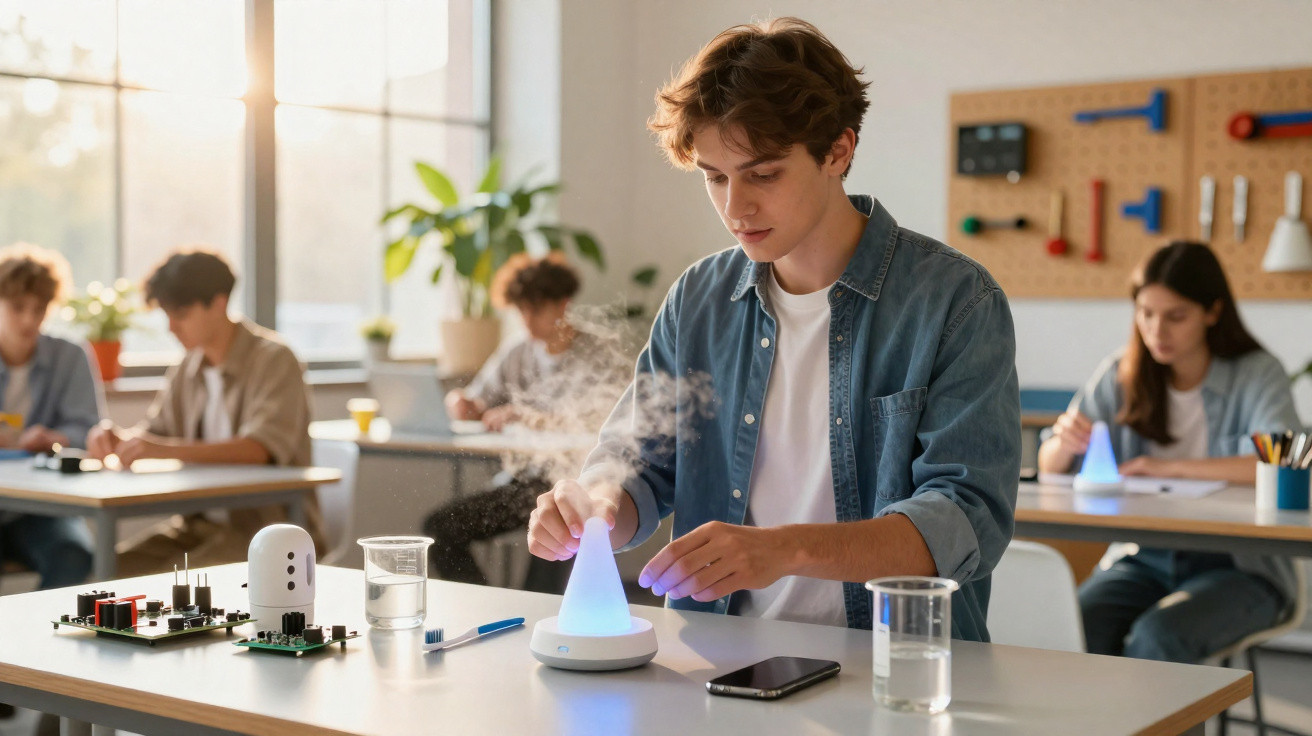
No lab coat. No investors in tailored suits. Just a chipped basin and a bathroom mirror still hazy from last night’s shower. She opens an app on her phone and taps once. A green light flashes, then a tiny figure appears on the screen. Her flatmates snigger, then crowd closer. Within a minute, nobody is laughing.
That’s the moment a low‑cost “smart hygiene” sensor - assembled from the kind of components you’d expect in a hobby electronics kit - began its unlikely route from a shared flat to worldwide headlines. It was a prototype designed to monitor bacteria, moisture and usage in real time… from your toilet paper and the surfaces around it.
On a flimsy plastic shelf above the loo, something quietly radical had just arrived.
A student, a roll of toilet paper, and a billion‑dollar blind spot
Most of us assume breakthroughs come out of gleaming tech labs, not a bathroom where the door barely shuts. And yet this story starts in exactly that sort of place: with a student irritated by how little we truly understand about the spaces we rely on to feel clean.
Her premise was almost offensively straightforward. Hygiene products - toilet paper, wipes, pads, soap - are used by billions every day, but they’re hardly ever measured. They vanish without a trace. No data. No feedback. Only routine and marketing claims. So she asked a question that sounds nearly impolite: What if the bathroom could quietly tell us when things are actually clean - and when they aren’t?
It feels theoretical until you remember how much faith we place in a roll of paper to shield us from some of the grimiest surfaces we touch.
The little device she built clips onto a standard toilet‑roll holder or any flat surface. It doesn’t film, record audio, or monitor individuals. Instead, it samples humidity, temperature, and the microscopic residue left on the paper and nearby areas - then converts that into a simple “hygiene score” inside an app.
In an early trial, her team installed the device in a shared student bathroom ahead of a party. By midnight, the hygiene score had fallen by 73%. The roll had been splashed, handled too much, and kept right next to the toilet brush. No one had clocked it. The following morning, cleaning that “looked fine” still left high bacteria indicators on the dispenser and the door handle.
No lecture was required. Those numbers alone changed behaviour: how people stored the roll, where they put soap, and even how often they aired the room. A tiny sensor had turned an invisible risk into something uncomfortably obvious.
Public loos were harsher still. In a small field study with a local café, the student captured hundreds of readings across two weeks. The paper was often compromised hours before closing, particularly on rainy days when humidity climbed. Staff genuinely thought they were doing everything “right”. The data pointed to a very different reality.
Under the tidy idea is a fairly rational sequence. Most hygiene brands battle over softness, scent, price, or branding. Hardly any compete on what happens after the product leaves the shelf. This invention goes straight at that blind spot.
On the technical side, the device combines off‑the‑shelf environmental sensors with a simple fluorescence system that reacts to organic residues on nearby fibres. Alongside anonymised usage patterns - how quickly the roll shrinks and how the score shifts over time - it creates a live picture of how “clean” that micro‑zone of your bathroom is likely to be.
It isn’t perfect science; it’s pattern recognition. But for soap makers, tissue giants and cleaning brands, those are precisely the patterns they’ve never been able to see: real‑world hygiene behaviour, minute by minute, roll by roll. For parents of toddlers, carers, or people with fragile immune systems, an early warning like that can feel less like a gimmick and more like a quiet safety net.
From student gadget to everyday habit: the smart hygiene sensor in your bathroom
What’s clever here isn’t just the measurement - it’s the nudge. Rather than bombarding users with dense charts, the app runs on a traffic‑light system. Green: fine. Orange: ventilate or clean that surface. Red: move or replace the roll, or wipe the area now.
The student quickly discovered that small, precise prompts beat vague guidance every time. So instead of “clean the bathroom more”, the app says things like: “Move your roll away from the splash zone” or “Your dispenser area has stayed damp for 6 hours - wipe and dry it.” One actionable step at a time.
As people respond, the system adapts. If you routinely deal with an orange alert by opening a window, the app can detect that your hygiene score rebounds faster on windy days. It may then recommend airing the room before guests arrive - while the roll is still “clean” - instead of reacting afterwards.
What surprised the team most were the emotional patterns. In a small beta across 50 homes, many parents checked the app late at night, right after changing a nappy or caring for an ill child. They weren’t fixated on cleanliness; they wanted reassurance. A simple green light meant going back to sleep with one less invisible worry buzzing away.
We rarely acknowledge the mental load of hygiene: the background pressure of looking after ageing parents, immunocompromised partners, or a newborn who seems to catch every bug. A tool that quietly says “You’re doing okay - this spot really is safe enough” doesn’t only reduce germ risk; it also softens that hidden weight.
Let’s be honest: nobody truly disinfects the flush handle every day.
There is a downside, though: turning hygiene into a points chase. Some testers started hunting a perfect 100/100 score, cleaning until midnight. That isn’t the intention. The team has since begun building “good enough” bands into the system, reminding users that life is messy - and that safe doesn’t have to mean sterile.
“The most surprising feedback wasn’t from tech people,” the student told us. “It was from a nurse who said, ‘If my patients’ families had this at home, some of our infections might never start.’ That’s when I realised it wasn’t just a geeky project. It was a small piece of peace of mind.”
To stop it feeling like yet another nagging app, the interface stays deliberately minimal: no public leaderboards, no social feed, no shame. Just quiet data you can check when you choose. That simplicity also underpins how the student wants the business to scale: licensing the sensor and anonymised insights to hygiene brands and facility managers - not selling your family’s habits.
- Key promise: turn invisible bathroom risks into clear, simple signals - without cameras or microphones.
- Who could benefit most: families with young children, carers, shared flats, small cafés, schools, and clinics.
- Hidden shift: from “I think this is clean” to “I know roughly how safe this really is, right now.”
Millions of users, silent data, and a new hygiene culture
Picture this device - or something similar - quietly fitted to toilet‑paper dispensers in airports, schools, co‑working spaces and stadiums. No flashy displays; just a tiny light that cleaners glance at as they pass. Green? On to the next cubicle. Orange or red? This one needs attention.
For facilities teams, that single change rewrites the playbook: cleaning based on real‑time need, not rigid timetables that ignore what’s actually happening. Less wasted product and labour in spotless stalls, and more effort spent where the traffic really is. A dull plastic holder suddenly becomes a live sensor for human flow.
At scale, hygiene brands get something they’ve never truly had: behavioural X‑rays. Not identities, but the anonymised how and when of paper, soap and sanitiser use. Where rolls empty quickest. When moisture hangs around too long. Which dispenser designs trigger fewer “red” alerts.
Used responsibly, that kind of information could lead to better products and smarter environments: shorter routes from sink to paper, materials that don’t hold damp, packaging that makes it obvious when something’s been compromised.
Used carelessly, it could just as easily become another engine for over‑marketing and anxiety. That tension will shadow this student’s invention wherever it lands.
There’s a cultural after‑effect too - harder to quantify, but already obvious among early adopters. People begin questioning old habits: spare rolls under the sink, pads stacked on the cistern, wipes kept right by the splash zone. Those choices were built on convenience, not evidence.
Once you’ve watched the data spike around a badly placed roll, you can’t really unsee it. In a small campus trial, students shifted the paper further from the toilet and closer to the door. Within days, average hygiene scores rose. Nobody sat through a workshop. They simply reshaped their routines around a new feedback loop.
On the personal side, something more subtle can happen. One father testing the device at home messaged the team: “For the first time, I can show my son a number instead of just saying ‘wash your hands better’. It turned our arguments into a kind of game we can play together.”
At a societal level, that move from abstract rules to tangible feedback is powerful. Not everyone will want - or need - a sensor in their bathroom, and that’s fine. But once the idea exists, it’s difficult to put it back in the box. Hygiene stops being only about trust and tradition, and starts edging towards live evidence.
On a campus not unlike yours, a student took one of the most ordinary objects we own - a toilet roll - and made it into a data point. Quietly, almost shyly. No glossy campaign. No viral launch. Just a blinking sensor on a wonky holder and a number on a budget smartphone.
That number is about to travel. Into hospital corridors where infections spread without notice. Into trains and planes where thousands share the same tight space for hours. Into homes where one cold can trigger weeks of stress and time off work. And into the boardrooms of hygiene giants still guessing what people really do behind closed doors.
We all recognise that moment when a small object changes how you see a whole part of your life - a Fitbit for your steps, a smoke alarm for your ceiling. This bathroom sensor could be next.
You may never install one. You might wait until your office, your child’s school, or your favourite café quietly adopts something similar. Either way, the concept is loose now: our hygiene habits no longer have to stay invisible.
Next time you reach for that familiar roll, you might pause - just briefly - and wonder what it would say if it could talk.
| Key point | Detail | Why it matters to you |
|---|---|---|
| Smart hygiene sensor | Clips onto toilet‑paper holders or surfaces, tracking humidity, residue and usage | Gives a concrete picture of how “safe” your bathroom zone really is |
| Traffic‑light feedback | Clear green/orange/red scores with specific prompts rather than vague advice | Helps you change one small habit at a time, without drowning in data |
| Impact at scale | Potential use in homes, cafés, schools, hospitals and public toilets worldwide | Makes everyday spaces cleaner, smarter and less stressful for millions of users |
FAQ:
- Is the device filming or recording me in the bathroom?
No. It only measures environmental data (humidity, temperature, residue on nearby fibres) and roll usage - not people.- How does it “know” if something is dirty?
It uses sensors and a fluorescence reaction to detect patterns linked to moisture and organic residues, then translates that into a hygiene score.- Can my landlord, boss or school see my personal bathroom habits?
The system is designed to aggregate anonymised patterns, not track individuals. What matters is the cubicle or dispenser, not who used it.- Will this make me paranoid about cleanliness?
It can, if you chase perfect scores. The creators aim for “good enough” ranges and gentle prompts so it supports you instead of stressing you.- When could something like this reach my home or workplace?
Early pilots are already happening in shared spaces. Mass‑market versions will likely come via hygiene brands, facility managers or smart‑home bundles over the next few years.

Comments
No comments yet. Be the first to comment!
Leave a Comment