
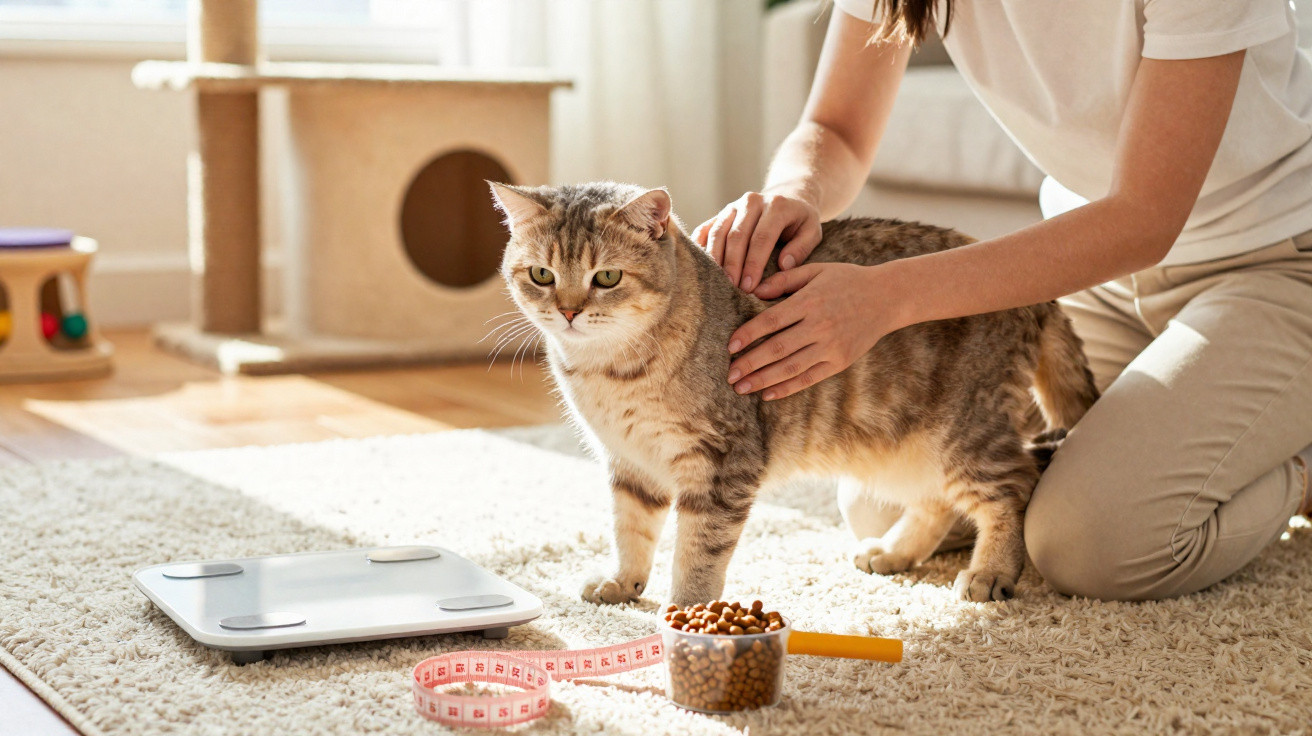
After neutering, many cats put on weight quietly but steadily - and it often goes unnoticed until the first health issues appear.
Having your cat neutered protects them from unwanted litters and can reduce the risk of certain illnesses. At the same time, their metabolism changes noticeably. Many owners only realise late on that their pet is becoming overweight. By then, joints, the heart and internal organs may already be under strain. A few focused routines can stop this happening.
Why neutered cats gain weight so easily
After neutering, a cat’s energy requirement typically drops by around 20 to 30 percent. In other words, they burn far fewer calories even though they look and act much the same on the outside. At the same time, many cats become hungrier, beg more, and are generally more relaxed.
“Neutering changes the hormone balance: energy use drops, but hunger remains - a risky combination for the waistline.”
If you don’t adjust the food amount, a calorie surplus can build very quickly. Just a few extra grams per day can add up over the months to several hundred grams of fat. This gradual change often only becomes obvious once the belly is already clearly rounded.
Early physical signs of overweight
Rib check with your hand
The simplest way to assess body condition is to feel the ribs. With a flat hand, stroke along the sides of your cat’s chest.
- Healthy weight: the ribs are easy to feel without pressing hard.
- Early overweight: the ribs feel cushioned; you need a bit of pressure.
- Clear overweight: the ribs are barely palpable or not palpable at all.
This quick check takes only seconds and gives a surprisingly reliable picture - no scales required.
View from above: does your cat still have a waist?
Stand behind your cat and look down at their body. A healthy cat shows a slight inward curve behind the ribcage. If that “waist” has disappeared completely, or the area even bulges outwards, excess fat is usually involved.
The belly is revealing too: if a wider, soft-looking sag sways under the body, that often points to fat deposits. A small, fold-like pouch can be genetic; a round, heavy belly usually is not.
Behaviour: is your cat getting more and more sedentary?
Extra weight reduces energy. Cats that are gaining weight often show a few familiar shifts:
- they chase toys for much shorter periods, or stop altogether,
- they sleep longer and more often,
- the typical short “mad dashes” around the home happen less frequently.
If behaviour changes very suddenly or dramatically, a vet should always check whether another condition is involved.
Mobility and grooming start to decline
Another early clue is that your cat seems clumsier. They may no longer jump as confidently onto the back of the sofa, misjudge a leap onto the scratching post, or avoid higher furniture that used to be easy.
Weight gain also shows up in grooming. If your cat can barely lick their back or the area at the base of the tail, they are either very stiff or too round - often both. Matted patches or greasy fur in these zones are warning signs.
Regular weighing provides clarity
If you want to be sure, weigh your house cat about once a month. You can do it without a vet visit:
- Stand on bathroom scales holding your cat and note the weight.
- Weigh yourself alone.
- Subtract the second number from the first - the result is your cat’s weight.
If the number creeps up over several months, it’s time to act. Even a gain of 200 to 300 grams can be significant for a 5 kg cat.
Adjusting food: fewer calories, same satisfaction
Gradual reduction after neutering
When you bring home a newly neutered cat, avoid cutting their food sharply overnight. Instead, reduce the portion slowly over two to four weeks until it’s about a quarter less than the previous amount.
This gives the body time to adapt to the new situation. Sudden, strict restriction often leads to intense begging, frustration, and sometimes even food stealing from the kitchen.
Which diet suits neutered cats
An ideal diet is rich in high-quality protein while keeping fat moderate and calories per portion lower. Many brands offer specific ranges for neutered cats or for weight management.
“High in protein, moderate in fat and lower in energy - that way muscle is maintained while excess pounds disappear.”
Whether dry or wet food is better depends on the individual cat. Wet food contains more water, tends to satisfy more quickly, and may reduce the risk of urinary stones. Dry food is easy to portion and works well in puzzle feeders and toys that encourage movement.
| Aspect | Dry food | Wet food |
|---|---|---|
| Water content | low | high |
| Feeling of fullness | often lower | usually higher |
| Portioning | very easy | via tins/pouches |
| Suitability for feeding games | very good | limited |
Control portions instead of free-feeding
Many owners top up the bowl “by feel” - and it’s often too much. A better approach is to measure the total daily ration with a measuring cup or kitchen scales and split it into two or several smaller meals.
The guideline on the packet is only a starting point. A very active outdoor cat needs more than a relaxed indoor tom. If food is regularly left over or weight increases, adjust the quantity.
Treats - use them rarely and deliberately
Treats add up faster than many people realise. A few small bites can equal the calories of half a main meal. Sensible rules include:
- give treats only as an exception,
- set a firm daily upper limit,
- subtract treat calories from the normal daily ration.
If you want to spoil your cat, use tiny pieces of cooked chicken or a little plain fish. No oil, salt or sauces - and only in mini portions.
More movement: make daily life deliberately “cat-friendly”
Arrange the home so that movement is worthwhile
Cats don’t need to jog to stay fit, but they do need reasons to move. A few easy ideas:
- place scratching posts and boards at different heights,
- create window seats with secure viewing platforms,
- offer boxes, blanket dens and tunnels as hiding places,
- rotate toys so nothing becomes dull.
Even 10 to 15 minutes of active play per day - split into several short sessions - can noticeably increase calorie burn and strengthen your bond.
Use food as enrichment
Instead of serving the entire ration in a bowl, put part of it into treat balls, puzzle toys or simple homemade activity boards. That way, your cat has to work for their food and automatically moves more.
Don’t underestimate the health risks of overweight
Excess weight doesn’t just strain joints and the spine. Risks range from diabetes and high blood pressure to cardiovascular problems. Anaesthesia and surgery also become more dangerous when an animal is obese.
A moderate weight reduction under veterinary supervision significantly lowers these risks. Crash diets are strictly off-limits for cats: they can cause serious liver damage. Slow, steady loss is the safe option.
When a vet should definitely take a look
If your cat is extremely tired, breathes heavily, seems constantly hungry, or continues to gain weight despite food reduction, a vet must rule out conditions such as thyroid disorders or metabolic problems.
In the clinic, body condition can be assessed professionally, a realistic target weight set, and a diet plan created to match your cat’s age, activity level and overall health.
Practical everyday tips for owners
- Record weight and food amounts in a small notebook or an app.
- Take photos once a month from above and from the side.
- Schedule play sessions firmly - like an appointment that doesn’t get cancelled.
- Tell family members so nobody “secretly” tops up treats.
- Change routines gradually rather than turning everything upside down at once.
If you notice small changes early, you can spare your cat many health problems. Neutering doesn’t have to mean love handles - with adjusted feeding, a bit more action at home and a watchful eye, your house cat can stay mobile and healthy for a long time.






Comments
No comments yet. Be the first to comment!
Leave a Comment