
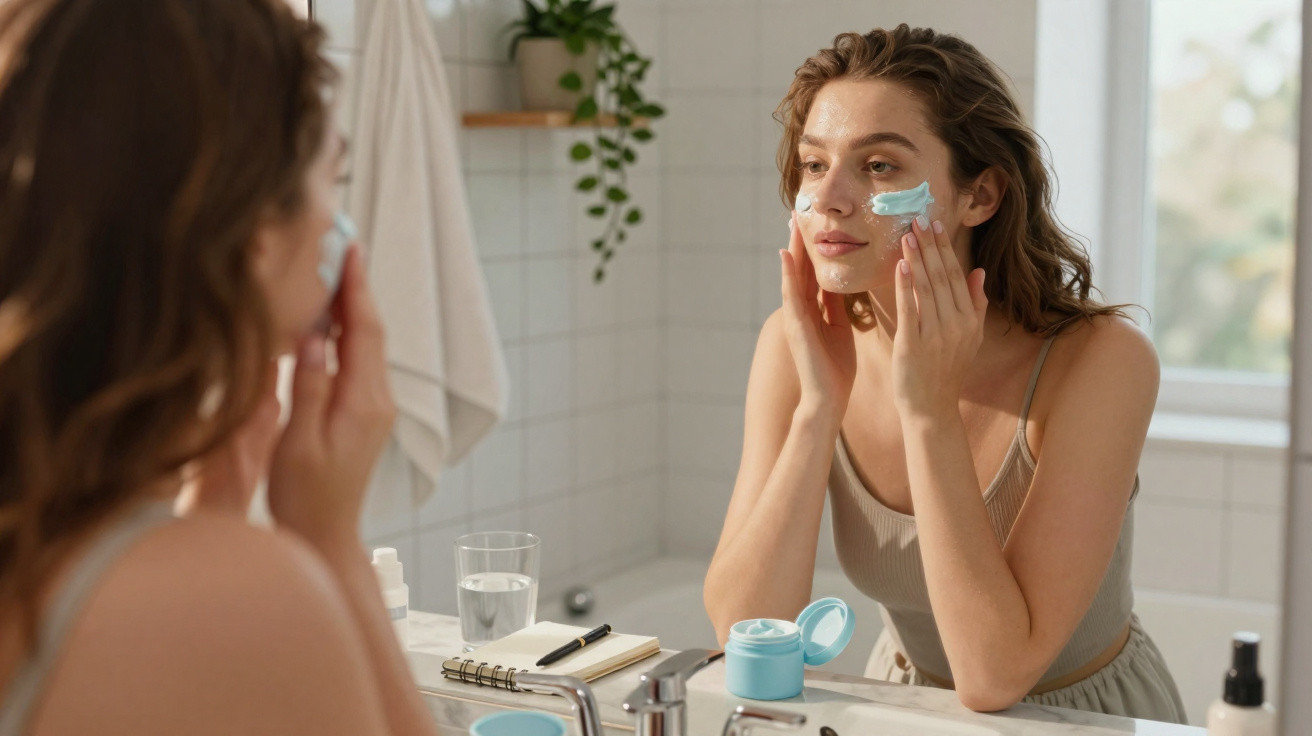
It began the way these trends usually do: doomscrolling at 3am. My feed had apparently decided I was one more “skin cycling” clip away from a full wobble, so it dangled a fresh obsession in front of me - the “blue-cream routine” that everyone seemed to be raving about overnight.
In the video, a woman patted a sky-blue moisturiser over her face with the solemn devotion of someone mid-conversion. With 2.3 million likes backing her up, I felt vaguely obliged to pay attention. She promised less redness, calmer breakouts, and that faintly filtered glow you normally only get from proper sleep and not reading the news. I wasn’t convinced, exactly… but I watched it three times.
Then I did what any exhausted adult with a credit card does: I bought the cream. And I committed to trying it properly for seven nights - no shortcuts, no “just this once” swaps - to see what actually shifted, and what absolutely refused to.
What on earth is the “blue-cream routine”, really?
The name makes it sound mildly cultish - and, honestly, it kind of is. The blue-cream routine is essentially a night-time ritual centred on a single product: a thick, pastel-blue moisturiser usually loaded with centella asiatica, ceramides, and some variety of soothing peptides. On TikTok, it’s positioned as the rescue plan for stressed, over-exfoliated skin. The idea is: cleanse, optionally apply a gentle serum, then coat your face in the blue cream and wake up looking calm and luminous.
If you’ve ever overdone retinol or acid toners and ended up with skin that feels like it’s been turned into hot sandpaper, the appeal is immediate. The logic is straightforward: stop battering your skin barrier and start treating it like it’s fragile. Less “burn your face off to fix it”, more “wrap it in a cashmere blanket and apologise”.
The blue colour is usually down to ingredients such as guaiazulene or chamomile derivatives - which also provide the visual drama TikTok loves. Blue simply photographs better in bathroom-mirror selfies than beige ever will.
I went for one of the most talked-about versions, the one that kept appearing in every “before and after” montage on my For You page. I studied the ingredient list as if I had a test coming up, then remembered most people see a pretty colour and a promise and tap “buy now”.
My ground rules were basic: apply it every night for seven days; no extra exfoliation; no cleanser changes; no sneaking in new serums. Just the blue cream, a bit of discipline, and my very normal combination skin - the sort that’s easily rattled by stress.
Day one: the first blue night
On night one, I found myself under my bathroom’s slightly unforgiving yellow light feeling oddly tense. Staring at your bare face for too long can feel exposing, especially when your camera roll is full of carefully angled, smoothed-out versions of you.
My skin looked… typical. Some redness around my nose, a breakout on my chin on its way out, and the sort of flat dullness that quietly announces, “yes, I do read my emails after 10pm”. Not a catastrophe, but not exactly radiant either - just everyday reality.
In the jar, the cream looked like a prop from a sci-fi set: a glossy blue blob sitting in the pot. The scent was faint and clean, like passing a spa you definitely can’t afford. It was richer than a standard lotion but not quite as dense as a balm, and it softened quickly once I warmed it between my fingers.
I pressed it onto my skin and watched the pale blue cast vanish, leaving a sheen that read “freshly glazed doughnut” - stylish on TikTok, less charming when you’re about to lie down on your real pillow.
In bed, I could still feel a thin tacky film on my cheeks. It wasn’t horrible - just very present, like wearing new pyjamas you haven’t decided you like yet. I half expected blocked pores or an overnight disaster, because whenever the internet announces something is “game-changing”, the “game” is often your own expectations.
I turned the light out feeling equal parts hopeful and braced for mess.
Days two and three: small shifts and a reality check
The morning after the first blue
The next morning, I did the slightly ridiculous thing: straight to the mirror before my eyes were properly open. No, my face wasn’t airbrushed. No, my pores hadn’t disappeared. But the redness was lower than usual, especially around my nose and across my cheeks. My skin looked a touch more even - like I’d slept an extra hour, even though I hadn’t. Not a miracle. Just… gentler.
When I touched my face, it felt smoother in that post-facial way, but without the tightness or sting. The bigger surprise was my chin: the small, angry spots that had been building looked flatter, less furious.
I still had texture. My pores still existed. One stubborn mark still refused to budge. But overall, my skin seemed calmer - like it had finally exhaled.
Routine fatigue vs viral discipline
By day three, the excitement had worn off. We’ve all experienced the point where a new routine slides from “ooh, self-care” into “do I really have to stand up and wash my face again?”. After work, after commuting, after staring at my phone for too long, the last thing I wanted was any sort of three-step plan.
This is what the videos rarely show: the boredom of taking care of yourself when there’s no audience.
Still, I kept going. Cleanser, a light hydrating serum, then the blue cream. Each night, my skin seemed to absorb it more quickly, and by the time I got into bed there was less of that glossy finish.
Mornings improved too: make-up sat more politely, rather than gripping every dry patch as if it had something to prove. A thought surfaced mid-routine: let’s be honest, no one does this flawlessly every day unless they’re being paid.
Mid-week: when the honeymoon phase meets the mirror
The good, the bad, and the still-there
By day four, the differences were harder to dismiss. My baseline redness had eased, particularly on my cheeks - the part of my face that usually looks like I’ve power-walked up a hill even if I’ve been at a desk all day.
My texture felt smoother too. Not baby-soft, but less bumpy and less irritated. I noticed it most during cleansing: that slight resistance around my jawline had shifted into more of a glide. There’s a quiet satisfaction in splashing water on skin that doesn’t feel like it’s protesting.
But the blue cream didn’t do anything miraculous to my under-eye darkness, and it didn’t erase the fine lines etched in by years of late-night scrolling. The breakout marks on my chin were fading, but they were still unmistakably there.
I also gained a tiny new whitehead near my hairline - decidedly not part of the advertised fantasy. It was a useful reminder that skincare doesn’t override hormones, stress, or the fact that I sometimes eat crisps for dinner.
Then there was shine. The cream is rich, and my T-zone knows how to show off. Some mornings I looked more dewy than I wanted, edging towards oily. Nothing a tissue and a cold rinse couldn’t handle, but if you already run oily, this can feel less “blue dream” and more “blue slip-n-slide”.
Even so, my skin didn’t feel smothered - just intensely moisturised, like it had finally received the water it’s been asking for for years.
The emotional side of sticking with it
Mid-week, something changed that wasn’t strictly about the product at all. Spending those extra five minutes at night - working the cream in slowly, pressing it into the sides of my nose, smoothing it over my forehead - started to feel less like a chore and more like a small ritual.
It wasn’t glamorous or camera-ready, but it was grounding. Running water, a towel pressed to the face, the cool slip of cream between fingers - it stitched the day together in a simple, human way.
There’s also a strange intimacy in relearning your own face - not the front-camera version, the real one. You start to notice the asymmetries, the marks that have histories, the lines that don’t vanish when you stop smiling. The blue-cream routine nudged me into that, night after night.
Somewhere between day four and day five, it clicked that the experiment wasn’t only about looking “viral-ready”. It was about whether I could do something consistently for myself without turning it into content.
Day seven: the verdict in real daylight
On the seventh morning, I checked my face in natural light on purpose - the harshest judge there is. No filter, no soft bathroom lighting, just daylight pouring through the kitchen window while the kettle boiled.
My skin tone looked more even than it had a week earlier. The redness that normally lights up around my nose and across my cheeks had clearly reduced. And the scar from my recent chin breakout had shifted from “headline” to background detail.
Hydration was consistent, which sounds unimpressive until you remember what tight, flaky days feel like. Foundation applied in a way that made me quietly grateful I’d stuck with it: it didn’t split around my nose, and it didn’t cling to tiny dry patches I hadn’t realised were there.
I still had pores. I still had texture. I still looked like someone who occasionally forgets SPF on cloudy days. But I looked more rested - even on a morning when I absolutely wasn’t.
The unexpected part was where I noticed it most. Not in selfies, but in those accidental side-angle reflections in shop windows or lift mirrors. I didn’t automatically wince. I didn’t instantly zoom in on everything that was “wrong”.
Instead there was this sense of: OK, this is my skin, and it looks… pretty good, actually. Not perfect, not porcelain - just quietly fine. That felt bigger than any TikTok transformation.
What changed, what didn’t, and what I’ll keep
The wins from one week of blue
So what genuinely changed? My skin barrier felt tougher and less reactive. Random redness flare-ups calmed down, and my face stopped stinging when I used products that had never bothered me before.
Dry patches eased, especially around my mouth and nose - the areas that always betrayed me the moment I put make-up on. Even bare-faced, my skin looked softer and slightly plumper, like I’d finally honoured its need for moisture instead of waging war with endless actives.
Breakouts didn’t vanish, but the spots I did get seemed to settle faster and with less lingering anger. Texture felt more even, less like a chaotic patchwork. And emotionally, the nightly routine softened something too - that jittery end-of-day feeling, the urge to go straight from Netflix to bed without checking in with myself.
A week isn’t a lifetime, but it was long enough to prove that consistency - paired with a genuinely soothing product - does add up.
The limits of a viral cream
Now for what didn’t change, because this is where the shiny reels get suspiciously quiet. My fine lines are still there. The ones on my forehead and around my mouth did not disappear beneath a layer of ceramides and centella.
They may have looked a touch softer, but if you expect any cream - blue or otherwise - to erase the last decade, you’re setting yourself up to feel deflated. Skincare can’t do the emotional heavy lifting of ageing for you.
My hormonal breakouts still arrived on schedule. They were a bit less inflamed, yes, but they weren’t evicted. Under-eye shadows looked slightly better when I slept properly and exactly the same when I didn’t.
The blue cream didn’t cure doomscrolling, didn’t cancel out three-coffee mornings, and definitely didn’t fix the part of my brain that sometimes insists, “If I just buy one more serum, I’ll feel better about everything else.”
One more honest point: even after seven days, I don’t think everyone needs a blue-cream routine. If your skin is already oily and fairly resilient, this may feel like too much. If you hate thick textures, you’ll likely drop it after two nights. And if you’re hoping for a dramatic seven-day miracle, you’ll be underwhelmed.
What it offers isn’t instant reinvention - it’s a small, practical kindness for skin that’s been pushed too far.
So was it worth it?
For me, yes - with conditions. The blue-cream routine works best as a reset button, not a magic wand. After a week, my skin looked calmer, more even, and better hydrated, and that alone made the nightly sink-time feel worthwhile.
It didn’t turn my face into somebody else’s; it just made mine look like it had finally been taken seriously. In a world that often talks about faces like problems to solve, that felt oddly emotional.
What I’m keeping is the ritual: gentle cleansing, fewer harsh actives, and ending the day with something that soothes rather than strips. I’ll keep the blue cream for the weeks when my barrier is clearly pleading for mercy, or when winter arrives and my cheeks feel like paper.
I won’t pretend it’s a cure-all, and I won’t promise it will change your life, but it might quietly shift how you feel when you catch your reflection while brushing your teeth at midnight.
Maybe that’s the real legacy of viral routines - not the exact product and not the perfect “after” photo, but the prompt to pay attention. To your skin, yes, but also to the tired person living in it. And if it takes a jar of sky-blue cream and a 3am scroll to get you there, that might not be the worst bargain.



Comments
No comments yet. Be the first to comment!
Leave a Comment