
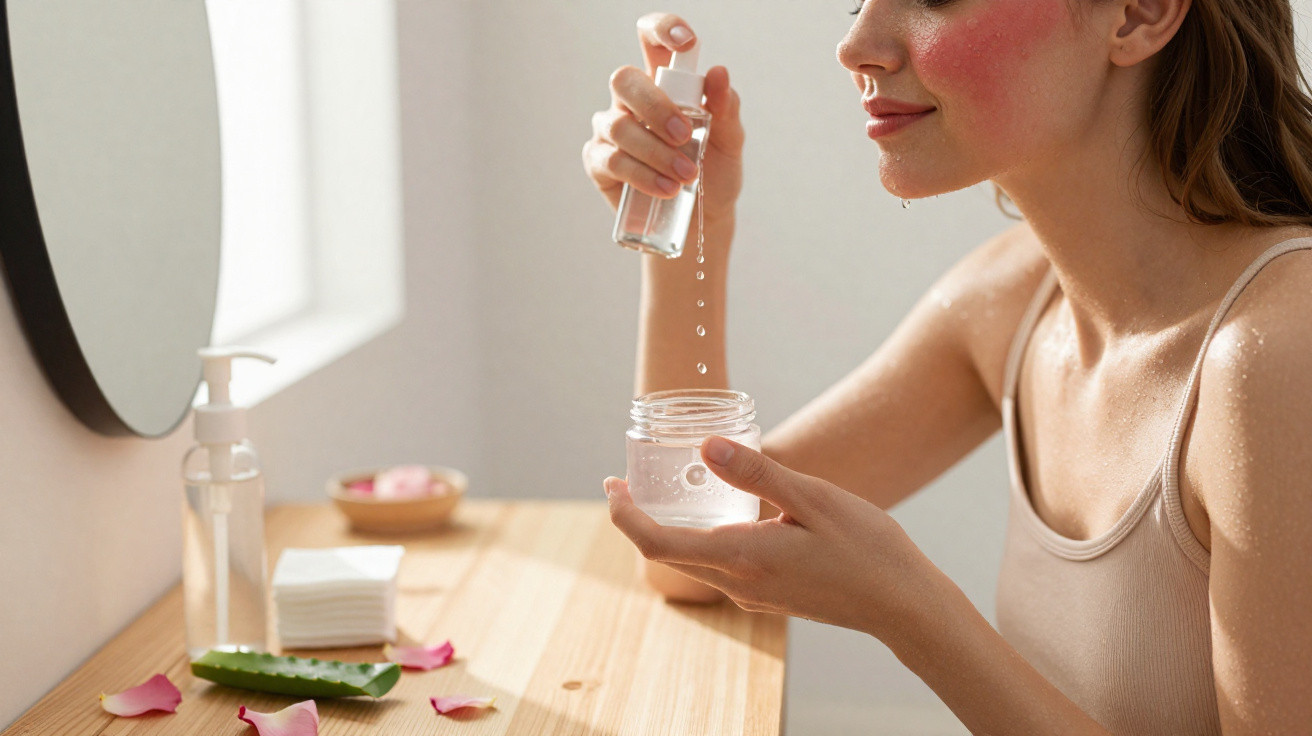
A lot of us still reach for a toner and just hope the redness settles. A skincare expert pointed me towards a quicker fix: rose water followed by aloe gel. Two basic, low-cost steps that take the sting out and bring the flush down-no fuss.
My cheeks get hot and a bit cross when a cleanser has been too enthusiastic. I saw a friend ditch her usual toner, spritz on rose water like a fine mist, then pat in a chilled ribbon of aloe gel. We carried on talking, but I couldn’t stop watching. The pinkness at the edges eased, the heat dropped, and her skin went back to its quieter, “indoors” mode. It was the sort of improvement you notice as a sensation before it shows up in the mirror. A few minutes later she looked more restored-like shutting a window on a blustery day. You could practically hear the relief. Maybe the softest pairing really does win.
Why this duo outperforms a traditional toner on redness
Redness tends to be a combination of surface inflammation, a barrier that’s feeling strained, and overactive nerves firing beneath the skin. Traditional toners often aim to “clean and tighten”; some still rely on alcohol or strongly fragranced botanicals that can feel like a burn on sensitive faces. Rose water isn’t built like that. It’s a hydrosol with a skin-friendly pH and small amounts of anti-inflammatory compounds from the flower. Aloe gel contributes film-forming polysaccharides that sit over the skin like a light, breathable dressing. One replenishes and soothes; the other protects and hushes. Together, that’s where redness starts to lose steam.
I tried the combo myself after a run on a humid Tuesday. My face was prickly and flushed-the impatient kind of heat that makes you want to keep touching your cheeks. The rose water delivered an immediate “cool room” feeling; the aloe came next and the tightness eased off. Small clinical trials have found that aloe’s sugars (such as acemannan) can calm UV-induced erythema faster than a plain moisturiser. Rose hydrosols aren’t magic, but their gentle astringency and antioxidant profile can help reduce the look of dilated capillaries. It’s not a dramatic reveal-more a steady, credible softening.
It comes down to what each layer does. Rose water lightly rehydrates the surface and encourages pH to move back towards a range where barrier-repair enzymes work more effectively. Aloe’s long-chain sugars create a very fine mesh that slows water loss and dampens the signalling associated with redness. Put them together and you get a “press and calm” effect: less evaporation, less nerve noise, less flushing. Where many toners focus on wiping, this pairing focuses on staying put. The payoff is less sting, more calm. When the barrier feels protected, it stops protesting.
How to use rose water + aloe for fast calm
Begin with freshly cleansed, slightly damp skin. Spray or press on rose water until your face has an even sheen-hydrated, not dripping. While it’s still a touch wet, warm a pea-sized amount of decolorised aloe gel between your palms and then press it on (don’t rub), concentrating on cheeks, nose and any areas that feel hot. Give it one minute. Finish with a light moisturiser, and SPF in the daytime. If you enjoy extra cooling, keep the aloe in the fridge. Realistically, hardly anyone does that daily-but on flare-up evenings it’s a small ritual that delivers more than it promises.
Choose rose water that’s alcohol-free and low in fragrance (a true hydrosol rather than rose-scented water). Go for an aloe gel with 95%+ aloe vera and as few dyes or perfumes as possible. If your skin reacts easily, patch-test along the jawline first-we’ve all had a “soothing” product turn against us. Avoid using this duo straight after strong acids or retinol; let those actives have their own night, then use rose-and-aloe as your reset routine. If you notice pilling, use a smaller amount of gel or apply it over slightly wetter skin so the polymers spread evenly. Press, pause, then moisturise. Straightforward steps, noticeable return.
Treat it as a barrier-first routine, not a passing trend. It makes your skin feel like it can finally breathe out.
“When you combine humectant water from rose with the occlusive mesh of aloe polysaccharides, you cut the micro-inflammation spiral and hold onto moisture-two levers that turn down visible redness,” -the expert
- Look for “Rosa damascena hydrosol” high on the label, not rose perfume.
- Choose decolorised, charcoal-filtered aloe to reduce potential irritants.
- Apply on slightly damp skin to improve slip and help prevent pilling.
- If you have rosacea, keep formulas simple and fragrance-minimal.
Rethinking your toner shelf
Toners aren’t “over”; they just need a better place in the routine. Hydrating toners with glycerin or amino acids can still feel great when your skin is settled. And for exfoliation, liquid acids can be useful-just not on nights when your cheeks are already trying to negotiate a truce. Rose water plus aloe gel works as quick triage that fits with skin biology: rehydrate first, then shield. It’s inexpensive, easy to travel with, and strangely reassuring. You’ll still have your favourites, but it’s liberating to have a reliable “redness button” to press. Pass it on to the friend who goes pink with wind, heat, or a spicy lunch. Skincare stories spread-and so do the simple fixes we actually stick with.
| Key point | Detail | Why it matters to you |
|---|---|---|
| Synergy over sweep | Rose water hydrates and balances pH; aloe forms a calming, breathable film | Faster redness relief than a wipe-and-go toner |
| Smart product picks | Alcohol-free hydrosol, decolorised 95%+ aloe, minimal fragrance | Reduces risk of stinging or flare-ups |
| Routine choreography | Mist rose, press aloe on damp skin, then moisturiser and SPF | Practical steps that fit into any routine |
FAQ:
- Can this replace my toner? On redness-prone days, yes. When your skin is calm, you can alternate: a hydrating toner in the morning, rose-and-aloe at night.
- Will aloe clog my pores? Pure, decolorised aloe is non-comedogenic. Thicker gels with added oils or thickeners can pill or feel tacky, so keep it simple.
- Is it safe for rosacea? Many people with rosacea do well with this duo, especially low-fragrance versions. If flushing is ongoing or painful, speak to a dermatologist for a personalised plan.
- Can I mix them in my palm? You can, but layering tends to work better: rose first, aloe second. Mixing may weaken the gel’s film-forming benefit.
- How often can I use it? Use it daily if you want. For best results, apply after cleansing and before moisturiser, and keep it separate from strong acids or retinoids.


Comments
No comments yet. Be the first to comment!
Leave a Comment