

At 8:30 a.m., the salon is already buzzing. A woman in her early 60s comes through the door, her silver hair wound into a small, slightly uneven bun that suggests “I gave up” rather than “I chose this.” She sets down her handbag, shares a laugh with the receptionist, then exhales while smoothing a hand over the flat hair at her crown. “I just want to wake up, run my fingers through it, and be done,” she says to the stylist. No fuss, no 30-minute struggle in front of the mirror. Simply hair that does what it should.
The stylist gives the knowing smile of someone who has heard it countless times. Because she has.
Picking up her comb, she says softly: “There’s one cut that changes everything.”
The low-maintenance cut hairstylists keep recommending in their chairs
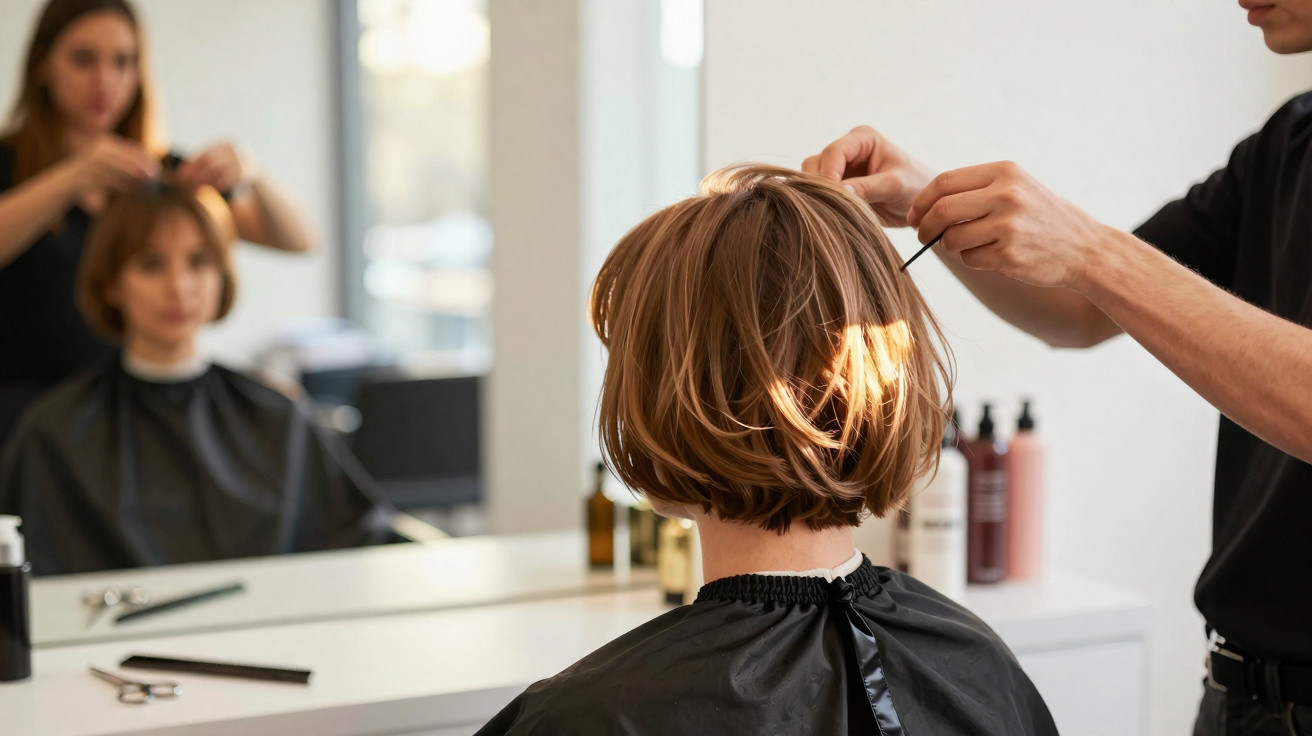
Put the question to three seasoned hairstylists-what should women in their 60s choose if they want simpler mornings?-and the reply is likely to be identical: a softly layered bob that falls between the chin and jaw, with delicate pieces framing the face. Not a sharp, perfectly structured bob, but an easy-going style with movement.
It occupies the ideal middle ground: short enough to stay manageable, yet long enough to remain feminine and adaptable. It works with finer, softer hair while retaining sufficient fullness to prevent a “helmet” effect. For many women, it is the subtle change that makes daily styling feel nearly unnecessary.
A Paris stylist once described a 64-year-old client who arrived with shoulder-length hair she constantly wore tied back. “I only wear it down for weddings,” she confessed. Drying it took forever, the ends appeared worn, and every morning involved choosing between time and feeling confident.
They changed her style to a gently layered, jaw-length bob with a discreet side fringe. When she returned two weeks later for a tidy-up, she said brightly, “I haven’t used a hair elastic once.” Her entire “routine” consisted of a fast towel-dry, a little styling cream and one unhurried sweep with a brush.
Stylists repeatedly return to this haircut for good reason. At around 60, hair commonly becomes finer, flatter and slightly more delicate. Long, weighty hair can pull it down, whereas very short styles may draw attention to every cowlick and sparse patch.
The chin-to-jaw bob sits comfortably between those extremes. Subtle layers create lift at the roots without any round-brush gymnastics. Its length can raise the features, soften the jawline and bring focus to the eyes. On hectic mornings, that mix of shape and softness saves valuable minutes-and plenty of frustrated sighs at the mirror.
How to get – and live with – this hairstyle without turning it into a chore
The real transformation begins during the consultation, before the scissors come out. Explain that you are looking for a soft, lightly layered bob sitting from chin to jaw, with gentle face-framing sections. Make it clear that easy everyday styling matters more to you than red-carpet drama.
Ask your stylist to lightly cut into the ends instead of leaving a blunt finish. This stops the shape looking stiff and square, allowing the hair to settle naturally even on days when you have barely touched it. The goal is straightforward: a style that appears “done” when you have made very little effort.
We all know that feeling: you leave the salon looking brilliant, then three days later look in the mirror and wonder, “Why won’t it sit like it did on day one?” Frequently, the issue is not the haircut itself, but the high-maintenance styling used during your appointment.
Say something if your stylist reaches for three separate brushes and creates a complete set of round-brush curls. Tell them the result needs to be achievable with only a hairdryer and your hands. Honestly, no one does the full routine every day. A good bob should air-dry into a respectable shape, requiring only a brief blast with the dryer when you feel like making more of an effort.
“Past 60, my best haircuts are the ones I barely have to think about,” says London hairstylist Marta R., who has specialized in mature hair for 20 years. “A soft, layered bob with light movement is forgiving. You can sleep on it, scrunch it a bit in the morning, and it still looks intentional.”
- Ask for a length from the chin to the jaw, rather than above the ears.
- Request soft internal layers, not heavy, choppy layers.
- Choose a fringe that is light and airy instead of thick and blunt.
- Apply a walnut-sized amount of styling cream, rather than a handful of mousse.
- Book trims every 6–8 weeks so the shape does not lose its structure.
Hair that matches your life, not your birth certificate
When women in their 60s adopt this type of haircut, an interesting shift often takes place. Salon conversations gradually stop being about “hiding” age and start focusing on fitting the pace of their actual lives. Many are still in work, looking after parents, helping with grandchildren, travelling or beginning new ventures. The last thing they need is a demanding style that feels like a full-time responsibility.
A relaxed chin-to-jaw bob with soft layers acknowledges that reality without making a fuss. It does not shout “anti-age” or claim to remove the years. It simply frames the face, lifts the features and allows natural colour and texture to show. You leave the bathroom more quickly and, somehow, feel a little lighter.
| Key point | Detail | Value for the reader |
|---|---|---|
| Soft, chin-to-jaw bob | Relaxed length with light layers and face framing | Daily styling drops to a few minutes with a naturally flattering shape |
| Ask for easy styling at the consultation | Explain you want hand-drying and minimal tools to work | Prevents ending up with a cut that only a stylist can reproduce |
| Light maintenance habits | Regular trims, small amount of product, gentle drying | Hair looks consistently fresh without feeling like a rigid routine |
FAQ:
- Does this bob work with naturally curly or wavy hair? Yes, provided the layers are cut with care and not made too short. Request curl-friendly layers and avoid thinning shears, which may cause frizz.
- What if my hair is very fine and thinning? A soft layered bob may still suit you, but keep layering understated and the outline slightly fuller to prevent a see-through effect.
- Can I wear this cut with gray or white hair? Absolutely. This shape is lovely with silver tones and may even make the colour appear brighter and more deliberate.
- How often should I trim a bob like this? Every 6–8 weeks is ideal for maintaining clean lines and balanced layers without needing constant salon appointments.
- Do I really need styling products every day? No. Often, a very small amount of light cream or serum on the ends will do; on some days, you can simply brush it and go.



Comments
No comments yet. Be the first to comment!
Leave a Comment