
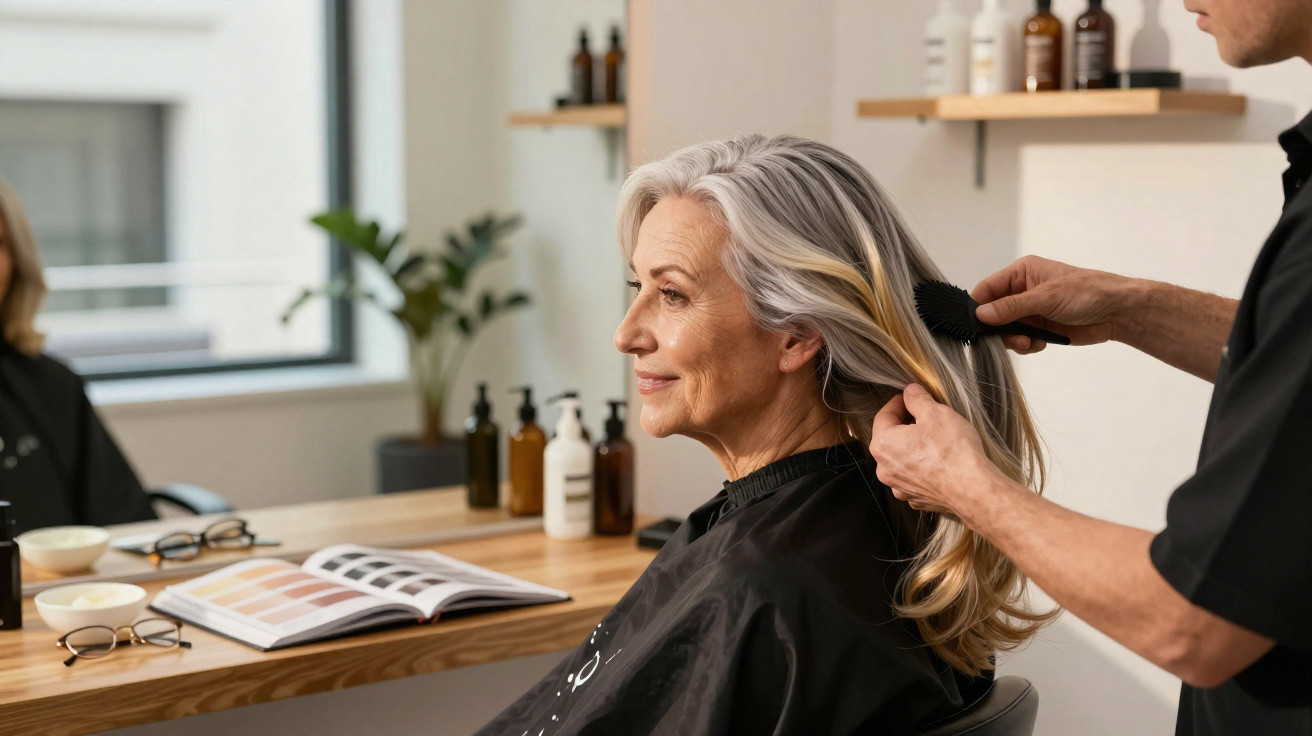
Some women simply want to cover their grey hair after their 60th birthday - and end up, without meaning to, with a shade that makes them look stricter and older.
The right hair colour can soften the look of fine lines, make the complexion appear brighter and give the face a subtle, optical lift. The wrong tone does the opposite: it emphasises every crease, dulls the skin and creates exactly the “granny effect” nobody wants. A seasoned hairdresser explains which three colour choices are particularly risky - and which alternatives genuinely look more youthful.
Jet black and very dark brown: harsh edges instead of softer definition
A common trap from about 60 onwards is going too dark. Many people reach for deep black or very dark brown to hide grey strands completely. On the model photo in the box instructions it often looks polished and glamorous - but day to day the effect is frequently the reverse.
As we age, skin naturally loses some of its radiance. A strong, almost-black frame around the face can amplify that. Fine lines, creases around the mouth and nose, and shadows under the eyes tend to stand out much more.
“Very dark colourations highlight every unevenness in the face and, figuratively speaking, add ten years.”
There’s also a practical issue: at-home dyes often turn out darker than planned. Many leave the colour on for too long or, worried the result might be too light, choose the deeper shade straight away. The outcome can look like a solid helmet of colour that has little to do with a natural, flattering look.
What usually works better instead:
- Choose a shade one to two levels lighter than your target colour
- Opt for warm, slightly translucent browns rather than black
- Add fine highlights so there is depth and movement
- Refresh the roots regularly, but avoid recolouring the lengths fully every time
If you have coloured very dark for years, you’ll typically need patience. A good salon will lift and soften the colour gradually - for example with gentle lightening, glossing treatments and highlights - so the result doesn’t turn patchy or develop a reddish cast.
Extreme blonde shades: from yellowing to a Snow White complexion
The second colour pitfall is taking blonde too far. Many women want to look “light and fresh” but end up in one of two extremes: too yellow or too icy. Both can be unflattering, especially once the skin’s texture has changed.
A yellow-leaning blonde can quickly give the impression of stressed, poorly cared-for hair, and the complexion beside it can look tired. Even more problematic are very pale, cool platinum tones: they can make facial skin appear greyer, drain warmth from the face and look more like synthetic hair than a high-quality colour.
“A blonde that’s too far from the natural colour can wash out the face and pull all colour from the cheeks.”
That’s why professionals generally advise staying close to your original base. If your natural shade is dark blonde or light brown, soft golden or honey accents usually look far more flattering than a stark, polar blonde.
How blonde looks more modern after your 60th birthday
Instead of a flat, “one-blonde-from-a-box” result, layered levels of lightness read much softer. Well-placed highlights around the face can add freshness without overwhelming the complexion. In the salon, this is often achieved with techniques such as:
- Balayage for soft, flowing transitions
- Face-framing highlights (lighter pieces only around the face)
- Glossing treatments that gently adjust the tone and add shine
A practical rule of thumb: go no more than one to two shades lighter than your natural colour. If you suddenly feel you need noticeably more make-up just to avoid looking pale, the blonde is usually the wrong tone.
Completely solid, single-tone colour: flat, severe, old-fashioned
The third classic “dated” signal is colour that is identical from root to tip - with no sheen, no depth, no play of light. On a swatch it can look sleek; in real life it often reads as a rigid block of colour.
On more mature hair, an overly uniform shade can make the style look less voluminous. Individual strands visually merge into one mass, the head can appear smaller, and the regrowth line looks harder. Wrinkles can seem more noticeable because the face loses a softer, more natural frame.
“Colours without nuance and reflective tones make any hairstyle look flatter - and can make even a perfect haircut seem boring.”
For that reason, professionals deliberately work with multiple tones even when, at first glance, it still looks like “one colour”. Tiny variations - even half a tone - distributed in the right places create movement and vitality.
Why reflective tones and contrast are so rejuvenating
The human eye responds well to contrast. Small light–dark differences in the hair create an impression of fullness, energy and freshness. Anything that resembles naturally lightened summer strands tends to look younger - without any drastic colour experiments.
Typical, flattering salon approaches include:
- Balayage: a freehand technique where lighter sections are blended in softly
- Ombré: mid-lengths and ends are lighter than the roots, with a gentle transition
- Hair contouring: light and darker pieces are placed to visually sculpt the face
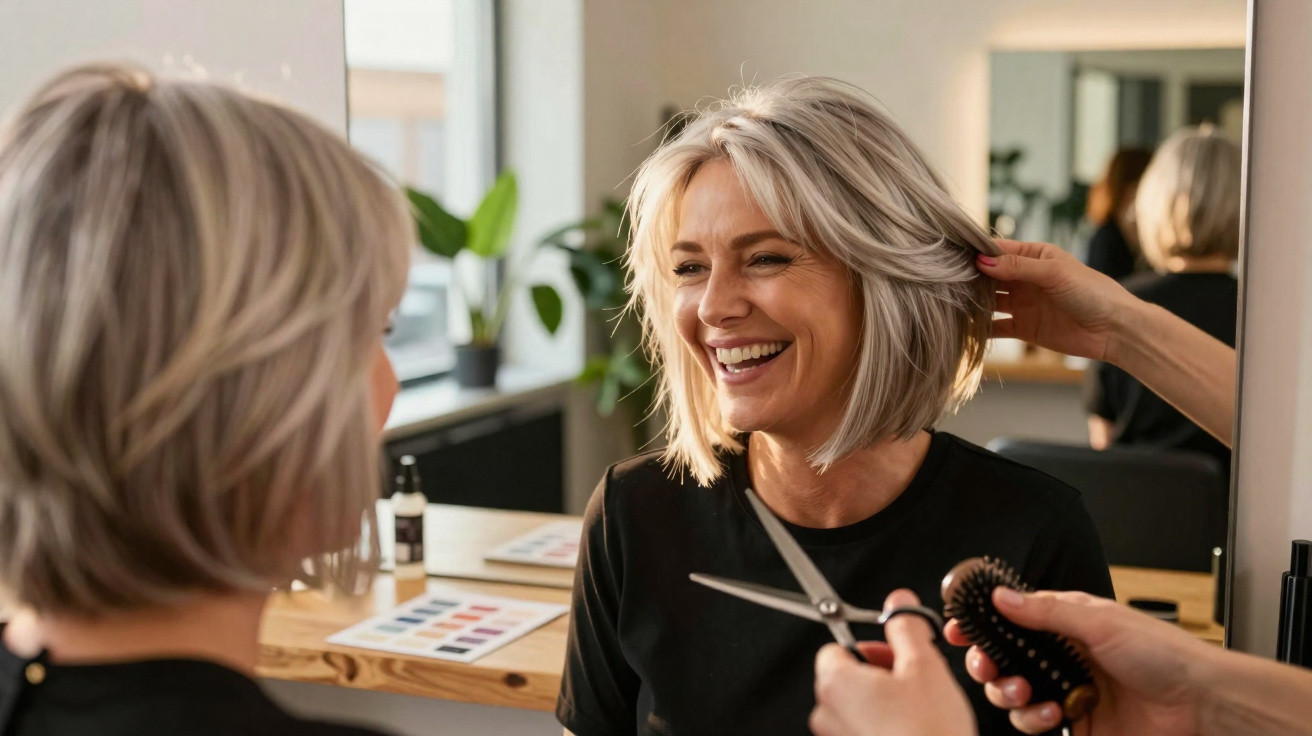
Many hairdressers also advise women over 60 not to dye away every trace of grey. A refined silver-grey - cooled down or warmed up and given shine - can look far more modern than a dense, dull all-over tint.
Which colours after 60 are genuinely flattering
It’s not the trending shade from social networks that matters, but the personal combination of skin undertone, eye colour and your starting hair colour. In general, the following directions tend to look especially harmonious:
| Starting hair colour | Recommended direction |
|---|---|
| Dark brown | Soft, warm chocolate browns, caramel highlights |
| Medium brown | Hazelnut and mocha tones, golden reflections around the face |
| Dark blonde | Honey, caramel or beige blonde, gentle balayage |
| Light blonde | Gold or champagne blonde, not an extreme icy blonde |
| Heavily grey hair | Refined silver-grey, delicate taupe or pearly tones |
A skilled colourist looks at the face as a whole, not just the hair. Redness, pigmentation marks and dark circles can often be visually softened with the right tone. If beige or rose shades suit you in clothing, you’ll often also benefit from warmer reflections in your hair.
Care, texture and risk factors: what mature hair needs as well
With age, it isn’t only colour that changes - the hair’s structure does too. Many notice drier ends, weaker lengths and more frizz. Any colouring, and especially strong lightening, can intensify these issues.
To avoid breakage and dull-looking lengths, a simple care routine helps:
- Shampoos and conditioners for colour-treated hair to keep pigment lasting longer
- Weekly masks or intensive treatments to combat dryness
- Heat protection before blow-drying or using straighteners
- Regular trims every six to eight weeks
If you’re taking medication more often or going through health changes, it’s wise to have a consultation in the salon before making a major colour shift. Some products can affect how hair responds to dye, make it break more easily, or cause an uneven result.
Another consideration is allergy risk. Even if you used to colour your hair without problems, sensitivity can still develop later on. A patch test before trying a new colour helps prevent unpleasant surprises on the scalp.
Embracing grey - when your natural shade becomes the trend
More and more women are choosing, deliberately, to stop constant recolouring and allow their grey to grow out. With the right toner or a glossing treatment, elegant silvery shades can appear that look anything but “old”. Slightly cool, glossy greys can look very modern, especially paired with a crisp haircut.
To make the shift from dyed hair to natural grey easier, many salons add fine highlights around the root area so the contrast is less obvious. Purple or blue-toned care products can neutralise yellowing in grey hair and help it look fresher.
In the end, it’s worth taking an honest look in the mirror: which shade makes your complexion look lively, adds sparkle to your eyes and attracts compliments? Often it isn’t the most extreme option, but the most nuanced - a long way from jet black, overblown blonde and rigid, single-tone colour.


Comments
No comments yet. Be the first to comment!
Leave a Comment