
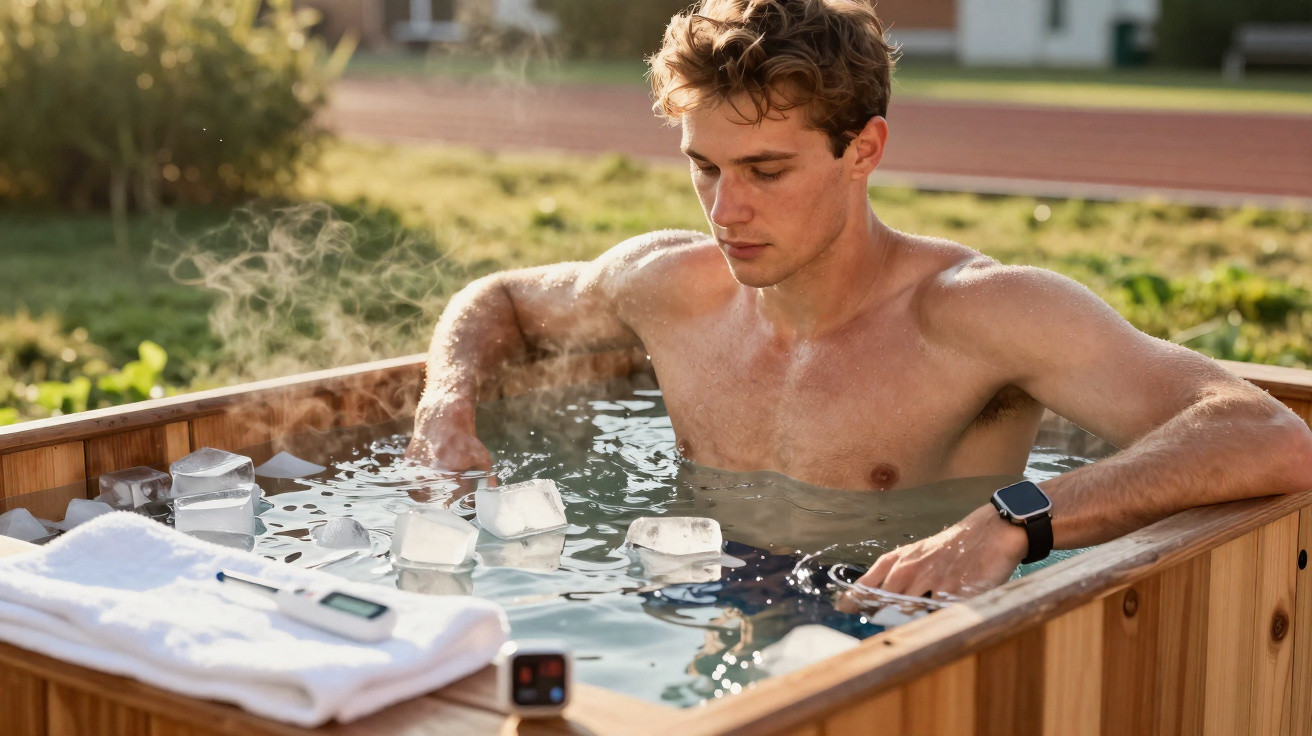
Ice baths have surged in popularity in recent years. What was once largely the domain of elite sport is now being taken up by both dedicated gym-goers and more casual exercisers worldwide.
Ice baths - also called "cold water immersion" - are exactly as the name suggests: you place your body in cold water for a set period.
Most ice baths are done at around 10–15°C, although some people choose water that is genuinely icy.
Online, social media is packed with clips of people jumping into freezing water and saying it helps with everything from post-workout recovery to mental health.
So do ice baths actually deliver on the claims? Here is what the research indicates.
Ice baths for recovery after exercise
A key reason people use ice baths is to ease muscle soreness and speed up recovery after exercise. Many athletes - such as endurance runners, weightlifters and football players - use them regularly.
There is also substantial evidence suggesting ice baths can support recovery after training.
Studies show that taking an ice bath straight after a session of hard exercise can lessen muscle soreness over the hours and days that follow. Ice baths have also been linked with improved recovery of muscle strength, power and flexibility.
They appear to work by lowering post-exercise inflammation, muscle swelling and muscle damage, while also helping the body clear metabolites such as lactate.
As a result, if you need to complete intense exercise sessions on consecutive days, ice baths may be a useful tool.
That said, they are not something to rely on after every session - even for athletes.
As noted above, one pathway through which ice baths help is by reducing the inflammation in muscle tissue that occurs after exercise. This can aid recovery, but that same inflammation also acts as a signal that prompts the body to adapt and get stronger.
Because of this, using ice baths too frequently (for example, after most training sessions) may dampen training-related gains in strength, endurance and power, as well as muscle growth.
Importantly, ice baths do not seem to negatively affect aerobic fitness. That means it may be fine to use them as often as you like after aerobic training sessions.
Ice baths and general health
More recently, ice baths have started to spread beyond sport and into wider fitness and wellness circles. Supporters argue they can improve mental health, immune function and overall wellbeing.
However, the evidence here is limited.
We recently carried out a systematic review that assessed all published studies investigating ice baths and health outcomes in the general population (rather than in athletes).
We identified just 11 studies, with some using cold showers instead of ice baths. The findings suggested that regular cold water immersion may be associated with small reductions in stress, small improvements in sleep quality and self-reported quality of life, and it might reduce how often people become ill (for example, with a cold or the flu).
Even so, many of these results came from single studies, so they should be treated cautiously until more research is available. We also did not examine how ice baths (and cold showers) might produce these effects, so the underlying mechanisms are not yet clear.
Are there any risks?
Although there is no research assessing the risks of ice baths at the population level, there are several potential hazards to be aware of.
In rare cases, cold water immersion has been shown to cause cold shock. This happens due to a rapid drop in skin temperature and can trigger gasping, hyperventilation, high blood pressure and, less commonly, cardiac arrhythmia (an irregular heartbeat). If not treated quickly, it can be fatal.
There is also some evidence that staying in an ice bath for too long (more than 30 minutes) may increase the risk of hypothermia, when body temperature falls to dangerously low levels.
5 tips if you're thinking of trying an ice bath
If you are considering ice baths, it is worth bearing a few practical points in mind.
Don’t go too cold: Despite the name, most studies indicate that 10–15°C is cold enough to maximise effectiveness.
Don’t stay in too long: Research uses a wide range of durations - some as short as three minutes, others up to 30.
However, 10–20 minutes is the most common window and seems more than sufficient for any health and post-exercise benefits. If you are new to ice baths, a sensible starting point is about 10 minutes in total, split into 3–5-minute bouts.
Enter slowly: Your stress response is highest in the first 30 seconds of cold water immersion and then fades. To reduce the likelihood of severe cold shock, wait for that initial response to pass before submerging your upper chest and face (or, better still, keep your face out of the water at all times).
Monitor how you feel: Notice how you are responding in the bath. Shivering is normal, but dizziness or numbness may indicate you should get out.
Use them strategically: If your training goal is to increase muscle strength, power or size, consider using ice baths sparingly rather than making them a daily habit.
Hunter Bennett, Lecturer in Exercise Science, University of South Australia and Ben Singh, Research Fellow, Allied Health & Human Performance, University of South Australia
This article is republished from The Conversation under a Creative Commons licence. Read the original article.





Comments
No comments yet. Be the first to comment!
Leave a Comment