

TOFA and a different route to weight loss
Most weight-loss medicines mainly work by suppressing appetite and reducing how much people eat. An experimental compound, however, seems to take a different path: in mice, it enables the body to expend more of the energy it receives.
This strategy could provide another means of addressing obesity. Rather than solely cutting calorie intake, a treatment could also raise the number of calories the body burns.
A study published in Science Advances found that obese male mice lost an average of 18 percent of their body weight over four weeks when given the compound, despite no change in the amount they ate.
Most of that reduction was body fat, with muscle and other lean tissue largely retained.
The compound is known as 5-tetradecyloxy-2-furoic acid (TOFA).
Researchers at the University of California, Berkeley first gave the mice a high-fat diet until they became obese. The mice were then administered TOFA orally twice daily for four weeks.
"Food intake was unchanged, physical activity was unchanged, and body temperature did not rise, yet whole-body energy expenditure increased by as much as 18 percent," senior author Anders Näär, a metabolic biologist at UC Berkeley, told ScienceAlert.

Anders Näär (centre), with metabolic biology graduate student Rachelle Stark (left), and nutritional scientist Chi Zhu (right) in the Anders Näär lab at Berkeley. (Mathew Burciaga/UC Berkeley)
TOFA neither caused the mice to be more active nor stopped them absorbing calories from food. Rather, it seemed to alter the way their bodies processed fat and expended energy.
The compound appears to act through two mechanisms: it reduces the creation of new fat, while helping cells absorb and burn fat for energy.
Precisely which cellular mechanisms are responsible for all of the extra energy expenditure, however, is still uncertain.
The team thought that two distinct interventions could recreate these effects: one to curb fat production and another to boost fat burning. Yet using those approaches together did not yield the same outcome as TOFA.
"Having both activities in one molecule appears to matter, and we still do not fully understand why," Näär said.
TOFA was first made in the 1970s and has long been used in laboratory research. Näär says its capacity to switch on fat-burning programmes seems to have existed all along, but had not previously been investigated.
Metabolic effects of TOFA in mice
The treatment seemed to offer effects beyond weight loss. It reduced blood glucose and insulin levels, improved the mice's response to glucose, and lowered fat levels in their blood and livers.
In separate experiments, TOFA also lessened markers of fatty liver disease, including fat accumulation, inflammation and scarring.
Näär emphasises that TOFA does not seem to preserve muscle directly. Since the mice kept eating as normal, the majority of the weight they lost probably consisted of fat.
"In our mice it simply did not produce the loss of lean mass that often accompanies weight loss," he said.
The researchers also paired lower doses of TOFA with the GLP-1-based drugs semaglutide and tirzepatide. These medicines drive weight loss largely by lowering appetite, thereby helping us reduce food intake.
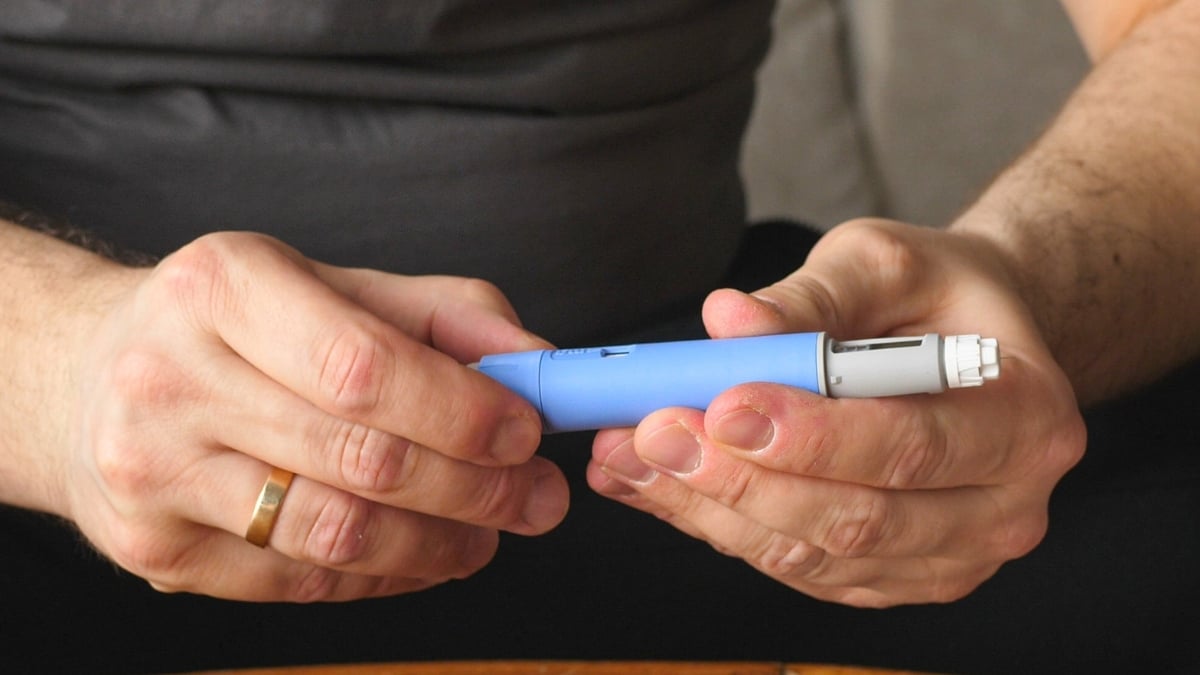
Semaglutide promotes weight loss by reducing appetite. (imyskin/Canva)
These combinations led to more weight loss and greater metabolic improvements than any treatment on its own.
The treatments work on opposite aspects of the body's energy balance. Semaglutide and tirzepatide lower energy intake, whereas TOFA raises energy expenditure in mice.
"That makes combination therapy interesting, because the mechanisms could complement one another instead of duplicating," Näär said.
In another experiment, mice treated with TOFA kept their weight off for longer once treatment had stopped. By contrast, mice given semaglutide regained weight quickly as their food consumption increased.
Limits of the TOFA research
Still, the combination experiments were brief and used small groups of mice. Every live animal in the study was male, so whether TOFA would act similarly in females remains unknown.

TOFA has not been tested in people. Its lowest effective dose is not known, and it has not received the safety testing needed for medical use.
Related: Massive Study Links The Time You Eat Breakfast to How Long You'll Live
Näär and two other study authors are co-founders and equity holders in ReRx Therapeutics, which is developing TOFA as a possible treatment.
The researchers next intend to conduct toxicology and efficacy studies in rats and larger animals with physiology more similar to humans. Such work is required before human clinical trials can start.
At present, TOFA is not a new weight-loss treatment. But the results highlight an intriguing possibility: helping the body shed fat may involve not just eating less, but also altering how it uses the energy it takes in.
The study was published in Science Advances.
This article was fact-checked by Rebecca Dyer and edited by Rebecca Dyer. While we pride ourselves on our process, we are only human. If you spot a mistake, please let us know.






Comments
No comments yet. Be the first to comment!
Leave a Comment