
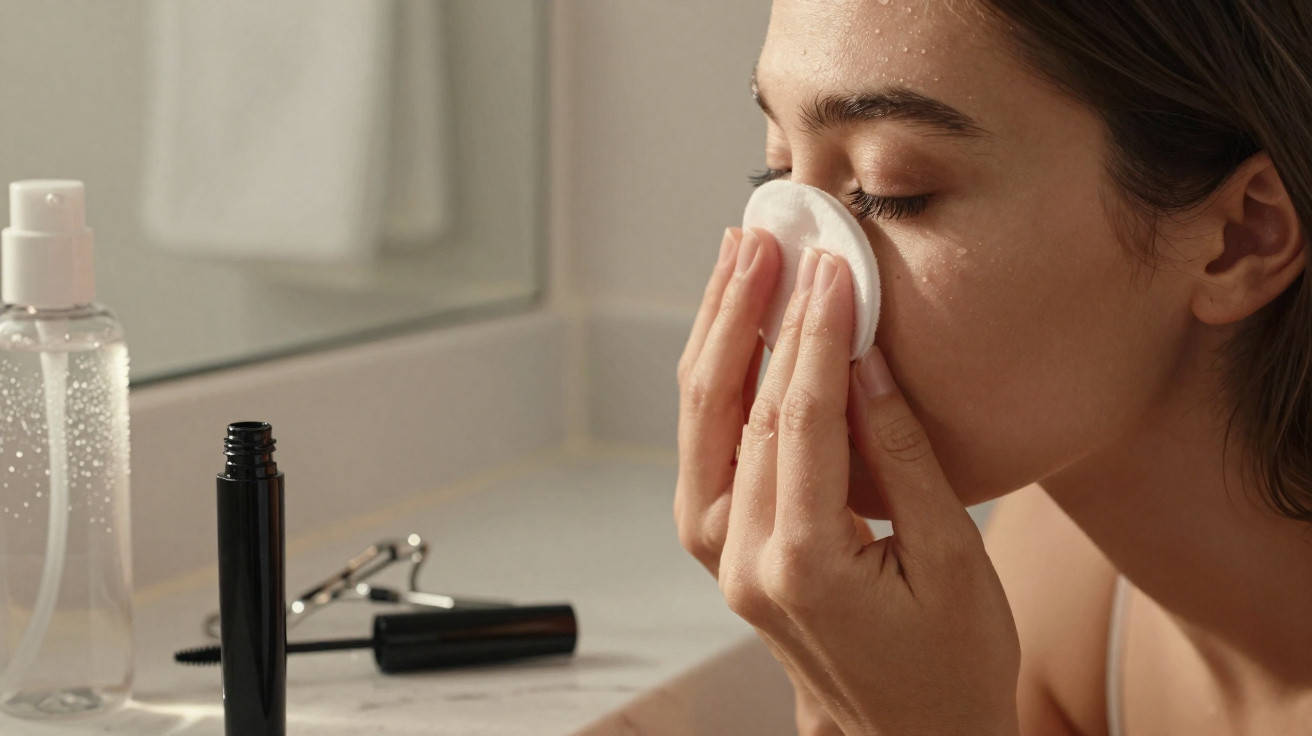
Spotting two or three eyelashes on a cotton pad can feel like nothing more than a make-up side effect, yet how you apply and remove it often matters more than any single product. Rubbing your eyes, clamping an eyelash curler too hard, and falling asleep with stiff, dried mascara can snap hairs or pull them out before they reach the end of their natural growth cycle.
Can waterproof mascara increase eyelash loss?
Waterproof mascara does not automatically cause an eyelash disease, but because it adheres more firmly it needs gentler, more deliberate removal. If you rub, tug, or repeat forceful strokes to break down the product, the mechanical trauma can fracture lashes or dislodge those that were already close to the normal shedding phase.
In many cases the issue is less about the formula and more about cumulative friction. Lashes that are wet or coated in several layers can become stiff and more susceptible to pulling. That is why it is best to soften the make-up first before attempting to remove it, and to avoid rough cotton, fingernails, tweezers, or quick movements along the eyelid margin.
How to remove make-up without pulling out your eyelashes
An oil-based eye make-up remover can help dissolve long-wear products without needing pressure. A second option is a neutral cosmetic oil designed for facial use and free from fragrance, provided it does not cause irritation. Apply with your eyes closed, taking care not to pour the product straight into the eyes.
A gentler routine reduces the urge to scrub and can help preserve the lashes. The process should follow a few straightforward precautions:
- Moisten a soft pad with a suitable remover;
- Press it lightly over closed eyes for a few seconds;
- Glide the pad in the direction of the lashes, avoiding back-and-forth rubbing;
- Repeat with a fresh pad if any residue remains;
- Rinse the area according to the instructions for the product used.
Stinging, redness, or persistently blurred vision suggests the product may have entered the eyes or triggered irritation. If that happens, rinse the area and stop using it. Essential oils, scented DIY mixtures, and substances not intended for the eyelids should be kept well away from this sensitive area.
Can an eyelash curler pull out eyelashes?
An eyelash curler can snap or yank lashes if you clamp down too firmly, keep using it in the same spot, or move it while it is still closed. Worn rubber pads can also catch the lashes. The risk is higher when the tool is used after mascara, because dried make-up makes lashes more rigid and more likely to stick.
To limit trauma, ensure the curler is clean, the rubber is intact, and use it before applying mascara. The squeeze should be light and brief, without dragging the tool forwards. Improvised methods of heating the accessory should also be avoided, as eyelid skin is thin and can burn easily.
Watch the video shared by the YouTube channel Larissa Costa showing how to remove make-up correctly without harming the skin.
Why does sleeping in make-up damage lashes?
While you sleep, your face presses against the pillow and shifts for hours. When mascara is left on the lashes, hairs stay hardened and can experience more friction, bending or breaking more easily. Leftover make-up can also irritate the eyelid margin and contribute to symptoms such as itching, stinging, and inflammation.
Itching can create a risky cycle: the more irritated the area becomes, the more you want to rub your eyes, increasing trauma to the lashes. Fully removing make-up before bed, washing your face gently, and keeping brushes and applicators clean all help protect the lashes and the surface of the eye.
When does eyelash loss need medical assessment?
Not all eyelash loss is caused by beauty habits. Marked shedding, known as ciliary madarosis, may also be linked to blepharitis, dermatitis, allergies, alopecia areata, thyroid changes, infections, or other issues. Noticeable gaps, crusting, pain, swelling, and persistent itching warrant professional assessment.
Reduce friction straight away and watch whether new lashes continue to fall, but do not try to conceal the issue with extra layers of make-up. If the change is sudden or does not improve, see a dermatologist or ophthalmologist. Acting early can help identify the cause, prevent further damage, and restore a safe routine for your eyes.


Comments
No comments yet. Be the first to comment!
Leave a Comment