
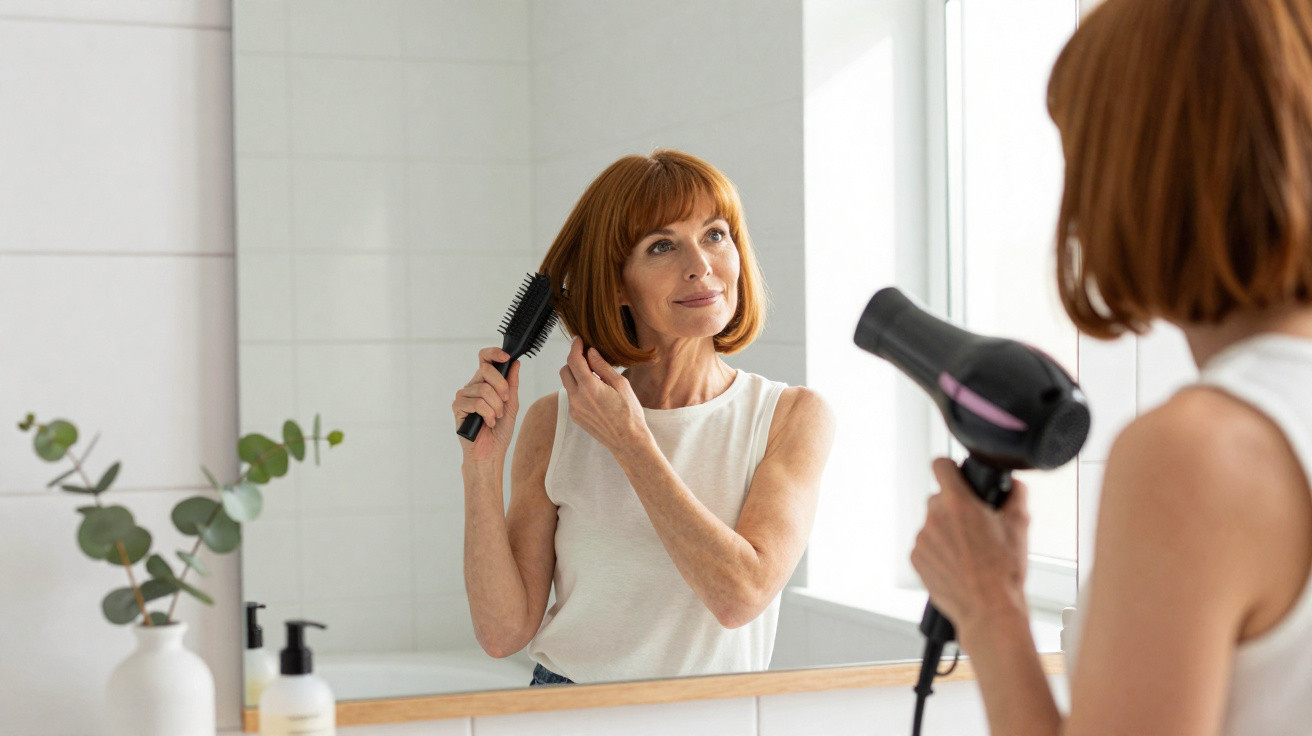
Soft volume, a touch of nostalgia, and a shape that works for everyday life - not just Instagram.
In 2026, women over 50 are seeing a familiar outline return: a 1960s-inspired bob that feels sleek without being stiff, contemporary without trying too hard, and genuinely kind to grey hair, finer textures and packed diaries.
The 60s bob: why this retro cut suddenly feels current
Although trend analysts have been calling for shorter, lighter cuts for mature hair, few predicted such a clear salute to the Swinging Sixties. The standout style is the 60s bob: a jaw-grazing shape with softly flicked-out ends and a rounded, breathable crown.
"This bob keeps the classic, jaw-skimming shape, then softens it with outward-flipped tips and natural volume that flatters most faces."
Where recent years favoured ultra-glossy, razor-precise bobs, the 2026 take has movement. The tips sweep outwards to give a subtle mod hint without veering into fancy-dress hair. It’s lighter in texture, gentler in outline, and reads more “French cinema” than corporate boardroom.
That difference matters after 50. As hair ages, it can become finer, drier or less dense, and a severe, poker-straight bob can draw attention to exactly that. The 60s bob tends to do the reverse: it adds motion around the jaw, helps lift the face, and makes hair look fuller through its curved, buoyant structure.
Why the 60s bob works so well after 50
The draw isn’t nostalgia alone - this cut addresses several midlife hair concerns at once.
- Softens facial features: A rounded perimeter plus flicked ends pulls the eye outward rather than down, so the lower face appears lighter.
- Adds volume without heavy layers: Smart shaping through the crown creates lift, especially useful when density has reduced.
- Works with grey and highlighted hair: The outward swing shows off shine, reflection and multi-tonal colour.
- Low effort, high impact: It looks intentionally styled with minimal day-to-day work.
"The cut is structured enough to feel intentional, yet loose enough to wear with glasses, natural grey or minimal makeup."
Because it sits between polished and relaxed, stylists are increasingly recommending it to clients in their 50s, 60s and beyond. Rather than battling the hair’s natural behaviour, the cut leans into it to create shape and spring.
How the 2026 version updates a 1960s classic
The original 60s bob was often set hard with hairspray, sometimes to the point of looking helmet-like. The 2026 refresh keeps the recognisable silhouette, but drops the rigidity.
Key features of the modern 60s bob
| Element | 1960s version | 2026 version |
|---|---|---|
| Finish | Very set, lots of hairspray | Soft, touchable, light hold |
| Ends | Strong flicks, almost cartoonish | Gentle outward turn, slightly relaxed |
| Volume | Backcombed, rigid bouffant | Root lift with round brush or light mousse |
| Layers | Mostly blunt | Subtle internal layers for movement |
Length usually lands somewhere between the cheekbones and the collarbone, although many stylists favour chin-to-jaw for a fresher look. The baseline is often softly curved rather than perfectly straight, which helps avoid a “helmet” feel and makes the cut more forgiving on wavy hair or areas that sit unevenly.
Styling the 60s bob at home
The salon creates the blueprint, but at-home styling is what keeps the bob looking lively between visits. Luckily, you don’t need a cupboard full of heated tools to make it work.
Step-by-step morning routine
- Towel-dry hair and apply a light volumising mousse or spray at the roots.
- Blow-dry with a medium round brush, lifting the roots upwards and slightly back.
- When you reach the ends, roll them away from your face so they turn gently outwards.
- If you want more definition, use straighteners on the tips: clamp lightly, then twist your wrist outward as you glide off.
- Finish with a fine mist of flexible hairspray or a texturising spray for hold without crunch.
"The aim is a soft, airy curve, not a rigid flick. Think “breeze caught my hair”, not “Saturday night 1967”."
On days you don’t wash your hair, a quick hit of dry shampoo at the roots plus a speedy pass with a round brush is usually enough to bring the shape back.
Choosing the right version for your face and lifestyle
“60s bob” is a broad label - within it sits a range of lengths and small details. Minor tweaks can make the style feel custom rather than one-size-fits-all.
Face shape and fringe ideas
- Round face: Choose a slightly longer bob (just under the chin) with more height at the crown than fullness at the sides.
- Square or angular face: Request softened ends and ultra-subtle layers around the jaw to blur sharper lines.
- Oval face: Most lengths suit; a cheekbone-skimming version emphasises bone structure.
- Forehead concerns: A wispy fringe or curtain bangs brings a 60s note and balances proportions.
Your routine matters as well. If you swim often or train daily, a collarbone-skimming option that can be clipped back may be the most practical. If you’re frequently on camera or attend lots of events, a shorter, crisper version tends to look more editorial and clearly “styled”.
How it behaves with different hair types
This bob shifts depending on texture - which can be an advantage if you work with it rather than against it.
- Fine hair: Often benefits most from the crown lift and rounded form. A blunt edge with minimal layering helps strands appear thicker.
- Thick hair: Usually needs internal weight removal and, in some cases, a longer length to stop the shape ballooning out.
- Wavy hair: Naturally delivers the soft movement that suits the style; the end flick can be kept very understated.
- Curly hair: Works best as an adaptation - think a curved bob with outward-facing curls, not strict 60s flips.
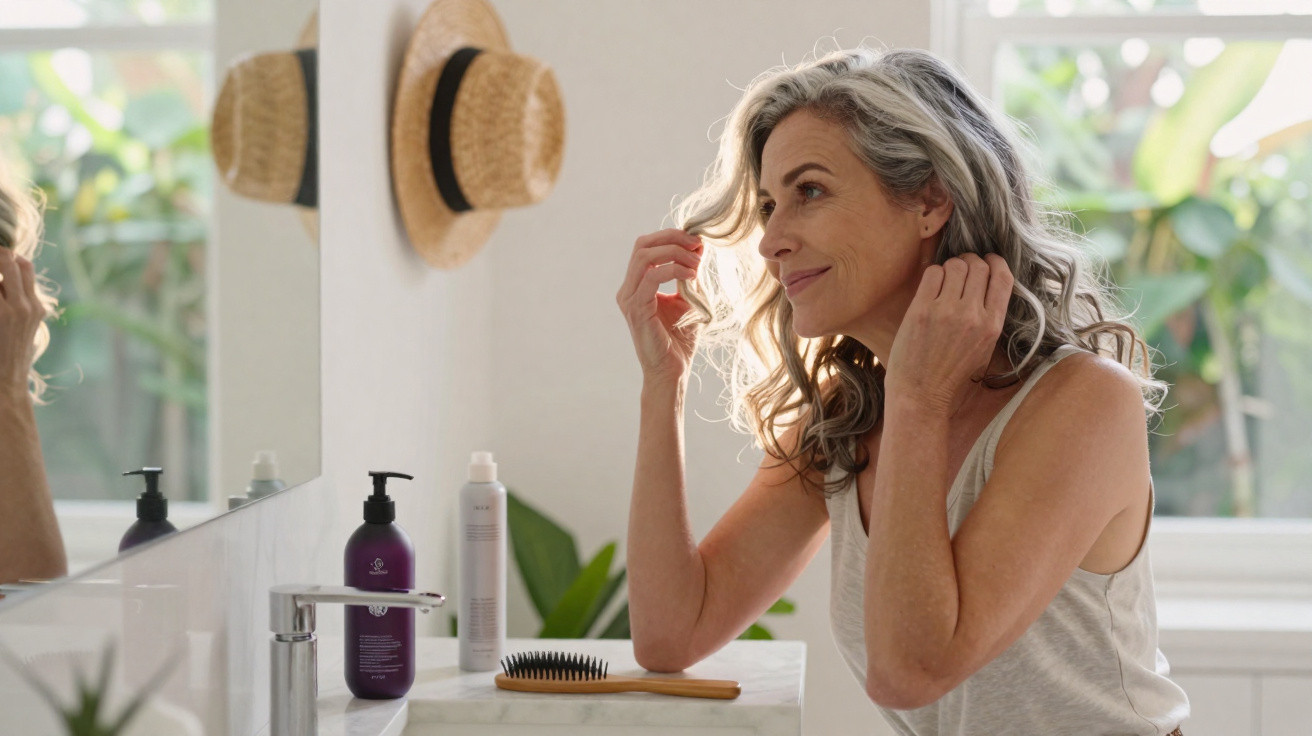
"Grey and silver hair particularly suits this cut, as the flicked ends showcase shine and dimension."
Talking to your stylist: terms and requests that help
Salon consultations can go off track if the only brief is “something like the 60s”. A few precise requests make the outcome far more predictable.
Ask for a bob that:
- sits around the jaw or slightly below
- has soft, outward-turned ends, not pin-straight
- includes light layering inside the cut for movement, not obvious steps
- keeps enough density at the bottom to avoid a wispy, thinned-out look
Bringing one or two reference photos is useful, but also say you want a modern finish with minimal product. That guidance helps your stylist avoid anything overly set or too retro.
Practical scenarios: how the 60s bob fits into everyday life
During the week, the cut pairs easily with glasses, a bare face and a simple shirt, because the outward curve adds instant structure. For evenings, curling the tips a touch more and switching to a side part can turn it into a softly glamorous shape that nods to classic films without feeling dated.
For anyone ready for a first big shift after years of longer hair, this bob can also act as a “transition cut”. It removes heaviness, sharpens the outline and frames the face, while leaving enough length to feel comfortable. If you like the change, you can gradually go shorter at future appointments.
Potential pitfalls and how to avoid them
With any retro style, the main danger is slipping into costume territory. Combining an overly short length, a very heavy fringe and strong hairspray can make the look feel ageing rather than refreshing.
Upkeep is worth considering too. Even though styling is simple, the shape generally needs trimming around every six to eight weeks so the ends keep flicking in the right place. Leaving it much longer can put the bob at an awkward point on the neck, which can visually drag the face down.
"Handled with a light touch, the 60s bob becomes less about nostalgia and more about smart, face-framing architecture for hair after 50."



Comments
No comments yet. Be the first to comment!
Leave a Comment