

From red carpets to office lifts to TikTok feeds, a subtle shift is catching the light: more people are choosing to show their grey hair.
Where once a hint of regrowth triggered a rushed salon visit, it is now often worn on purpose. Salt-and-pepper strands have become a marker of confidence, lived-in style and a willingness to let time look like time. Even so, that blend of steel and silver needs the right routine if you want it glossy and bold rather than flat and faded.
Why salt-and-pepper hair looks different
Salt-and-pepper hair combines strands that still hold pigment with white hairs that no longer produce melanin. That mix affects both the way light reflects and the way products sit on the hair.
Grey and white fibres are often drier, a touch coarser and sometimes more porous. They can frizz more quickly, lose their sheen and pick up pollutants or minerals from water, which can leave hair looking dull or slightly yellow.
"Grey hair is not just a colour shift. It is a full change in texture, shine and maintenance needs."
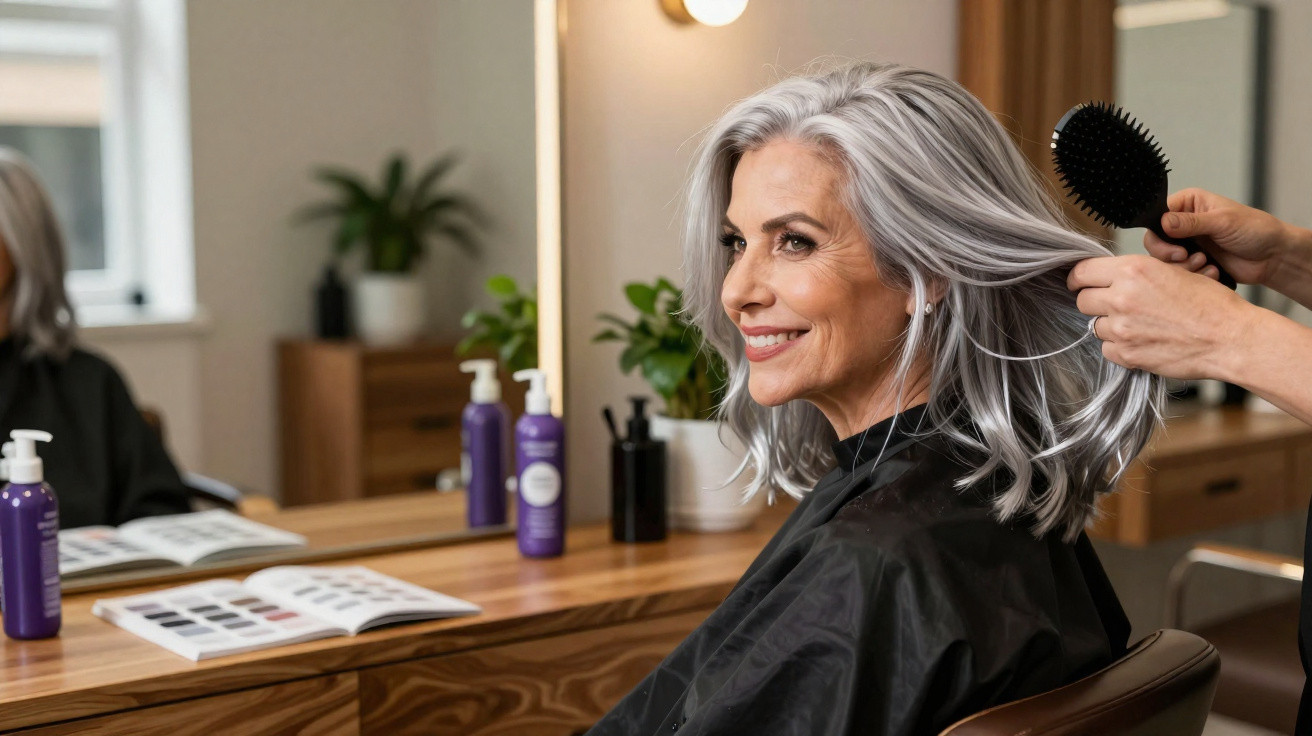
With the right approach, the contrast can look polished and intentional-whether that means a crisp bob threaded with silver or longer, softer waves with icy ribbons throughout. Treat it like a high-end fabric: cleanse gently, target your care, and choose cuts that work with the texture you have now.
1. Use a violet shampoo to keep brass at bay
A common frustration with greys is how quickly yellowing or brassy tones can appear. Sunlight, cigarette smoke, pollution and even hard water all play a part.
Violet shampoos contain purple pigments designed to neutralise warmth. Because purple sits opposite yellow on the colour wheel, it visually offsets that straw-like cast.
"A violet shampoo once or twice a week can keep salt-and-pepper hair cool-toned, crisp and closer to silver than nicotine beige."
How to use violet shampoo without overdoing it
- Begin with once weekly, then tweak based on how quickly brassiness comes back.
- Work it into the areas that yellow first-often the hairline, crown and around the face.
- Let it sit for two to three minutes, not twenty. Leaving it too long can tint porous strands lilac.
- On other wash days, swap in a mild, sulphate‑free shampoo.
If your water is very hard, you may see warmth returning sooner. A shower filter alongside violet shampoo can bring a noticeable improvement over a few weeks.
2. Switch to deeply hydrating care
When melanin production reduces, the way sebum travels along the hair can change as well. That can leave grey sections feeling wiry or rigid, even if the rest of your hair still behaves much as it always did.
For salt-and-pepper hair, moisture and nourishment need to sit at the centre of your routine.
"Think of grey hair as thirsty hair: feed it moisture first, then anything else."
Products that work particularly well
- Creamy conditioners with glycerin or aloe to restore softness after each wash.
- Mask treatments once a week featuring ingredients like shea butter, argan oil or ceramides.
- Leave-in milks or serums to tame frizz and provide daytime protection.
- Light oils (such as marula or jojoba) used sparingly through lengths and ends, not at the roots.
Concentrate products on mid-lengths and ends, where dryness is usually worst. If your roots flatten easily, apply conditioner from about ear level down and keep your scalp to lighter products or dedicated scalp tonics.
3. Choose a modern haircut that matches your texture
Grey does not usually make someone look “old” by itself. It is the combination of colour, cut and styling that creates the impression. A contemporary shape can make grey hair read as a deliberate statement.
"The right cut makes silver streaks look intentional, not accidental."
Cuts that flatter salt-and-pepper shades
- Short crop or pixie: emphasises the dark‑to‑silver contrast, looks edgy and is straightforward to style.
- Textured bob: jaw- or collarbone-length with soft layers adds movement and showcases natural streaking.
- Long layers: for those keeping length, gentle face-framing prevents hair from hanging heavy or looking flat.
- Curly shaping: for curls and coils, a cut that honours your pattern keeps grey spirals defined rather than fluffy.
Take reference images to your stylist, but match the cut to your real routine. A fringe that looks effortless on Instagram can become hard work if new grey hairs stick out in unexpected directions.
4. Add subtle highlights or lowlights for dimension
Very few people can switch to fully grey overnight. Moving from dyed hair to natural salt-and-pepper often takes months, and the contrast between regrowth and old colour can look stark.
Thoughtful colour placement helps blur that boundary and makes the transition feel intentional rather than like you simply stopped booking appointments.
"Soft highlights and lowlights can make the mix of grey and natural colour look sun-kissed instead of patchy."
Ideas to talk through with your colourist
- Cool highlights one or two shades lighter than your natural colour to mirror the white strands.
- Ashy lowlights slightly deeper than your base to add depth and contrast.
- Face-framing lights to brighten the hairline where greys often show first.
- Gloss treatments in cool tones for shine without a heavy, long-term colour commitment.
Softer methods-such as balayage or micro-babylights-usually blend regrowth more naturally than a single, solid dye. That reduces harsh demarcation lines and lets you extend the time between appointments.
5. Protect your hair from heat and sun
Grey hair-particularly the white strands-tends to be more sensitive to external stress. UV exposure, straighteners and even a very hot blow-dry can accelerate dryness and shift tone.
| Risk factor | Effect on salt-and-pepper hair | Protection tip |
|---|---|---|
| Sun exposure | Yellowing, dryness, rough texture | Use hats, UV sprays and limit midday exposure |
| Heat tools | Breakage, dullness, loss of elasticity | Apply heat protectant, lower temperature, shorten contact time |
| Chlorine and salt water | Discolouration, extreme dryness | Rinse before and after swimming, apply protective conditioner |
"A heat protectant spray is non‑negotiable if you straighten, curl or blow‑dry salt-and-pepper hair regularly."
Dial tools down compared with what you might have used in your twenties. For many hair types, 150–170°C (300–340°F) does the job. On off-days, air-dry; or use a diffuser with a cool setting to preserve texture.
Styling tricks that make grey hair look intentional
Often, it is the finishing touches that separate “I gave up” grey from “I chose this” silver.
Small changes with big impact
- Parting shift: moving your part a few millimetres can either emphasise or soften streaks around the face.
- Texture sprays: a light salt spray or dry texture mist lifts roots and avoids the helmet look.
- Shine products: clear shine sprays or lightweight serums help greys reflect light like metal rather than chalk.
- Defined edges: sharp necklines and intentional baby hairs elevate even a simple ponytail.
Make-up and clothing can also support the look. Cooler blush and lipstick tones, plus outfits in navy, charcoal or jewel shades, often flatter silver hair more than head-to-toe warm beige.
What’s actually happening when hair goes grey?
If you want the science: each hair grows from a follicle containing pigment-making cells called melanocytes. As time passes, these cells slow down and eventually stop producing melanin.
"Once a strand grows in white, there is no known topical product that can restart pigment in that exact hair fibre."
What you can control is the condition of that strand-its strength, shine and overall health. Diet, stress management, gentle styling and scalp care can all influence how your salt-and-pepper hair behaves, even though they will not reverse the colour shift.
Real-life scenarios: transitioning without the awkward phase
Many people hold back because they dread the “half grey, half dye” stage. You can make that period look far less uncomfortable.
- If you have dark dye on your lengths: a colourist can introduce lighter, cooler highlights and slowly lift the depth of your base shade.
- If you are naturally light: a sheer gloss close to your natural colour can soften the line until greys become more evenly distributed.
- If you want a fast change: some people choose a shorter chop to remove a large amount of old colour, then grow from a cleaner baseline.
Keeping up with trims every eight to ten weeks helps prevent frayed ends and maintains a sharp silhouette, which makes the transition feel considered rather than temporary.
Risks to watch and benefits people rarely mention
With salt-and-pepper hair, the biggest pitfalls come from over-processing and under-caring: excessive bleach, repeated high heat, or harsh shampoos can cause already delicate strands to snap. Using violet products too frequently can also mute brightness and leave hair looking slightly purple rather than luminous.
On the other hand, many people find upkeep becomes cheaper after the transition, with fewer long chemical sessions and an increased sense of freedom. In social settings, visible grey can challenge expectations at work and in dating, but it can also communicate self-assurance that plenty of people find appealing.
"Handled with thought and a bit of strategy, salt-and-pepper hair stops being something to manage and starts becoming part of your personal brand."



Comments
No comments yet. Be the first to comment!
Leave a Comment