
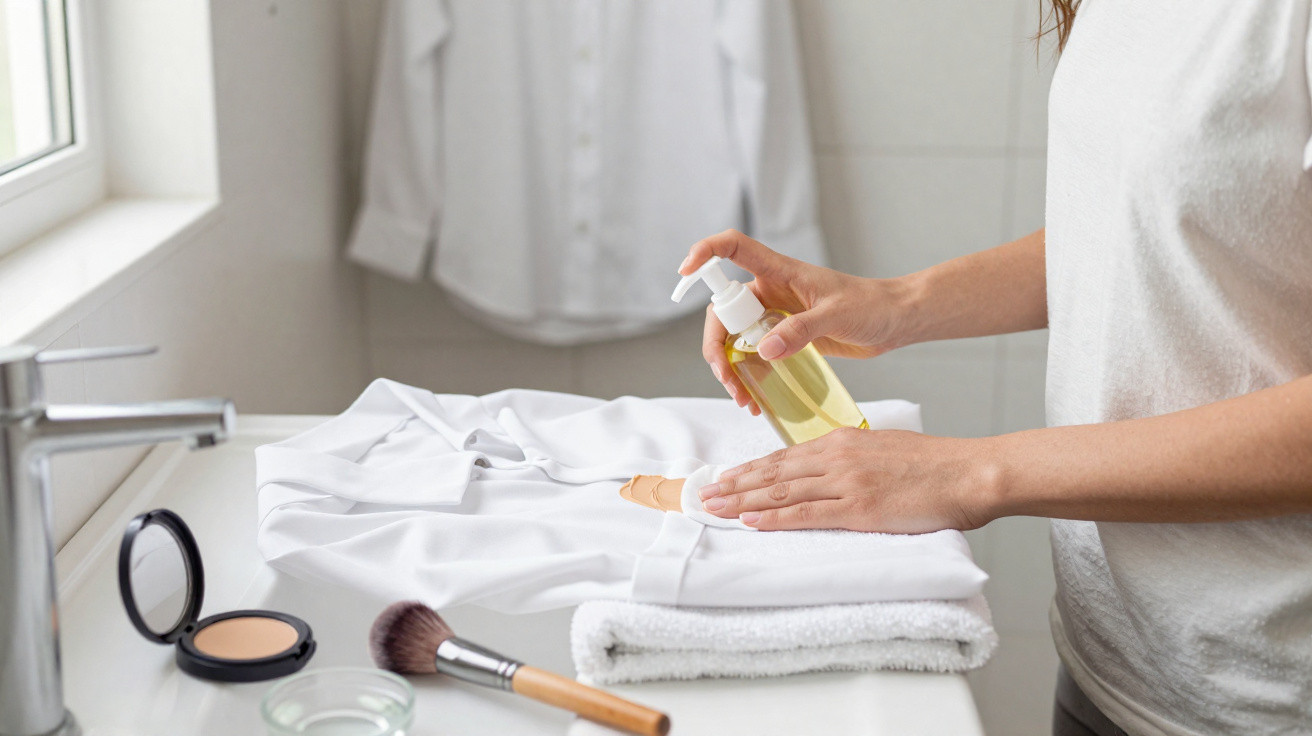
Spotting an unwanted mark after a long night out is incredibly frustrating for anyone who looks after their favourite garments. Lifting set-in residue without harming delicate fibres calls for a smart approach, so you can restore a pristine look without heavy scrubbing or harsh wash cycles.
How does cleansing oil work on fabric fibres?
Removing stubborn cosmetics from pale clothing starts with understanding how the products interact with the threads. When dense make-up foundation works its way into the weave, standard washing methods often fall short because they do not break down the oily components.
Applying an effective, targeted product directly to the stain helps split heavy cosmetic molecules without attacking the structure of cotton or silk. This more advanced method keeps the garment intact and allows the dirt to release naturally through a focused, highly efficient action:
- Lipophilic action: the product draws out greasy residue anchored in the fabric and dissolves it quickly.
- Fast emulsification: the formula turns milky on contact with water, making it far easier to rinse away completely.
- Textile protection: fine threads stay intact, with no chalky white marks left behind after at-home treatment.
Why is this method ideal for light-coloured clothing?
White items need extra care because they show even tiny imperfections, as well as yellowing caused by everyday beauty products. Using a cleansing oil provides a safer option than chlorine-based chemical bleaches.
By treating the affected area directly in your bedroom, you reduce the chance of pigment transferring onto clean sections of the garment. The result is precise and controlled, helping the fabric keep its original tone without fading or prematurely ageing the fibres.
To see how this fabric-care technique works in practice, watch the step-by-step guide on Malu Saade’s YouTube channel.
What are the steps to remove the stain without scrubbing?
Too much mechanical agitation damages fabric and wears down structured seams-one of the most common mistakes in home laundry. Gentle, accurate movements protect the threads, helping a white blouse regain its original appearance quickly.
Dry-clean-style home protocol
Efficient targeted application The key is to place just a few drops of the product on the completely dry fabric, allowing a concentrated reaction where it is needed.
Leave it for a short moment, then press lightly with your fingertips to help lift embedded mineral pigments.
Following a clear sequence prevents waste and helps the dirt release fully before the garment even reaches the sink. This streamlined routine makes clothing care faster by sticking to a few defined steps:
- Apply the remover directly onto the dry cosmetic mark.
- Massage gently in small, focused circles using your fingertips.
- Add a few drops of warm water to emulsify the mixture.
- Rinse thoroughly under running water until all oily residue has gone.
How can you protect critical areas like collars and cuffs?
Shirt ends take constant wear from skin friction and the build-up of long-lasting daily care products. Pre-treating the shirt collar helps stop grime from setting permanently after the fabric air-dries.
Regular attention to these high-wear zones can significantly extend the lifespan of your smartest, most expensive work pieces. Building this simple habit into your post-event evening routine keeps fabrics looking immaculate and free from stubborn marks:
- Check the inner seams as soon as you take the garment off in your bedroom.
- Treat any yellowed areas before dropping the item into the laundry basket.
- Avoid ironing over residue, as heat can set stains.
What should you do to prevent premature fibre wear?
Choosing gentle, purpose-made products shields delicate structural threads from fast fading and the formation of unwanted surface pilling. Selecting the right cleaning agents helps fine garments keep their drape and shape for much longer.
Spending a few minutes on a focused treatment also reduces the need for frequent heavy washing-machine programmes, saving water and electricity. Your clothes can keep a like-new finish, standing up to regular wear while staying soft and elegant.



Comments
No comments yet. Be the first to comment!
Leave a Comment