
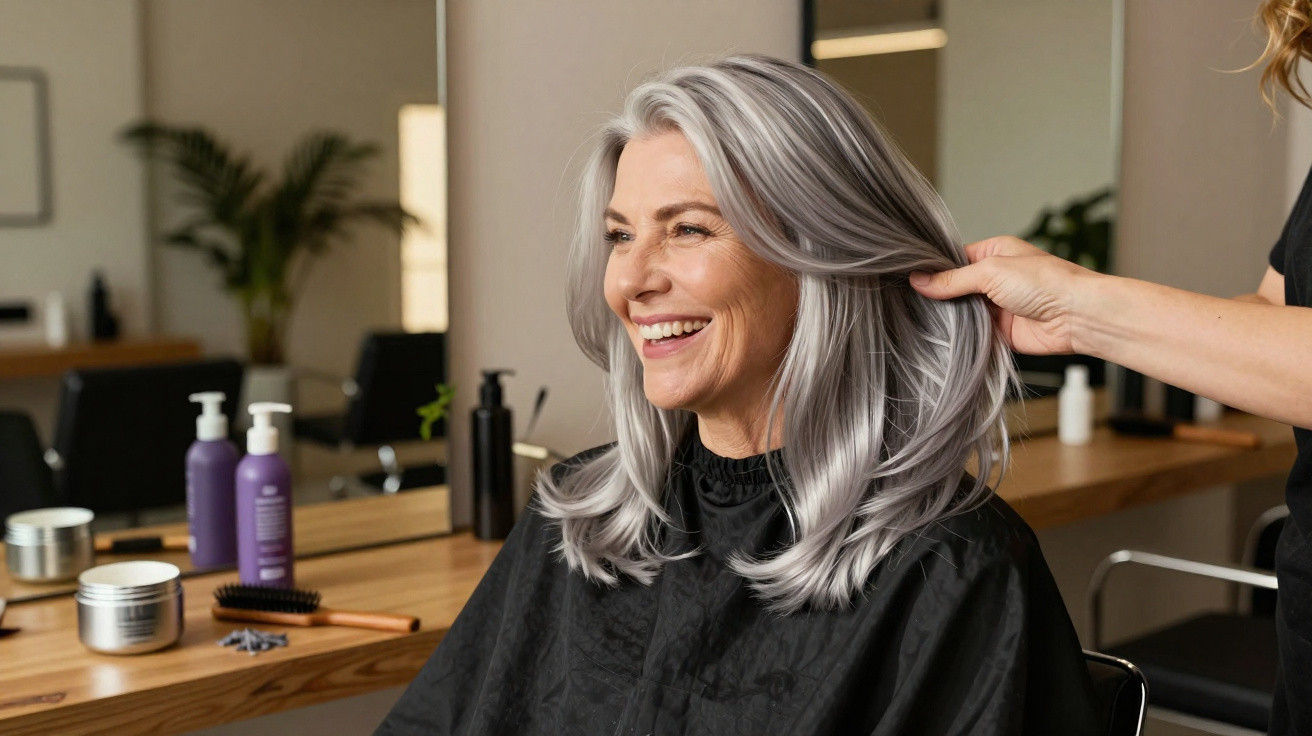
In salons across 2025, hairdressers are seeing a clear shift: more clients want to keep their natural grey, but they still want it to feel fresher, sharper and brighter. The aim is nuanced - making salt and pepper hair look youthful and purposeful, without covering it in head-to-toe colour.
Grey hair is trending, but it needs a strategy
Grey hair has moved from a “sign of ageing” to an intentional style, particularly for women over 50 who have had enough of monthly root touch-ups. However, when you stop colouring, a different set of challenges often shows up: the texture can change, the ends may become coarse, and the overall tone can read as flat.
Grey hair can be flattering and modern, as long as it looks deliberate, polished and in good condition.
In 2025, three standout techniques are taking hold for anyone who wants to embrace grey rather than mask it. They prioritise contrast, shine and light around the face, instead of opaque, all-over coverage.
Grey blending: the soft transition that fakes younger hair
“Grey blending” has quickly become the most requested option for people who want to grow out old dye without living with a stark regrowth line. Rather than stopping colour abruptly, the stylist softly combines the previous colour with the new silver growth.
At its core, the idea is straightforward: build dimension so the eye stops locking onto the boundary between darker, pigmented lengths and lighter roots.
- Lighten a few strategic strands with a soft balayage or foils.
- Apply a sheer gloss to cool down brass and boost shine.
- Use a toner to align warm and cool tones for a more even look.
This approach is not about concealing grey; it is about making it appear deliberate and full of movement. As the contrast between coloured lengths and natural roots becomes less obvious, the hair tends to look denser and more youthful overall.
Gray blending turns “growing out dye” into a hairstyle, not a phase to suffer through.
Stylists commonly suggest grey blending for the first 6–18 months after you stop full colouring. By that stage, there is typically enough natural grey to wear confidently, with only occasional glossing needed.
Smoky silver: the chic upgrade to flat grey
When salt and pepper hair has dulled or taken on a yellowish cast, “smoky silver” can provide a refined reset. Picture cool ash tones, anthracite depth and a gentle metallic sheen.
Rather than pushing towards bright, icy platinum, smoky silver stays in a softer and deeper range. That usually makes it more wearable on mature skin and across varied skin tones.
Why smoky silver feels younger, not older
An all-over, flat grey can pull the face down. Smoky silver reintroduces contrast near the face, which often sharpens the look of cheekbones and helps the eyes stand out.
Stylists tend to build the effect by:
- Neutralising yellow with a violet or blue-based toner.
- Adding deeper charcoal lowlights for depth.
- Finishing with a high-shine treatment for a metallic finish.
Depth plus cool reflection gives grey hair that “expensive” glow people often associate with younger, healthier hair.
The crucial point is avoiding roots that are too dark, as that can make features look harder. For most over-50s, a gentle gradient - slightly deeper at the roots and lighter through the ends - is generally the most flattering.
Face-framing highlights: instant lift without full colour
For high impact with very little ongoing commitment, face-framing highlights are the understated hero of 2025 salon menus. The concept is simple: lighten only the pieces that sit around your face.
On grey or salt and pepper hair, those brighter strands work like a built-in ring light. They soften the look of lines, pull focus towards the eyes and inject energy into the cut.
Stylists frequently place face-framing highlights in harmony with your natural grey pattern rather than trying to override it. Just a handful of lighter sections at the front can make a straightforward bob look newer and more intentional.
Light around the face works a bit like a soft-focus filter: it brings radiance without changing who you are.
Which technique fits your lifestyle?
| Technique | Best for | Maintenance |
|---|---|---|
| Gray blending | Growing out old dye gracefully | Salon visit every 3–4 months |
| Smoky silver | Dull or yellowish grey needing a reset | Toner and gloss every 6–8 weeks |
| Face-framing highlights | Quick brightness around the face | Touch-up 2–3 times a year |
The 2025 haircut that makes grey hair look modern
Colour rarely does all the work on its own. The haircut is often what decides whether grey reads as stylish or simply “tired”. Right now, stylists are broadly in agreement: layered shapes tend to be more flattering than heavy, one-length cuts.
Soft layers add movement, helping grey tones catch the light and show their natural variation. A blunt, weighty shape can emphasise stiffness and may make the face look older.
Flattering cuts for salt and pepper hair
- Layered bob: Falls at the jawline or collarbone, with texture through the ends to keep it lively.
- Pixie cut: A strong option for defined features, and it can look especially current with smoky silver or gray blending.
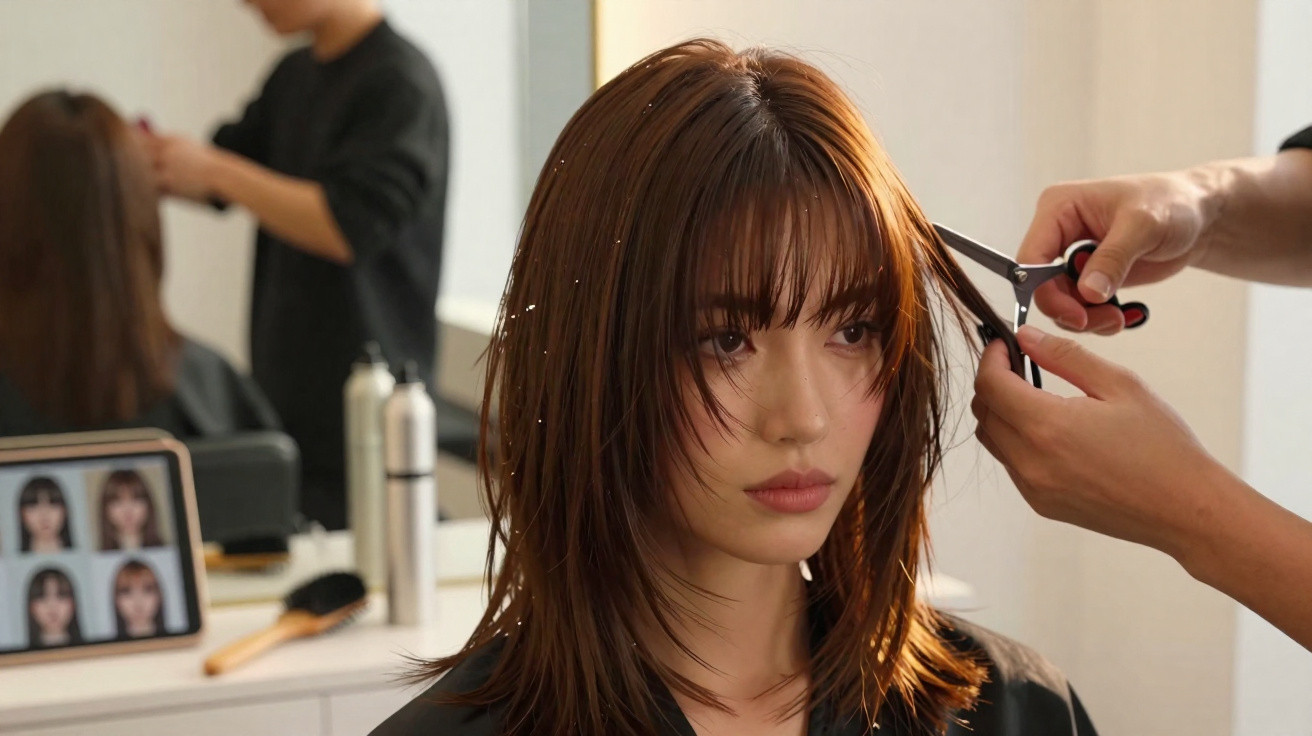
- Mid-length with curtain fringe: A soft, centre-parted fringe that frames the face and pairs well with face-framing highlights.
Movement in the cut echoes the natural variation in grey, turning “salt and pepper” into a built-in highlight effect.
What stylists aim to steer clear of: heavy, one-length “helmet” shapes or overly rigid blow-dries. Even if the colour looks good, these finishes can spotlight dryness and create a dated feel.
Hydration, shine and daily care: the real age-reset
Natural grey hair often feels coarser because the cuticle can become more porous. That increased porosity can lead to frizz, split ends and a duller surface, all of which can age the overall look.
Many professionals now treat grey much like textured or colour-treated hair, focusing on targeted moisture and protection.
What to look for in grey-hair care
- Ceramides: Help repair the cuticle and reduce roughness.
- Keratin: Supports strength, especially on brittle ends.
- Hyaluronic acid: Attracts water and adds plumpness to dry strands.
- Leave-in conditioner: Shields against heat, pollution and breakage.
Healthy grey hair reflects light; that reflection often does more for a youthful look than any dramatic colour change.
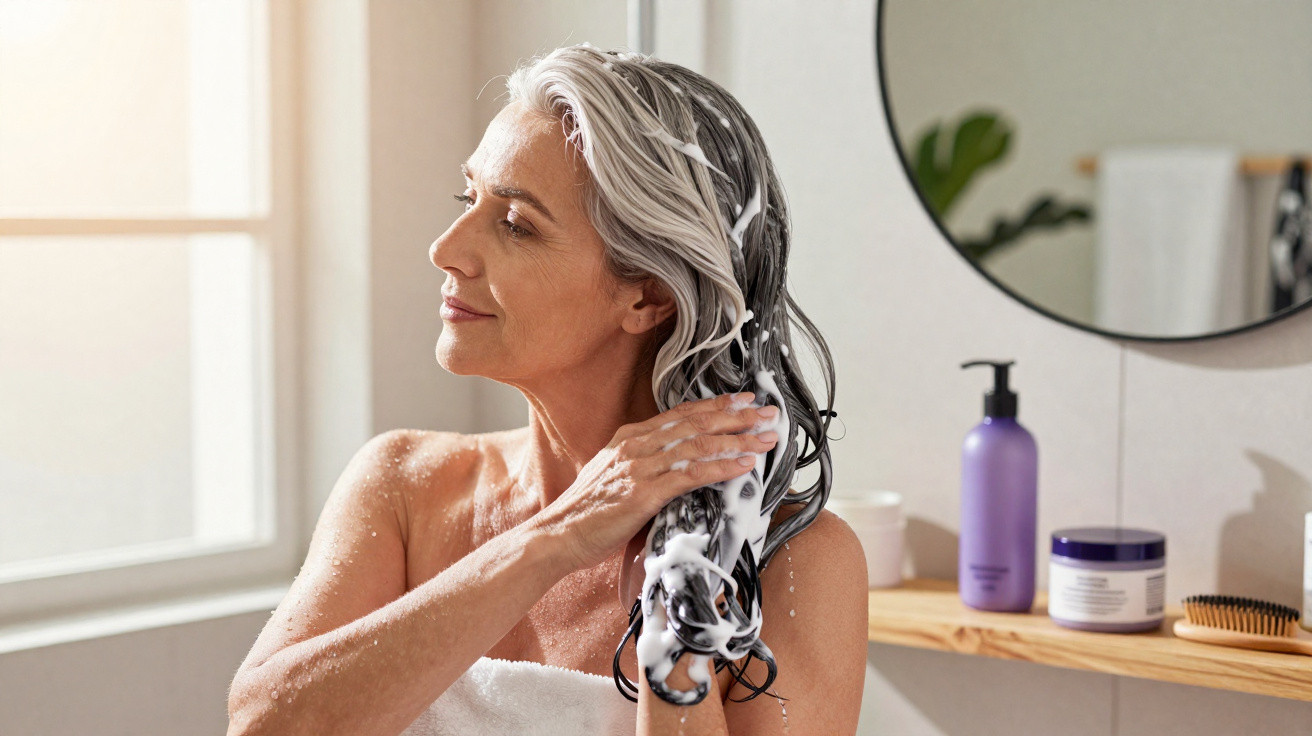
Purple shampoos can reduce yellowing, but using them too often may leave hair looking dull and slightly violet. Many stylists recommend limiting them to once a week, alternating with a gentle, hydrating shampoo.
How these choices play out in real life
Consider two 55-year-old women with similar amounts of grey. One stops colouring overnight, keeps a blunt shoulder-length cut and carries on using the same shampoo she used in her 30s. The regrowth line remains obvious, the texture feels rough, and the grey can appear accidental.
The other books a grey blending appointment, introduces soft layers and swaps to ceramide-rich products, adding a weekly hydrating mask. Within months, the regrowth becomes part of a blended pattern, the haircut has more movement, and the grey looks styled rather than endured.
For many, the real shift happens when grey is seen as a material to shape, not a flaw to correct. Once that mindset changes, choices like blending, smoky tones or face-framing highlights feel less like damage control and more like design.
There is a psychological element too: keeping natural grey while still investing in cut and care can read as confidence rather than resignation. That balance - authenticity with polish - is exactly what 2025 grey-hair trends are trying to achieve.



Comments
No comments yet. Be the first to comment!
Leave a Comment