
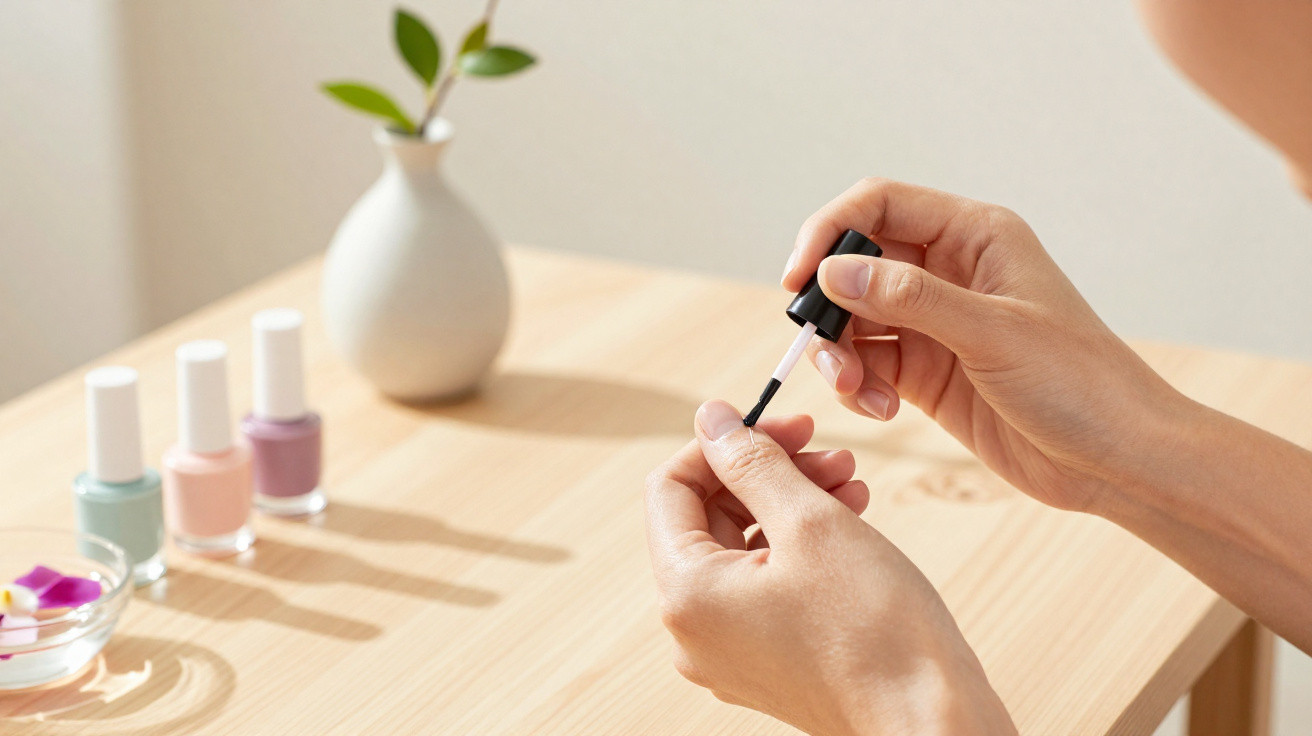
The Japanese technique for nail care has been gaining popularity among people who want their nail polish to stay put during everyday tasks. The method centres on carefully sealing the very tip of the nail, creating a barrier that helps prevent early chipping. This extra step is particularly helpful for anyone who washes up, uses cleaning products, or has a busy household routine-situations where the finish tends to wear down quickly.
What makes nail polish chip in everyday life?
Nail polish doesn’t start peeling for no reason. It is often triggered by factors such as constant contact with hot water, exposure to chemical products, and insufficient protection at the nail tip. Together, these weaken the top layer and speed up wear.
Skipping proper sealing also makes it easier for polish to lift at the edges. Without that reinforcement, tiny cracks can form and quickly spread, ruining the overall finish.
How does the Japanese technique help nail polish last longer?
What sets the Japanese technique apart is the way it strengthens the nail’s structure and protects the nail polish as soon as the manicure is finished. The aim is to stop water and friction from undermining adhesion at the nail tip-the area most prone to damage.
When the sealing is done correctly, the product creates a kind of "closure" along the free edge, making it harder for chipping to begin. As a result, the polish lasts better even with more demanding routines, such as frequent cleaning and regular contact with washing-up liquid.
Main benefits commonly noticed when applied properly:
- Less chipping in the first layers of nail polish;
- Better adhesion of the nail polish across the nail surface;
- Extra protection for the nail tip against knocks and friction;
- Stronger sealing performance during household routines.
Which habits strengthen nail sealing?
Keeping sealing effective depends on a few simple, consistent habits. The Japanese technique supports exactly this protective routine, treating maintenance of the nail tip as the key point for preventing polish failures.
A few practices can help extend how long the application holds:
- Avoid long exposure to water straight after painting your nails;
- Re-seal the tip with each new coat of nail polish;
- Wear gloves when handling cleaning products;
- Keep the nail tip even and free from small chips or snags.
The link between protecting the nail tip and a professional finish
When the nail tip is given extra attention, the polish result usually looks more even and long-lasting. The Japanese technique focuses on this area, building a base that stands up better to daily wear.
Sealing becomes an essential step in keeping the finish intact for longer. It helps reduce chipping and keeps nails looking more organised, even after repeated tasks such as cooking or cleaning.
Why does the Japanese technique improve your care routine?
Using the Japanese technique changes how nail polish performs over the following days. By strengthening the seal and shielding the tip of the nail, you get a more stable surface that is less likely to break down with routine wear.
With fewer chips, nail upkeep can be more spaced out and predictable. That makes day-to-day life easier for anyone who needs their hands to look well cared for, even with frequent household tasks.
The balance between protection and a neat finish makes the Japanese technique a practical option for those who want more durable nail polish without sacrificing a well-finished look. Correct sealing and ongoing care of the nail tip are what keep that result going over time.

Comments
No comments yet. Be the first to comment!
Leave a Comment