
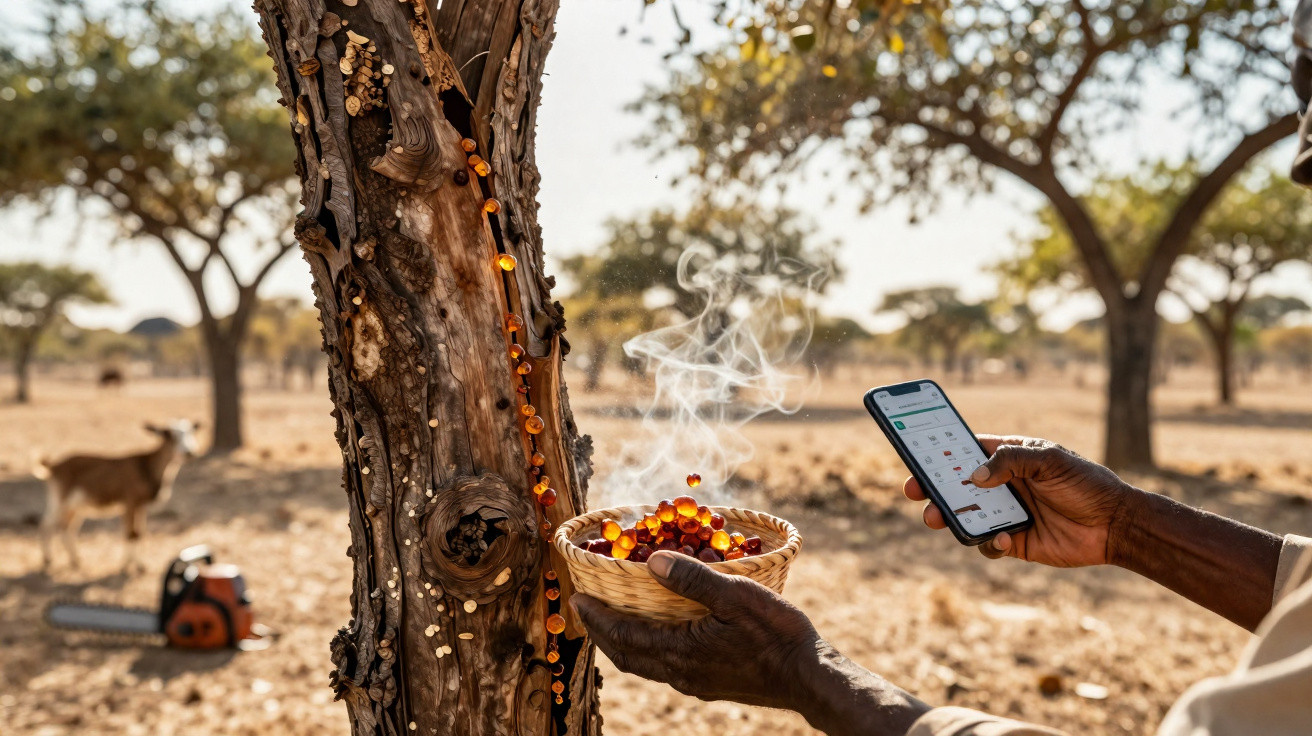
A gentle, smoky fragrance wafts through churches, yoga studios and high-end bathrooms - yet the trees that produce it are under mounting strain.
Frankincense, once tied to ancient riches and spiritual authority, now sits where climate pressure, a booming global wellness market and precarious livelihoods collide in the Horn of Africa. For many buyers it signals tranquillity and tradition; for many harvesters it can mean uncertainty, loans and trees that are failing to persist.
The festive scent with a fragile supply
Frankincense is neither a flower nor an essential oil. It is a solidified resin drawn from several Boswellia species: hardy desert trees that cling to stony slopes across Somaliland and Somalia, into Ethiopia and Sudan, and onwards to parts of the Arabian Peninsula. Harvesters slice the bark, a milky sap oozes out, and after drying into pale yellow “tears” it is scraped off and sold.
For generations, caravans moved these aromatic tears along trade corridors connecting Africa, Arabia, India and the Mediterranean. The resin still travels widely, but it now ends up in a very different mix of destinations - Catholic worship, traditional Indian and Chinese medicine, aromatherapy, skincare serums, and incense sticks burned in suburban homes.
Frankincense now feeds a vast wellness economy while depending almost entirely on wild trees that are not regenerating fast enough.
Analysts put the wider wellness industry at trillions of dollars, and frankincense has benefited from that surge. As interest grows in “natural” scents, relaxation aids and anti-inflammatory products, demand keeps climbing. The Boswellia trees supplying the resin, however, cannot expand nearly as quickly.
The harvester’s dilemma in Somaliland
In Somaliland’s Sanaag region, harvesters such as Salaban Salad Muse plan the year around the tapping season. Men spend months in caves or makeshift shelters, hiking rugged terrain to reach family-owned Boswellia stands. They look out for pests, clear sand that can bury seedlings, and judge how many cuts each tree can cope with.
Earnings are typically tied to how much resin a harvester delivers. When international buyers demand higher volumes, or when prices fall, the burden lands on harvesters to cut more frequently and more deeply. In places shaped by conflict or limited oversight, brokers can set the rules, offering upfront cash that later traps harvesters in poor selling arrangements.
For many households, alternatives are limited. Drought can reduce livestock income, paid work is rare, and leaving in search of work brings hazards of its own. As a result, tapping often intensifies even when people understand the trees need time to recover.
How a tree runs out of resin
The traditional approach to tapping is straightforward but disciplined. Harvesters make a small number of shallow cuts and then leave the tree for weeks while resin forms. After a few cycles in a season, the tree is given months - sometimes an entire year - without tapping. That pause allows wounds to close, new tissue to develop and seeds to set.
When the pace increases, the system stops working. Excessive incisions sap the tree’s energy reserves, disrupt seed production, and create long-lasting entry points for insects and fungi. One recent technical report indicated that some severely harmed Boswellia trees might require a decade or longer to regain health - assuming they survive.
Over-tapping turns a tree from a renewable source into a mined resource, drawing down a bank account that is no longer being refilled.
Studies from Ethiopia and Sudan focusing on Boswellia papyrifera - one of the most important frankincense species - describe an alarming situation. Many groves contain few, if any, young trees. Seedlings are eaten by grazing animals. Regular grass fires burn saplings before they mature. In some areas, natural regeneration has been minimal for decades.
Researchers caution that if practices do not change, resin production in these populations could drop by half within 20 years. Other Boswellia species face varying degrees of pressure, but the same pattern recurs across the region: ageing trees that are repeatedly overused.
Climate, beetles and chainsaws
Tapping is only one part of the squeeze on frankincense trees. Climate change is already altering the semi-arid habitats where Boswellia grows. Unpredictable rainfall can stress trees, while sudden floods can erode shallow root systems. Prolonged dry periods leave bark brittle, increasing cracking and susceptibility to infestation.
Wood-boring beetles present a particular danger. Where trees are already weakened, larvae tunnel through trunks and branches, interrupting water transport and speeding decline. Affected groves often show dead crowns, snapped limbs and a steep fall in resin output.
Grazing and fire intensify these pressures. Goats and camels browse seedlings before they can establish. Unmanaged fires - sometimes lit to clear land or encourage new pasture - move through young Boswellia stands and effectively wipe out regeneration.
Infrastructure and extractive projects can also shrink or break up frankincense landscapes. New roads can make previously remote groves easier to access, which may help communities reach markets but can also open the door to heavier exploitation.
Can planting save frankincense?
The vast majority of frankincense is still collected from wild trees. That reliance adds to the resin’s cultural appeal, but it also creates a biological bottleneck. In response, some researchers and NGOs are encouraging planting efforts, ranging from community woodlots in Ethiopia to agroforestry trials in West Africa.
In principle, cultivating Boswellia in managed settings could distribute risk, bolster local earnings and reduce pressure on wild stands. Nurseries for seedlings, fenced plots and training for farmers all point to a more deliberate model for the resin economy.
- Wild stands provide genetic diversity but are under heavy strain.
- Planted groves allow closer oversight and more reliable resting periods.
- Blended approaches with crops or livestock could smooth household incomes.
Planting, though, is not a simple fix. Land that suits Boswellia is often already used for herding, farming or other activities. New plantations can lead to conflicts over water access or traditional grazing routes. Where governance is weak, higher-value trees may even encourage land grabbing.
Efforts to “save frankincense” only work when they first protect the people who live with the trees and depend on them.
Smartphones meet sacred smoke
One of the more distinctive responses involves digital monitoring. In Somaliland, a company called DFEC is piloting three mobile-based services designed to make supply chains clearer and reduce damage.
Harvesters who sign up with DFEC can bring resin to collection centres, where each batch is recorded with its timing, source and quality grade. The app follows resin from isolated villages to warehouses and on to export shipments, creating traceability that buyers can verify.
| DFEC feature | Practical effect for harvesters |
|---|---|
| Traceability app | Records origin and movement of resin, helping justify higher prices for well-managed trees. |
| Tree health app | Geotags trees, tracks incisions, age and condition, and schedules check-ups. |
| Training and support | Workshops on sustainable tapping, climate adaptation and basic business skills. |
Field staff visit groves with smartphones, measure trunk size, tally bark cuts and upload photographs. Each tree is turned into a data point in a live map. Early trials have already logged thousands of trees and provided training to several thousand harvesters on how to reduce tapping intensity while still maintaining some income.
The system can also connect to mobile wallets, allowing payment by electronic transfer even for harvesters located days from the nearest bank. That reduces reliance on cash advances from intermediaries and makes it easier for buyers to pay a premium for resin that is verified as sustainably produced.
Shifting responsibility up the chain
Digital systems can show what is happening in the groves, but they do not determine who pays more or who changes behaviour. Those decisions sit further up the line - with fragrance companies, wellness brands, religious organisations and, ultimately, consumers.
Researchers note that people purchasing products containing frankincense rarely see the hidden costs behind low resin prices. Labels may emphasise purity or calm, but they seldom mention tree age, regeneration rates or how harvesters are paid. Without strong demand signals, responsibly sourced resin must compete against cheaper supplies drawn from overworked groves.
The question hanging over the incense burner is simple: who is willing to pay for resin that leaves enough cuts unmade?
Some specialists point to the Catholic Church in particular. While it represents a relatively small proportion of global volume, its visibility and moral authority extend widely. An explicit preference from church leadership for certified sustainable frankincense could push suppliers to adopt better practices and strengthen ethical sourcing efforts.
What your next incense stick really means
To most consumers, frankincense is intangible: a smell, a curl of smoke, a drop of oil on the wrist. Yet each of those traces leads back to real trees on distant cliff edges with scarred bark, and to people hauling sacks of resin in desert heat. Choosing cheap incense in bulk or selecting products that offer some form of traceability is directly linked to whether young Boswellia can survive long enough to replace the older trees being cut today.
For those working in health and wellness, the implications are practical. A yoga studio that uses frankincense-heavy blends can question suppliers about the tree species, harvesting areas and whether any field monitoring is in place. A cosmetics company relying on frankincense for its anti-inflammatory reputation could allow for a modest premium that supports training or tree-health assessments in sourcing regions.
The same thinking extends to policymakers and development organisations. Frankincense lies where climate adaptation, rural livelihoods and cultural heritage overlap. Local initiatives that combine regulated grazing, fire control, alternative income options and careful tapping schedules may not attract attention, but they strongly influence whether the resin trade remains viable within a generation.
Behind the warmth of a Christmas mass and the hush of a meditation class sits a slow, technical task: matching the life cycle of a desert tree to the appetite of a global marketplace. That involves tracking seedlings, deciding when not to cut, logging information in simple apps and renegotiating who benefits from each fragrant tear of resin.






Comments
No comments yet. Be the first to comment!
Leave a Comment