
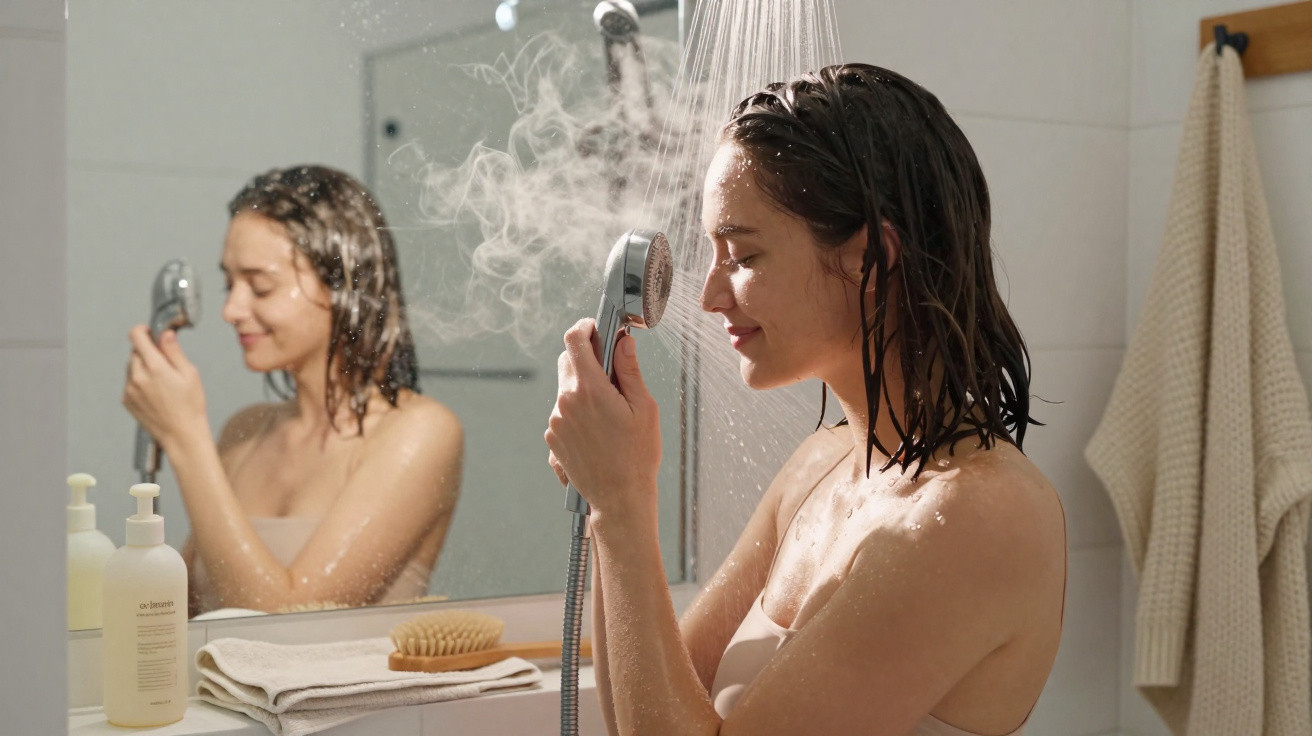
That little fizzing sound when you tug a jumper over your head and your hair springs up like it’s about to feature in a school lab demo?
That’s winter quietly sabotaging any hope of sleek, polished hair. One minute your blow-dry looks passable; the next you resemble someone who’s been yanked backwards through a display of party balloons. It isn’t merely irritating - it’s oddly mortifying, particularly when you’re trying to look even slightly pulled together at work or on a first date.
We point the finger at the coat, the scarf, the biting wind, even the hat. We mist, smooth and mutter. But the real reason hair turns into a static weather system from November onwards is more subtle than it appears - and the solution isn’t a new serum or a £35 brush. It’s sitting in the dullest bottle in your shower, and it only requires a tiny change.
The day your hair starts fighting back
There’s usually a particular day each year when it hits you: winter has arrived, and your hair has stopped cooperating. Perhaps it’s in the gym changing rooms - you pull on a sports top and suddenly every strand is standing to attention, plastering itself to your cheeks and lips. You try to press it down with your hands, only to find your palms make the flyaways even more determined, as though you’re charging them. You catch sight of yourself and think, “I did not sign up for live-action static electricity.”
Most of us have also had the moment where a lift door opens, or you lean towards a car window, and you see your hair actively reaching for the glass. It feels personal, as if your hair has taken against the entire season. You begin dodging woolly hats, convincing yourself that numb ears are a fair trade. Then you get to the office, shrug off your coat, and your hair pulls the balloon trick again under strip lights. There’s nowhere to hide.
The weird thing is how little the usual fixes do. You can buy the pricey shampoo, the posh oil, the smoothing spray full of glossy promises. Still, your hair crackles when you brush it. The harder you battle, the more it seems to rise and cling, as though your hair is staging its own small winter uprising.
The boring science your hair is secretly living by
“Static” sounds dramatic, but the mechanism is almost embarrassingly straightforward: your hair is collecting extra electrical charge. Each time a strand rubs against something - your jumper, your scarf, your coat lining - it gains or loses tiny charged particles. When lots of strands end up with the same kind of charge, they push away from one another. That’s why hair fans out and floats: each strand is trying to get away from its neighbours.
Add winter conditions and it gets worse. Cold outdoor air contains less moisture, and central heating dries indoor air even further. Humidity drops, and the air becomes less able to help “earth” that excess charge. Dry air plus dry hair means the static has nowhere to disperse, so it keeps accumulating. Your hair turns into a set of tiny magnets that refuse to sit neatly together.
And the condition of your hair matters more than we like to admit. When the hair fibre is dehydrated, the surface becomes rougher and less supple, so it grips fabrics more aggressively and holds charge for longer. In practice, you become a walking Van de Graaff generator every time you pull a polo neck over your head.
Why your usual conditioner quietly gives up in winter
Most people apply conditioner in a perfunctory way: a quick squeeze, swipe it over the ends, rinse it out while mentally planning dinner. Realistically, hardly anyone stands there calmly working it through like they’re in a hair advert, especially on a weekday morning. In summer, that casual approach is often enough because there’s more moisture in the air and hair tends to feel softer anyway. Once temperatures drop, that half-effort suddenly stops cutting it.
Conditioner isn’t just there to “make your hair soft”. It coats each strand with a thin smoothing layer, helping it lie flatter and behave. It also adds a little weight, which is key to preventing hair from lifting into static. The issue is that winter wears that layer away more quickly: scarves, hats, dry air and more frequent hot showers grind down whatever protection you managed in 30 seconds.
Your formula matters as well. Light, summery conditioners designed “not to weigh hair down” can leave static-prone hair almost bare. The silicones and conditioning agents that provide genuine control are often used sparingly, so you get shine but little restraint. In winter, hair typically needs a touch more heft - not another featherweight mist that smells lovely and achieves very little.
The tiny tweak in the shower that changes everything
Flip your routine, not your whole product shelf
Here’s what rarely gets said: fixing winter static usually isn’t about buying something new, it’s about using what you already own differently. The adjustment is simple - treat conditioner like the main step, not an afterthought. Use slightly more than you think you should, apply it with intent, and - most importantly - don’t rinse away every last trace.
After shampooing, gently squeeze out excess water first. When hair is dripping, it can’t hold conditioner properly; the product just slides off. Apply conditioner from around ear height down, then add a small amount through the upper lengths, steering clear of the scalp if you get oily quickly. Use your fingers or a wide-tooth comb to distribute it until your hair feels slippery and evenly coated.
Then do the bit that actually changes the static: leave it on for a couple of minutes, rinse with lukewarm (not hot) water, and don’t chase the squeaky-clean sensation. A faint veil of conditioner left on the hair shaft becomes an invisible anti-static barrier once dry. You’re not aiming for sticky or heavy - just that soft, slightly silky slip that lets your brush glide rather than scrape.
The “half rinse” trick for serial static sufferers
If your hair is very fine or permanently airborne, try the alternative version. Rinse your conditioner normally, then, right before you step out of the shower, smooth the tiniest pea-sized amount through the mid-lengths and ends again. Don’t rinse this final touch. Pat dry gently and style as you usually would.
That micro-layer works like a built-in leave-in cream, without adding another separate product to clutter the bathroom shelf. It gives just enough moisture and slip to stop strands charging up and attaching themselves to your face every time you remove a scarf. For many people, that alone takes static from “constant” to “barely there”. And you didn’t have to buy anything.
Why water, not oil, is the secret winter ingredient
Reaching for an oil or serum when your hair looks frizzy and untamed feels sensible. It gives thickness, gloss and a “coated” finish. The problem is that static isn’t solely about looking dry; it’s about lacking moisture inside the hair fibre. Oils mostly sit on the surface - they can help a little with frizz, but they don’t address the internal dehydration that makes hair charge up with the smallest bit of friction.
A decent conditioner is water-based, so it can help reintroduce moisture, then hold on to some of it using film-forming ingredients. The goal is hair that’s flexible with a hint of weight, not hair sealed under a glassy silicone layer that looks sleek yet still crackles the moment a wool scarf comes near it. Static-prone hair often feels strangely light and floaty, and the antidote is strands that are properly hydrated and therefore less eager to fly.
If you adore your hair oil, keep using it - just layer sensibly. Let conditioner handle the main hydration in the shower, then apply a tiny drop of oil to the ends once your hair is mostly dry. Think of oil like the top coat on painted nails: attractive and protective, but pointless without the base underneath.
The towel, the brush, the jumper: small villains in the static drama
Although the conditioner tweak does most of the work, a few small changes around it can make the difference feel almost unreal. That aggressive towel-rubbing habit many of us learnt as children? It’s a static generator. Instead, press or squeeze water out with a soft towel or an old cotton T-shirt. Your hair will look less frazzled before you even reach for a brush.
Plastic brushes and bargain combs are also great at building charge. A wooden brush, or one with mixed bristles, is gentler - and you’ll genuinely hear less of that faint fizzing noise as it goes through your hair. If you’re brushing in extremely dry air - hello, office loos with roaring hand dryers - run your hands under the tap first and leave them slightly damp while you handle your hair. That tiny bit of moisture helps absorb excess charge.
Clothing plays a part too. Synthetic jumpers, coats with polyester linings and fluffy scarves can amplify static dramatically. You don’t need to bin your wardrobe; just clock the pattern. If you’re wearing a high-neck acrylic knit, give your hair an extra smoothing conditioner pass in the shower that morning, or keep a small leave-in spray as a backup. Knowing your triggers stops you blaming your hair for what is, frankly, your outfit’s doing.
The emotional side of hair that won’t behave
On paper, static hair sounds trivial. In real life, anyone who’s stood under unforgiving shop lighting trying to flatten a halo of flyaways knows how much it grates. Hair is strangely linked to how “together” we feel. When it starts acting independently - lifting, floating, sticking to lip gloss - it can make you feel scruffy, childish and less in control.
There’s a quiet self-consciousness to fussing over it as well. You notice yourself repeatedly patting your head against a train window or in a café, trying to persuade the flyaways to settle. You feel slightly vain, even though it’s really about wanting your outside to match your inside that day. You’re trying to present the calm person you worked to become, not the frazzled cartoon with lightning hair.
That’s why this small conditioner adjustment matters more than it seems. When your hair stays where you place it, you stop thinking about it every five minutes. You can take off your scarf in a packed bar without that sinking moment. And your mornings feel calmer because winter is no longer a three-month argument between your hair and your clothes.
When the tweak doesn’t work (and what that really means)
If you try the “more mindful conditioner, lighter rinse” approach and your hair still resembles a static-charged hedgehog, it may be signalling something more. Very damaged or heavily processed hair often can’t retain moisture properly, regardless of how much conditioner you apply. Bleach, strong dyes and years of heat styling can leave the surface so rough that, even when you do everything “right”, it still snags on every jumper fibre that comes near.
In that situation, treat the conditioner tweak as damage limitation rather than a miracle. It will still improve things, but you may need to add a weekly deep-conditioning mask or a protein treatment, or give the straighteners a break for a while. The goal is to gradually repair the hair’s surface so it can hold moisture from the inside out, not merely sit beneath a layer of cosmetic shine. Sometimes static is the first small warning that your hair is more fragile than you thought.
It’s also worth accepting a basic truth: some hair types will always be more prone to “floatiness” in winter. Very fine, straight hair has less natural weight and often less natural oil, so it’s more likely to lift. That isn’t a failure of your routine; it’s simply your hair being itself. The aim isn’t to bully it into submission - just to make it cooperative enough that you can get on with your day without checking every shop window.
Winter, but make it less electric
Once you understand what turns winter hair into a static firework - dry air, dry strands, and friction from clothing - it stops feeling like a personal vendetta. That unglamorous bottle of conditioner you’ve been racing through becomes an everyday tool you can actually use properly. Squeeze out more water first, spend an extra 30 seconds, rinse a little less, and leave the faintest film on your ends. It doesn’t sound heroic, but your hair will quietly reward you each time you pull off a woolly hat.
You’ll still get the occasional balloon moment - the odd crackle when you peel off a jumper in the dark. That’s simply winter doing what winter does. But those moments stop setting the tone for your whole look, or your whole morning. And one day you’ll slide your coat off your shoulders, shake out your hair, and notice - with a slightly smug little smile - that nothing floats, nothing clings, it just falls. Static or not, that’s a very good feeling.






Comments
No comments yet. Be the first to comment!
Leave a Comment