
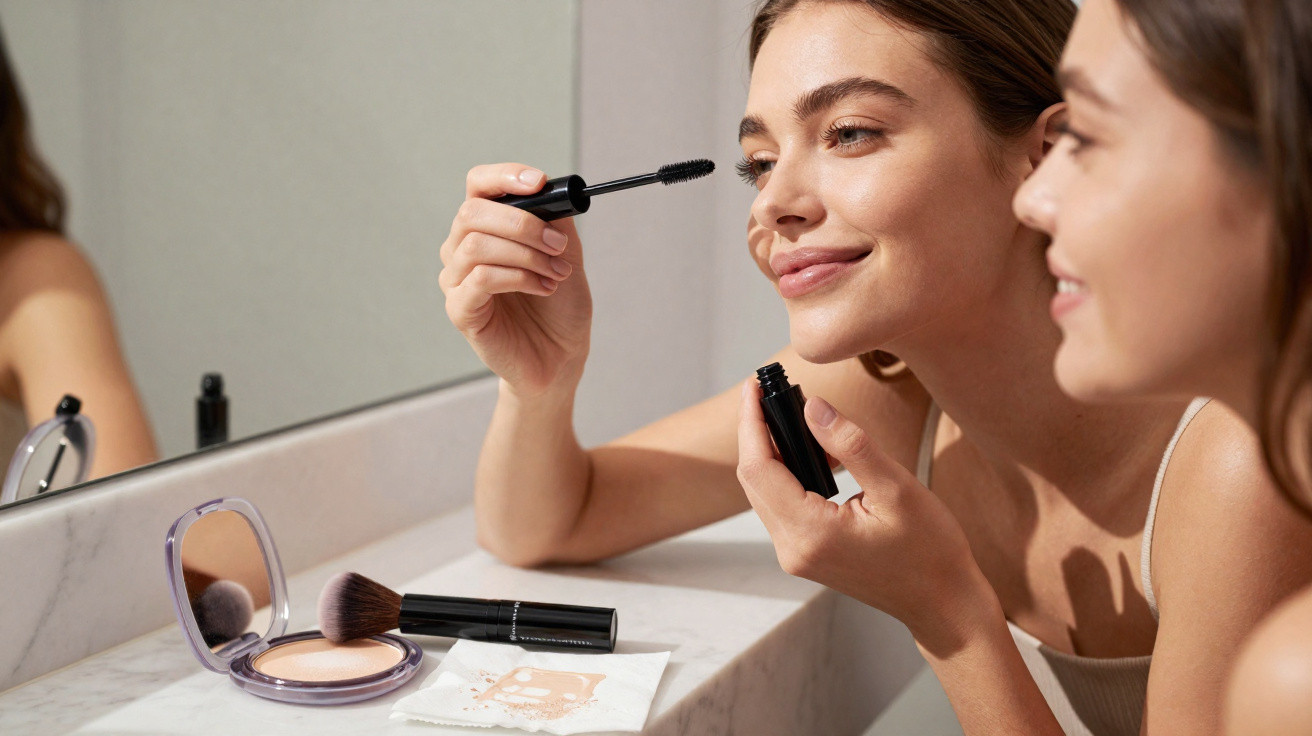
You can leave the house looking put-together - lashes perfect - then glance in a mirror a couple of hours later and see dark smudges beneath your eyes. A mascara that runs does more than ruin pictures; it can dent your confidence, particularly when the day feels important. The upside is that a handful of sensible techniques and the right products can greatly reduce the chances of ending up with panda eyes.
Waterproof mascara: when you really need staying power
When heat, humidity or emotions are involved, most make-up artists immediately opt for waterproof mascara. These formulas are built to stand up to water and sebum, the two biggest reasons mascara smears.
Waterproof mascara is your first line of defence on rainy days, at weddings, or during long commutes.
Check for packaging that states “waterproof” or “long-wear”. These versions rely on tougher film-forming ingredients, helping the mascara cling to the lashes and resist breaking apart. The trade-off is that they can feel a touch drier than standard formulas, so it’s best to curl your lashes beforehand - once waterproof mascara has set, altering the shape is difficult.
The main downside is taking it off. Scrubbing at night can irritate the delicate eye area and weaken lashes. Instead, reach for a bi-phase eye make-up remover or an oil-based cleanser, then hold a cotton pad soaked in product over your lashes for 15 seconds before wiping away gently.
- Use waterproof mascara for events, hot weather and emotional days.
- Keep a nourishing lash serum or conditioner in your routine to balance dryness.
- Always remove it with an oil-based product, never with force.
Powdering the face: stop oils from dragging mascara down
If your skin is oily - or you use a creamy concealer around the eyes - it can behave like a slippery surface, gradually pulling colour downwards as the hours pass. Locking the base in place can make a noticeable difference.
Setting powder around the eyes reduces smudging by controlling shine and movement.
Once you’ve applied foundation and concealer, sweep a light translucent powder over the T‑zone and under the eyes. Use a small, fluffy brush and knock off any excess first so you don’t emphasise fine lines. Pay particular attention to the lower lid and the top of the cheekbone, where mascara marks typically appear.
Even very dry skin can do well with a barely-there layer of powder, but it’s wiser to choose a finely milled, moisturising or luminous option. You’re not aiming for a flat matte finish - just a smoother base that is less likely to encourage transfer.
| Skin type | Best powder approach |
|---|---|
| Oily | More generous powder under the eyes and on eyelids |
| Combination | Powder T‑zone and under-eye area only |
| Dry | Very light dusting of hydrating or luminous powder |
Less is more: stop overloading your lashes
Piling on coat after coat can look dramatic at first, but it often ends in flaking and smearing. The thicker the build-up, the longer it stays pliable - and the easier it is for pigment to move onto your skin.
Two thin coats of mascara last longer and look cleaner than four heavy coats.
Before you apply, scrape away surplus mascara on the rim of the tube or dab the wand on a tissue. Place the brush at the roots, give a gentle wiggle, and then sweep upwards through the lengths. If you want added impact, repeat after you’ve coated both eyes.
A simple check: if you can see obvious clumps forming, you’ve applied too much. You can fix it by combing through with a clean spoolie or a metal lash comb to lift away excess product before it sets.
Patience pays: let your mascara dry properly
A lot of smudging happens within minutes of application. If you blink forcefully, glance upwards quickly, or brush your lashes, wet mascara can stamp onto your lids or under-eye area.
Give your mascara at least 30 seconds to set before moving on with the rest of your routine.
After applying, look slightly downwards and try to avoid heavy blinking. Some people speed things up by lightly fanning their lashes with a hand or a small fan. Wait until the lashes feel firmer before using setting spray, cream blusher or anything else near the eyes.
If you notice a new smudge, leave it until it’s completely dry, then flick it off with a dry cotton bud. Wiping while it’s still wet usually spreads the pigment and makes the mark worse.
Permanent makeup: a more radical option
If you’re fed up with daily mascara issues, permanent makeup can reduce how much you rely on it. Lash line enhancement - often referred to as an “eyeliner tattoo” - places pigment right along the lash roots.
Permanent lash line enhancement gives the illusion of fuller lashes, even with no mascara on.
A trained specialist performs the treatment using a fine needle. The effect commonly lasts one to three years, influenced by factors such as your skin type and how much sun exposure you get. Compared with a traditional eyeliner tattoo, the finish is more understated, so it tends to suit day-to-day wear.
If you’re considering it, take time to vet practitioners thoroughly, ask about hygiene standards, and look at healed examples rather than freshly done work. Anyone with very sensitive eyes, certain skin conditions, or a history of keloid scarring should speak to a dermatologist first.
False lashes: impact without running pigment
You can also reduce smudging by shifting emphasis from mascara to false lashes. Whether you choose strip lashes or individual clusters, you can create length and fullness while wearing very little mascara - or none at all - on top.
By relying on faux lashes, you reduce the amount of wet product that can potentially smudge.
For everyday wear, pick lightweight styles with flexible bands and use a reliable adhesive. Run a thin line of glue along the band, wait a few seconds for it to become tacky, then place it as close to your natural lash line as possible.
Another option is semi-permanent extensions, applied one lash at a time in salons. They deliver a fuller, camera-ready look from the moment you wake up. The compromises are the higher price, top-ups every two to four weeks, and the need to steer clear of oil-based products around the eyes.
Extra tactics to keep your mascara in place all day
Prep the eye area correctly
Your skincare routine can determine how well mascara wears. Using a rich eye cream in the morning can make make-up slip.
- Choose a lighter gel or lotion in the daytime, and save heavier balms for the evening.
- Put eye cream on at least ten minutes before make-up so it has time to absorb.
- Blot away any excess sheen with a tissue before applying mascara.
When it’s especially hot, an eyelid primer can give make-up even more grip. Some people also dust a tiny amount of powder over bare lashes before mascara to help it adhere, although this tends to suit stronger, healthier lashes.
Choose the right mascara formula for your eyes
Although waterproof mascara works well for many people, others find tubing mascaras a better match. These rely on polymers that coat each lash in a small “tube”, and they often remove with warm water and gentle pressure rather than a standard remover.
Tubing mascaras tend to flake less and are popular with people whose mascara usually prints under the eyes.
If your eyes water easily due to allergies or sensitive tear ducts, opt for products labelled as ophthalmologist-tested or suitable for contact lens wearers. It’s also best to avoid strongly fragranced formulas, which can sting and trigger more watering - undermining your efforts to prevent smudging.
Real-life scenarios and smart combinations
Consider what your typical day looks like. If you commute on busy trains and deal with unpredictable weather, you might use a tubing mascara on the lower lashes and a classic or waterproof mascara on the upper lashes, alongside careful powdering around the eyes. That approach limits smudging in the area where it’s most obvious.
If you’re going to a summer wedding, you could book lash extensions a few days beforehand, then add only a light coat of waterproof mascara to the upper lashes for extra definition. That way, you’re less likely to worry about tears during speeches or heat during photos.
For gym sessions or runs, many dermatologists actually recommend leaving mascara off altogether to minimise irritation and rubbing. If you still want a bit of definition, a subtle permanent lash line or a lash tint can provide enough impact without any chance of black streaks on your cheeks mid-workout.




Comments
No comments yet. Be the first to comment!
Leave a Comment