
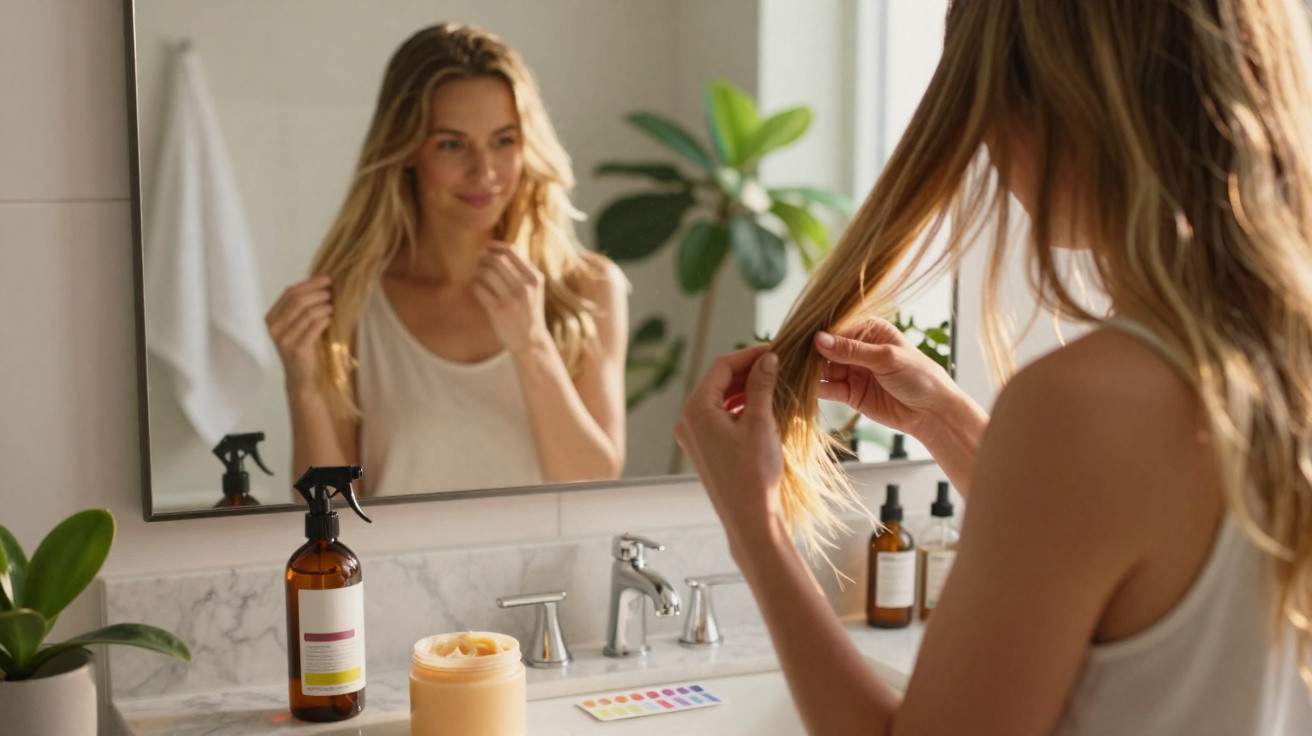
Hair with highlights, illuminated streaks and frequent colour changes remain among the leading beauty trends, fuelled both by salons and celebrity influence. Techniques such as balayage, morena iluminada and platinum have gained ground for delivering brightness and a personalised look, but they also demand extra care after chemical processing.
To reach lighter shades, the bleaching process opens the hair cuticles to remove the natural pigment. This temporarily shifts the hair’s pH, leaving the fibre more porous and therefore more prone to breakage, dryness and loss of shine.
Well-known celebrities who keep their hair light or undergo frequent transformations help to reinforce these trends and encourage specific care routines. Among them are Sabrina Carpenter and Kylie Jenner, who often show blonde or illuminated hair in public appearances, campaigns and on social media. These looks draw attention not only for their aesthetics, but also for the upkeep they require, highlighting the importance of structural care to preserve the hair’s health and shine.
Hair acidification for chemically treated hair
In this scenario, hair acidification comes in-an increasingly common step in treatment protocols for anyone maintaining chemically treated hair. According to hair specialist Dione Wennie, professional education manager at Embelleze, “this process is necessary to rebalance the pH and reorganise the surface of the fibre, reducing porosity from the first application, improving shine and softness, and preparing the hair to better absorb hydration and reconstruction treatments”.
She also notes that acidifying products can be used both in professional protocols and in an at-home care routine, particularly in the post-salon period. “Among the options, I usually recommend Novex Acid Control Acidificante Anti-Danos because it helps rebalance pH, seal the cuticles, support the recovery of generally sensitised hair and maintain hair health,” she explains.
Beyond that, adopting hair acidification after colouring and bleaching helps make strands more resistant to everyday aggressors such as heat from hairdryers and straighteners, pollution and sun exposure. For this reason, it is not merely an aesthetic step, but a strategic measure for long-term hair health.
How to add acidification to your hair treatment routine
To include acidification in an at-home routine, Dione Wennie explains that acidifiers should be applied after washing and conditioning or other hair treatments, onto hair that is still damp, gently massaging to ensure it penetrates the fibre.
Frequency should follow the manufacturer’s guidance-typically once or twice a week-especially after bleaching or intensive chemical processes. In addition, pairing acidification with regular hydration and reconstruction treatments enhances the results, keeping hair soft, glossy and better able to withstand daily wear.
By Caroline Amorim

Comments
No comments yet. Be the first to comment!
Leave a Comment