
Your silver strands are suddenly making more noise than your outfit. There is a rapid, almost undetectable solution hair professionals use when clients need help between appointments-and it may already be in your make-up bag.
It happens in the bathroom mirror halfway through the week, after a lengthy commute, when the lift lighting reveals every fresh glittering strand along your hairline. You angle your head from side to side, weighing up a hat, a messy bun or a carefully placed side parting. Your salon appointment is still two weeks away, and your patience is wearing thinner than your root coverage.
We have all experienced that one grey hair catching the light and refusing to stay unnoticed. The simple trick colourists share is to use natural, skin-safe pigments to tint the surface of those wiry, reflective hairs until your next visit. One minute, a dense brush and a shade that resembles your base colour are all you need.
The small science behind a quick grey cover
Grey hairs are not truly “grey”. They are translucent strands that have lost the melanin which previously gave them depth. Light reflects from this glass-like surface, so they appear brighter and whiter than the rest of your hair, particularly at the parting and temples. When professionals refer to a natural pigment trick, they mean applying mineral pigments-often iron oxides-to reduce that reflectivity, rather than dyeing the hair.
Picture frosting a window: a very fine veil of matte colour rests on the cuticle and absorbs light, allowing the strand to blend into the rest of the hair. The match need not be flawless; it simply needs a similar depth. A hint of warmth works for brunettes, while ash blondes benefit from a cooler nudge, and the overall effect looks harmonious.
Colourists favour this approach because it involves no commitment. It will not alter your colour formula or introduce undertones you may later regret. Instead, you are adding light absorption where it was absent and securing it with a little hold to prevent it from brushing away. The aim is not to imitate a salon appointment-it is to soften the sparkle so you can get on with your day.
How to use the natural pigment trick at home
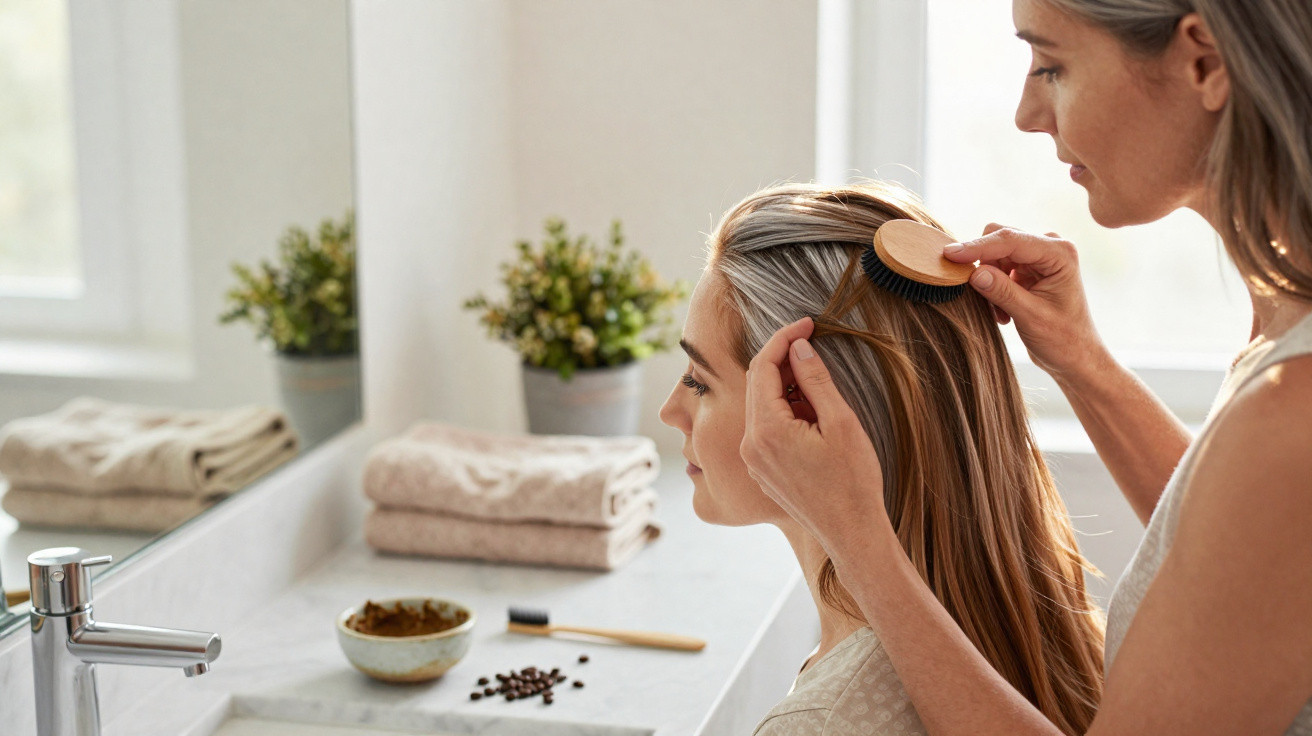
This is the method professionals teach their clients: with dry hair, pick up a matte eyeshadow or brow powder matching your natural base level on a small, dense brush. Press the pigment, rather than sweeping it, over visible greys along the parting and hairline. Tap away surplus powder before you begin. Once applied, spray on a light mist of flexible hairspray or use clear brow gel to set it, then leave it untouched for one minute.
For brunette hair, select a neutral-to-warm brown; dark blondes suit taupe, while light blondes should choose a soft, cool beige. If you are deciding between two shades, opt for the slightly lighter option, as it tends to look more convincing at the scalp. Have curly or coarse hair? Use a mineral root powder rather than eyeshadow to achieve an even diffusion. For fine hair, tinted dry shampoo provides grip and gentle volume while disguising greys.
Realistically, hardly anyone does this every day. Yet on mornings when your hair matters, this small ritual can transform how your entire face feels. Press, set and stop adjusting it-movement and brushing can disrupt the effect. A New York colourist explained it to me like this:
“Treat gray like glare on a screen. When you cut the glare with an ultra-thin layer of matte pigment, everything else looks richer and calmer.”
- Tools: a dense eye brush or sponge puff, matte eyeshadow or brow powder, tinted dry shampoo, plus clear brow gel or light hairspray.
- Finish: keep it matte. Shimmer highlights grey rather than helping it disappear.
- Placement: focus on the parting, front hairline and crown whorl-small zones can make a major difference.
- Tone: choose warmer shades for brunettes, neutral tones for dark blondes and cool-leaning shades for ash blondes.
- Removal: ordinary shampoo removes it. There is no colour stain or commitment.
Mistakes to avoid-and small upgrades that count
Never use this technique on damp hair. Moisture thins out pigment and creates a muddy finish. Avoid rubbing back and forth, too, as this lifts the cuticle and increases frizz. Press on the colour, then pat it to soften the edges. If your scalp becomes oily, prepare the area first with a spritz of dry shampoo, so the pigment adheres to the hair rather than your skin.
Avoid frosted eyeshadows, reddish-brown bronzers and anything with sparkle. They reflect light and draw attention to every strand you intended to conceal. Keep the application especially soft around the hairline; heavy pigment at the forehead can appear painted on. Where your roots are much lighter than your lengths, move your parting slightly to draw coverage from your base colour.
Grey hair around the temples is often coarser and more resistant-approach it as though it were a different fabric. Take a firmer brush and dab on a small amount of tinted brow gel to “coat” individual wiry strands before applying powder. If you have a sensitive scalp, select fragrance-free, non-comedogenic products and patch-test a small area first. With temporary colour, a subtle touch works better than a bold one.
Why professionals trust this small fix
The pigment trick works with your colour plan rather than against it. It does not turn your next salon visit into corrective work or introduce warmth into a cool formula. You can return to your usual root retouch with no unexpected issues at the basin. It is also useful during the awkward fifth to seventh weeks, when regrowth is visible but diary availability is not.
Combine it with clever styling to make it last even further. A gentle zigzag parting breaks up the straight line of regrowth. Creating a soft wave or bend with curling tongs casts shadow over the roots. A light spray of tinted dry shampoo at the crown adds lift, drawing attention away from a distinct silver line.
On mornings when everything else feels hectic, this is a form of control that fits in one hand. You do not need to cover every hair-only those that flare under bright light. Once you realise how little product is needed to tone down the sparkle, you can stop pursuing perfection. That is the real flex.
The deeper logic-and when to change strategy
Temporary coverage works best when you have up to around 1 cm of regrowth and scattered greys. If 50% or more of the front section is grey, powders alone can look flat; a tinted root spray with a micro-diffuser may distribute colour more evenly over a wider area. With very dark hair, choose a shade half a level lighter at the scalp to prevent the finish from resembling shoe polish.
If you are growing out your colour and thinking about blending greys over the long term, speak to your stylist about lower-commitment options. These include root smudging, lowlights one or two levels lighter than your base, or sheer demi-permanent glosses that reduce contrast. The pigment trick remains helpful between appointments, but the objective shifts from concealment to harmony.
Think of it as a spectrum: pigment powders and sprays, followed by colour-depositing conditioners, then demi-permanent services, and finally permanent retouch-each stage brings more lasting power and commitment. Your choice depends on your lifestyle, budget and how much you want to experiment with tone. No one solution has to dictate your life; small tools can create significant ease.
One more thought before you step into bright light
This is not about acting as if you have no greys. It is about choosing how prominently they appear on a particular day. Some weeks, you may pat on a little pigment and leave the house; on others, you may allow the silver to frame your face and appreciate how striking it looks in sunlight. Both options are valid, and both can exist on the same head.
I have seen executives and artists, new mothers and marathon runners use this in a rideshare mirror and visibly relax their shoulders. The routine is small, but its impact is real. Use it, adapt it or ignore it when you feel bold. Hair communicates. Today, it can whisper.
| Key point | Detail | Benefit for the reader |
|---|---|---|
| Use matte mineral pigments | Press matte eyeshadow or brow powder (iron oxides) onto dry roots, then set it | Quick, non-damaging coverage that appears natural in daylight |
| Match depth, not perfection | Pick a shade close to your base; slightly lighter is better than too dark | Lowers the chance of harsh, painted-looking roots on camera and in person |
| Preparation and placement | Use dry shampoo first if oily; target the parting, hairline and crown whorl | Maximum coverage with minimal product and no mess |
FAQ:
- Can I use coffee or tea to stain grey hair between visits? They may add a little warmth to light hair, but results are faint and uneven. Mineral pigments in powders or sprays offer instant, reliable coverage.
- Will this trick work on very coarse, resistant greys? Yes, although you should coat them first. Apply a tiny swipe of tinted brow gel to individual wiry hairs, then add powder for improved grip and opacity.
- What if my scalp is sensitive? Choose fragrance-free, non-comedogenic formulas and avoid aerosols if they irritate you. Press pigment onto the hair shaft rather than the skin, and wash it out at night.
- How do I find my perfect shade at home? Match the middle lengths of your hair, not the ends. A neutral-warm brown looks healthiest on brunettes, while a cool taupe prevents brassiness on blondes.
- Will rain or sweat make the pigment run? Set it with light hairspray and avoid touching it. Most powders and sprays withstand normal weather, though a hood or umbrella is sensible during heavy rain.




Comments
No comments yet. Be the first to comment!
Leave a Comment