
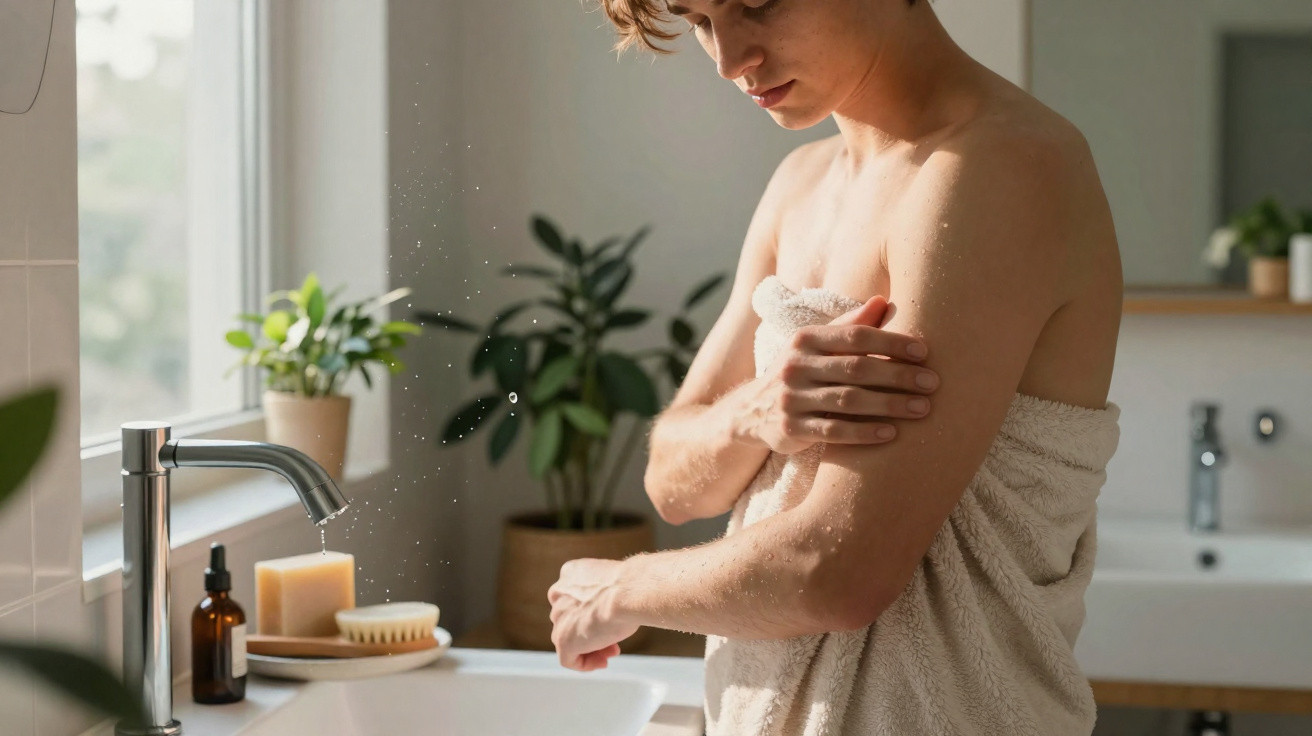
Showering daily in hot water is often seen as basic hygiene. At the same time, the so‑called “Non Bathing” trend is spreading: people who shower or bathe very rarely, yet still want to avoid smelling unpleasant. While it may sound odd at first, there is a medical angle to it - because our skin is far more sensitive to water, soap and shampoo than many assume.
What’s behind the trend
With the “Non Bathing” approach, followers largely avoid daily showers using shower gel and shampoo. Instead, they wash only specific areas as needed or use gentler alternatives. One proper shower a week - and that’s it.
"The idea behind it: the body should be given time to find its own balance of sebum, bacteria and moisture again."
Dermatologists have been noticing for some time that many people simply over-care for their skin. Repeated irritation from hot water, harsh surfactants and added fragrances can make skin look and feel worse rather than better.
What happens to your skin when you shower less often?
Our skin is not a sterile protective suit. It is home to billions of micro-organisms - the skin microbiome. These bacteria help defend against pathogens and keep the acid mantle stable.
The acid mantle has time to recover
After a long shower using shower gel, the skin can take many hours to return to its natural pH level. If you do that in the morning and again in the evening, the skin is constantly deprived of this recovery window.
- Hot water removes fats from the surface of the skin.
- Shower gel strips sebum and lipids even more.
- The protective film becomes thinner and the skin dries out.
If you shower only once a week, that protective layer can settle and stabilise in between. Many people then report less tightness and less itching.
Dry patches and eczema may ease
Particularly with sensitive skin, atopic dermatitis or psoriasis, doctors repeatedly see the same issue: washing too often and using too much product. Cutting back removes common irritants from the equation.
"Showering less can mean that moisturisers suddenly work better - simply because the skin is no longer being washed back to ‘zero’ all the time."
The outermost layer of skin (the stratum corneum) tends to remain more resilient, and tiny cracks can close more quickly. Redness often reduces because there is less mechanical and chemical stress.
What about odour and hygiene?
The biggest worry is straightforward: won’t I smell? The answer depends mainly on two things - how you wash in between and your personal level of sweating.
Think armpits, feet and the intimate area
If you only shower once a week, it’s wise to clean sensitive, odour‑prone areas separately every day - but that doesn’t necessarily mean a full body shower.
- Armpits: with a flannel and lukewarm water; if needed, a little mild soap
- Feet: wipe daily as well, and dry carefully, especially between the toes
- Intimate area: water only, or very mild specialist products
- Hands: continue washing regularly as before; this has little to do with shower frequency
When these areas are cared for consistently, most people smell far less than they fear. Body odour mainly develops when sweat is broken down by particular bacteria over time - clean, dry skin helps reduce that.
Sweat, sport and work - who may struggle with showering less
A strict switch to once a week doesn’t fit every routine. Anyone doing physically demanding work, exercising a lot or sweating heavily will need practical compromises.
Examples that can help include:
- shorter, lukewarm showers after exercise, using only water or very little shower gel
- changing clothes for work and training
- performance fabrics that retain less odour
- rinsing armpits and groin specifically instead of washing the entire body
Many dermatologists suggest a middle path: avoid lathering up the whole body every day, cut the amount of cleansing agents significantly, and include some showers that use no products at all.
Positive effects on hair and scalp
Much like skin, the scalp often settles when shampoo is used less frequently. Daily washing can actually stimulate sebum production - hair becomes greasy faster, and a washing cycle develops.
| Frequent washing | Less frequent washing |
|---|---|
| Scalp dries out or becomes very greasy again | Sebum production levels out |
| Dandruff and itching occur more often | less irritation from surfactants |
| Hair quickly looks limp and stringy | more volume and natural shine |
If you move from washing your hair every day to once or twice a week, you usually need two to three weeks of patience. During this transition, roots can look greasier; afterwards, the system often calms down.
When showering rarely becomes a problem
The trend is not risk‑free for everyone. Certain groups should be cautious.
People with pre-existing conditions
Anyone with open wounds, chronic skin infections or severe obesity should discuss their washing routine with a doctor. Germs can build up in skin folds, under the breasts or around the groin.
Acne also warrants a closer look: too much cleansing can irritate the skin, but too little can worsen blocked sebum. An individual plan is often needed.
Everyday exposure to germs
If you work in healthcare, social care, or roles involving lots of close contact, you face a higher risk of having problematic bacteria and viruses on the skin’s surface. In such cases, showering more often may still make hygienic sense, particularly after a shift.
"Good hygiene doesn’t depend only on the number of showers, but on smart everyday routines - from handwashing to caring for your clothes."
What a healthy middle ground can look like
No one has to jump straight to showering only once a week. Even small changes can have a measurable effect on skin and mucous membranes.
- set shower days, e.g. two to three times a week
- on other days, wash targeted areas with a flannel
- keep water lukewarm rather than very hot
- use shower gel only where it’s needed (armpits, intimate area, feet)
- avoid products with strong fragrances and alcohol
If you want, you can test for a few weeks how your body responds to doing less: does your skin become calmer? Do dry patches fade? Does clothing really smell stronger after a day than it used to, or does it stay within reason?
More than a trend: what mindful personal care is really about
In the end, the question of showering touches bigger issues too: water use, the energy crisis and rising household bills. A shorter, less frequent shower saves several litres of water and electricity each time. For many people, that alone is a strong incentive to change.
There is also a shift in what “beauty” and “clean” are supposed to look like. For years, advertising and social media have implied that only heavily perfumed skin is truly “clean”. Dermatologists take a more pragmatic view: what matters is an intact barrier, not smelling of peach or coconut.
Anyone exploring the trend also comes across terms like “microbiome” and “acid mantle”. Both refer to the finely tuned interplay of bacteria, fats and horny cells that keeps our outer layer stable. Every hot, foaming shower disrupts this system for a while - and how often that happens each week makes a difference.
Whether you fully switch to once weekly or simply drop a few showers: for many, their own skin becomes the measure. If it feels calmer, less irritated and requires fewer care products, there are good reasons to give your body a break from constant showering now and then.




Comments
No comments yet. Be the first to comment!
Leave a Comment