
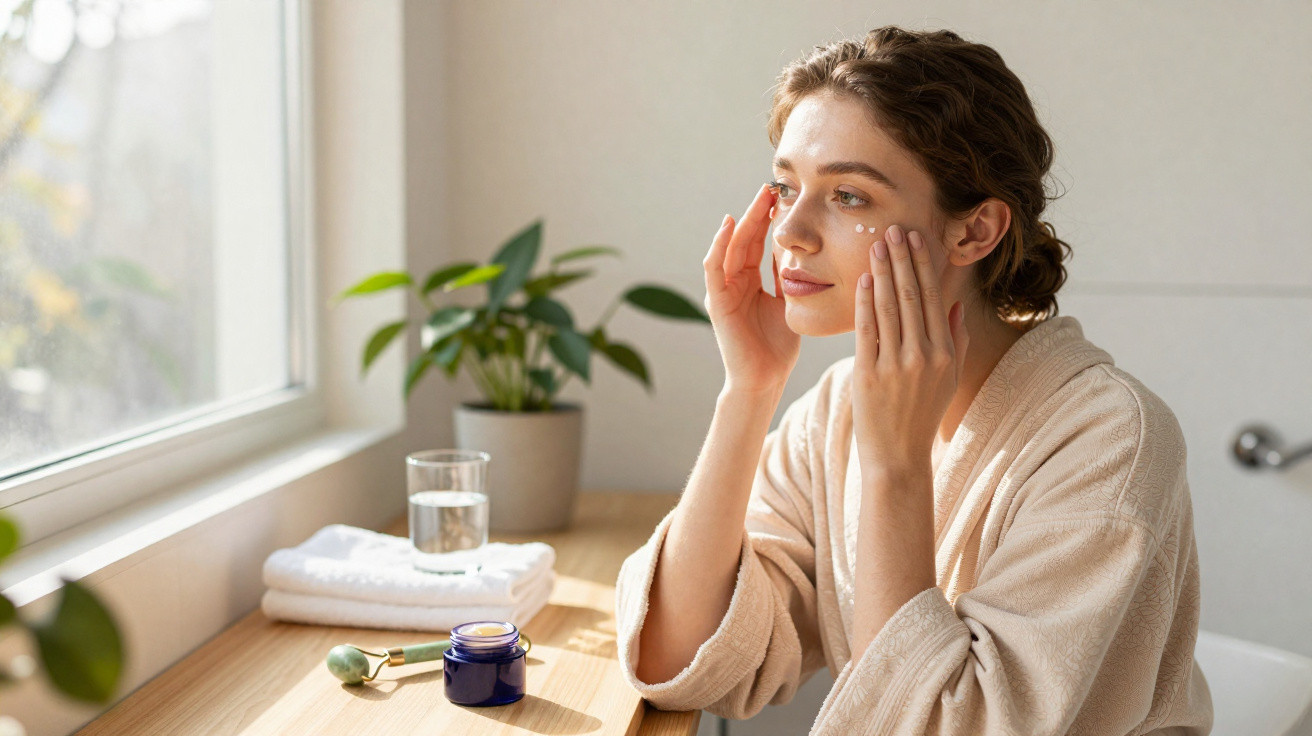
A tired-looking woman stares back from the mirror - just not in the way she anticipated.
In the cool bathroom light, she stands there patting on yet another layer of eye cream beneath her eyes. The pot wasn’t cheap, the reviews were raving, and the influencer’s under-eyes looked practically Photoshopped. So she follows the familiar logic: “If a pea-sized amount is good, then a little extra must be even better.”
About ten minutes later, the reflection shifts. Yes, the fine lines seem a touch smoother - but the skin also looks a bit… inflated. The under-eye area is puffier, glossy, almost weighed down. She blames poor sleep, late-night emails, and that salty meal. The last thing she suspects is the tiny, luxurious jar sitting by the sink.
The reality is a little more uncomfortable.
Why your “miracle” eye cream can backfire
Eye creams are marketed like miniature magic elixirs - and the marketing is genuinely persuasive.
They claim they can rewind time, soften dark circles, and lift skin that life has slowly tugged downwards. The skin there is delicate, the tub is small, and the price tag is often steep. So when the texture feels rich and silky, it’s easy to assume that using more will deliver more. In practice, the under-eye area behaves less like an absorbent sponge and more like tissue paper.
When you apply too much, it doesn’t properly absorb. It lingers, shifts around, and can trap fluid or clog the area. That’s often when the puffiness shows up.
Dermatologists hear versions of this all the time.
A 32-year-old office worker spends weeks piling on three layers: a serum, a retinol eye cream, then a thick balm “to seal it all in”. She starts waking up with swollen under-eyes and assumes it must be allergies. A 48-year-old teacher doubles her anti-ageing cream the night before a big event, hoping for a “tightening” effect. Instead, her concealer settles into creases, her eyes look more exhausted in photos, and she quietly concludes that eye creams simply don’t work for her.
Some clinics note that an unexpectedly large proportion of under-eye puffiness isn’t genetic or medical at all - it’s cosmetic. Heavy textures, overloaded formulas, and over-enthusiastic application. There’s no spreadsheet tracking it, but ask any skin therapist and you’ll hear the same thing: using too much product is one of the quieter culprits.
There’s a straightforward - if slightly irritating - reason behind it.
The eye contour has very thin skin and fewer oil glands. When you smear on a thick layer, the product can migrate into the lash line, cause irritation, or upset the fragile skin barrier. Ingredients intended to hydrate can draw and hold water near the surface, so the area looks puffed up rather than smoothed out. Rich emollients can also slow natural drainage, meaning fluid hangs around instead of moving on.
What you get isn’t a “lift”. It’s that soft, squishy, cushiony swelling that concealer never truly disguises. Your skin is reacting, not rejuvenating.
How to use eye cream without waking up puffy
The solution is almost comically small.
Take the smallest amount you can sensibly pick up: roughly a grain of rice for both eyes, not one grain per side. Place tiny dots along the orbital bone rather than right on the lash line. Let the bone be your boundary - it’s a natural guide. Use your ring finger because it usually applies the least pressure, and tap lightly instead of dragging. You’re not spreading icing on a cake; you’re barely-touching skin that’s thin and easily annoyed.
Wait a full minute before applying make-up or layering another product. If you can still see a shiny, damp film after that minute, you’ve applied too much. Blot away the excess with a tissue rather than rubbing or forcing it in.
On evenings when your eyes already feel puffy from screens or tears, don’t reach for a heavy cream.
Choose a lighter gel, or use your usual fragrance-free moisturiser - sparingly. If you regularly wake up puffy, keep richer formulas for night-time and go very minimal during the day. Cold tools (or even a chilled spoon) can support drainage, but only with a gentle touch. During a week of poor sleep, your eye cream doesn’t need to work harder - your habits do.
Most of us have had that morning where we look in the mirror and think, “I swear I went to bed early - what is happening to my face?” That’s exactly when it’s tempting to add another layer, buy an “instant de-puff” stick, or start mixing products. Let’s be honest: hardly anyone actually does that every day the way those ultra-perfect tutorials suggest. Your skin doesn’t need a performance; it needs consistency - and less overload.
One cosmetic dermatologist puts it bluntly:
“Most people need less eye cream, not more. They need the right texture, a tiny amount, and patience. Puffiness is often a sign of over-care, not under-care.”
Keep three simple guardrails in mind whenever you reach for the jar:
- Use a grain-of-rice amount for both eyes, never more.
- Apply on the orbital bone, not in the lashes or waterline.
- Switch to lighter textures if you wake up puffy more than two mornings a week.
Those small rules will do more for your under-eyes than almost any trend.
Learning to read what your under-eyes are really telling you
Under-eye puffiness isn’t only about what you apply.
It can also be a quiet signal about salty meals, late-night scrolling, hormone shifts, allergies - even how you’re positioned on your pillow. Heavy product can magnify all of it, like adding more water to a sponge that’s already saturated. Some mornings, the swelling feels soft and watery and fades by lunchtime. Other times, it’s stubborn, almost rubbery, and refuses to shift.
That distinction matters. It’s your body trying to tell you something.
When you notice swelling under the eyes, mentally rewind the last 24 to 48 hours.
Did you introduce a new cream? Layer retinol and a thick balm? Eat something high in salt? Cry? Wear waterproof mascara that needed lots of rubbing to remove? There’s rarely just one culprit. More often it’s a mix: too much product, too little sleep, not enough water, a warm room. Halving your eye-cream use for a week is an easy experiment - and it can be surprisingly revealing.
If puffiness is accompanied by pain, redness, or changes to vision, that isn’t cosmetic - it’s something to take to a doctor.
There’s a particular kind of relief in simplifying this part of your routine. You don’t need to chase every new launch or follow ten steps every night. You can stick with one or two formulas you genuinely like, learn your own patterns, and give that fragile area more space to breathe. When you stop battling your under-eyes and start paying attention to them, the mirror often feels a little kinder.
| Key point | Detail | Why it matters for you |
|---|---|---|
| Amount | A “grain of rice” for both eyes is more than enough | Lowers the risk of puffiness and prevents wasted product |
| Application area | Apply along the orbital bone, not on the lash line | Reduces irritation and stops the product migrating |
| Texture | Lightweight gels in the morning, richer creams at night if needed | Matches your routine to real needs without overloading the skin |
FAQ:
- Can eye cream really cause puffiness? Yes. Using too much, picking formulas that are too rich, or applying them too close to the lash line can trap fluid and irritate the delicate eye area, which can lead to visible swelling.
- How can I tell if I’m using too much eye cream? If the area still looks shiny or damp a minute after you’ve applied it - or if your concealer slips and creases easily - you’re probably applying more than you need. Another strong clue is morning puffiness that improves when you cut back.
- Should I use eye cream every day? Many people get on well with once or twice daily use, but some skin does better with less. If you’re prone to puffiness, try using it only at night or every other day and see how your under-eyes respond.
- What texture works best if I puff up easily? Lightweight gels or fluid lotions are usually a safer bet than thick balms. Look for “lightweight” or “fast-absorbing” formulas, and avoid heavy fragrance or strong actives too close to the lash line.
- Can I use my regular moisturiser instead of a dedicated eye cream? In many cases, yes. A gentle, fragrance-free facial moisturiser, used sparingly around the orbital bone, can be enough - especially if dryness is your main concern rather than deep wrinkles or pigmentation.




Comments
No comments yet. Be the first to comment!
Leave a Comment