
The alarm sounds, and the first thing you think isn’t “Good morning” - it’s “My neck.” Then your lower back chips in with its usual stiffness, followed by that flat, lingering ache in your shoulders from last night’s doom-scrolling. You stretch, something clicks, and you make the same promise: today you’ll sit with better posture, drink more water, and move more.
Ten minutes later, you’re folded over your phone again, swallowed by emails and breaking news.
By lunchtime, your body feels like a chair that’s been folded the wrong way, and you start to wonder when “simply being awake” became an endurance event.
Somewhere between the noise and the diary reminders, your routine quietly decides how comfortable your body is going to feel.
When your body starts running on rails
At some point each day, you can tell whether your body is cooperating or pushing back. Sometimes it shows up while you’re doing something as basic as tying your shoelaces. Your back tugs, your hamstrings grumble, and suddenly you’re bargaining with yourself just to stand up straight.
On other days, you tie the same shoes and it’s effortless. You bend, straighten, move - almost on autopilot. Nothing dramatic. Just… easy.
That contrast rarely comes from a wonder mattress or a life-changing smoothie. More often, it’s the result of small, unglamorous routines your body has learned it can rely on.
Take Elena, 39, who works in marketing and spends most of the day at a laptop. For years, her evenings followed the same script: heating pad on the sofa, scrolling with a sore neck, telling herself this was simply what “getting older” felt like.
One winter, a new habit appeared by accident. Rather than dropping onto the sofa straight away, she started walking her dog for 15 minutes at the same time every evening. Same route, same playlist, same jacket. A few weeks in, she noticed something odd: her back didn’t shout through meetings. Her shoulders stayed down instead of creeping up.
Nothing else had shifted. Same job. Same chair. Just one small, consistent ritual that stopped her body setting like plaster in one permanent position.
Our bodies thrive on predictability. Joints tend to feel better when they can count on a little movement each day. Muscles recover more efficiently when bedtime is roughly consistent. Digestion behaves more calmly when meals land at similar times.
This isn’t about treating discipline like a virtue. It’s about biology responding well to rhythm. When movement, rest, and nourishment happen repeatedly, your nervous system eases off. Tension reduces. Pain doesn’t need to yell quite as much.
Physical comfort isn’t usually about doing more; it’s about doing a few small things again and again until your body believes you.
Little rituals that quietly reset your body
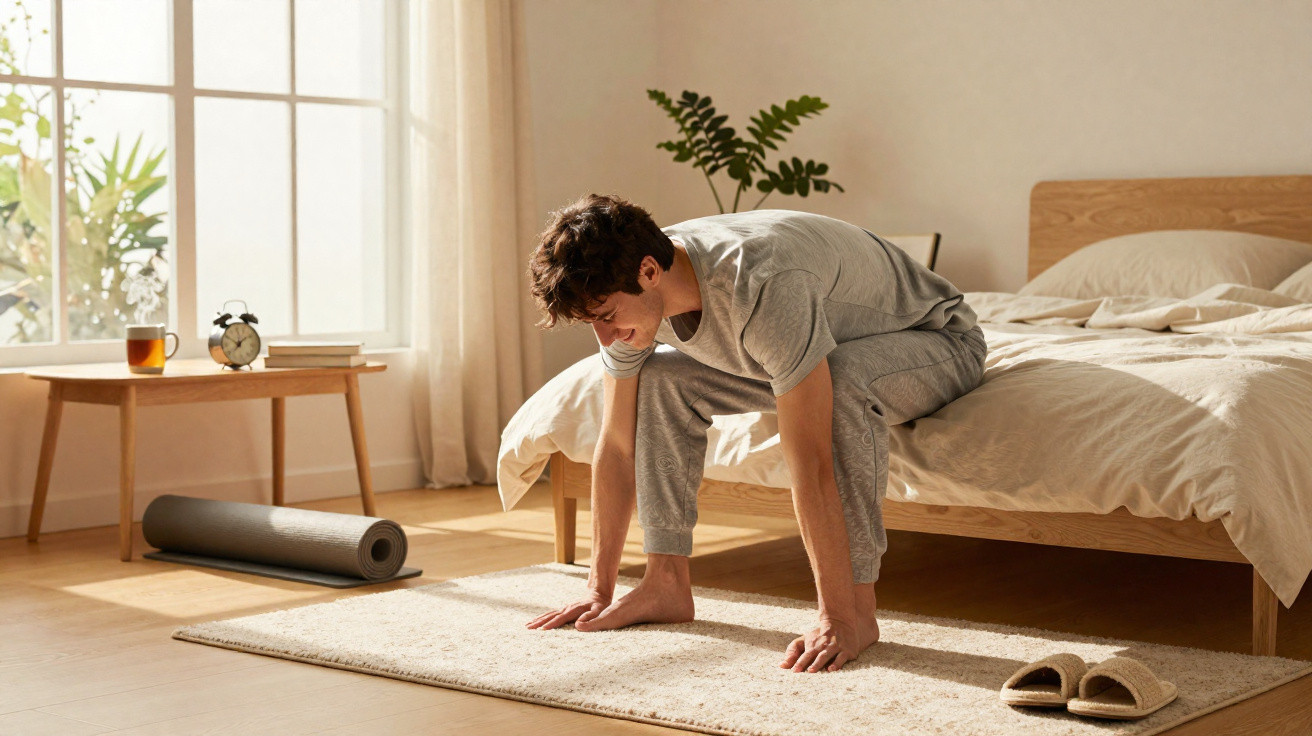
One of the most straightforward routines for physical comfort begins before you even leave the bedroom. Sit on the edge of the bed, put both feet on the floor, and take three slow breaths while keeping your shoulders loose. Then gently roll your neck, circle your ankles, and reach your arms overhead as if you’re trying to grow one centimeter taller.
It’s under a minute. You’re essentially telling your body, “We’re starting now - but we’re doing it kindly.” With time, that small cue can ease morning stiffness and reduce the jolt of going from horizontal to full-speed life.
It can feel too minor to count - and that’s precisely why it sticks. Habits that don’t feel like a major undertaking are the ones you actually repeat.
The same principle applies during the working day. Instead of chasing a perfect plan like “I’ll move every 30 minutes”, choose one simple anchor. For instance: whenever a meeting ends, stand up and walk to the kitchen and back. No step targets. No tracker guilt. Just a steady rhythm.
Most people know that moment of realisation: you haven’t shifted since 9 a.m., and your hips feel like they’ve fused to the chair.
A gentle routine breaks the spell without telling you off. And yes, you’ll miss it sometimes. You’ll skip the walk, eat at your desk, or slump your way through the afternoon. Let’s be realistic: almost nobody manages this every single day. That doesn’t erase the value of the days you do.
“I stopped chasing motivation and started chasing repetition,” says Jonas, 46, who swapped chronic neck pain for a two-minute stretching ritual before bed. “The stretches are boring. The comfort isn’t.”
- Wake-up ritual: 30–90 seconds of gentle stretching before you check your phone.
- Movement anchor: connect a short walk or stretch to something you already do (coffee, meetings, calls).
- Comfort check-ins: three times a day, notice your posture, jaw, and breathing for 10 seconds.
- Wind-down cue: dim lights and one quiet activity at the same time each night to signal “off” to your body.
- Snack rhythm: regular, simple snacks or meals so your energy and mood don’t crash into your joints.
Living inside a body that feels like home
Physical comfort rarely arrives through one grand decision. It slips in through repetition: the glass of water you put on your desk each morning; the five-minute walk you take after lunch, even when the weather is annoying; the habit of putting your phone away 20 minutes before sleep so your shoulders and eyes can soften.
On paper, it all sounds almost laughably basic. Then you live it for a month and realise your neck cracks less, and your lower back doesn’t complain every time you stand up. The dull, boring stuff starts to feel like quiet magic.
The real shift happens when those tiny habits stop registering as “healthy chores” and start feeling like your default - like brushing your teeth or locking the front door. You don’t negotiate with them. You just do them. Your body settles into the expectation that you’ll look after it, not occasionally, but consistently.
That’s when comfort stops being a weekend project and becomes your weekday baseline.
You don’t need a flawless plan. You need a rhythm your real life can genuinely sustain.
So perhaps the more useful question isn’t “How do I fix my back/neck/shoulders?” but “What’s one tiny thing I’m willing to repeat daily for the next month?” A 60-second stretch? Standing for one call a day? Going to bed 15 minutes earlier on weeknights?
Your routine won’t look polished on Instagram. It will be patchy, imperfect, and sometimes forgotten. Even so, your body will notice.
And if you pay close attention, you might as well.
| Key point | Detail | Value for the reader |
|---|---|---|
| Small routines beat big efforts | Short, repeatable habits ease tension over time | Makes physical comfort feel achievable, not overwhelming |
| Link habits to existing moments | Attach movement or stretches to coffee, meetings, or bedtime | Improves consistency without needing extra willpower |
| Rhythm calms the nervous system | Predictable sleep, movement, and food reduce pain signals | Helps the body feel safer, looser, and less reactive |
FAQ:
- Question 1 Do I need a strict schedule to feel more comfortable in my body? Not at all. What helps is having a few repeatable cues, such as “after breakfast I stretch for one minute” or “after work I walk around the block.” Consistency matters more than exact timing.
- Question 2 How long before a routine actually reduces pain or stiffness? Many people notice small changes within two weeks, such as easier mornings or less tightness in the afternoon. More noticeable shifts usually show up after four to six weeks of mostly sticking to your new rhythm.
- Question 3 What if my routine falls apart when life gets busy? That’s completely normal. Rather than restarting from scratch, come back to the smallest version of the habit: one stretch, one glass of water, one short walk. The aim is to keep the thread going, not to perform perfectly.
- Question 4 Can routine really help if I already have chronic pain? It won’t replace medical care, yet gentle, predictable patterns can reduce flare-ups, calm your nervous system, and support whatever treatment you’re already following. As you adapt, listen to your body and your doctor.
- Question 5 What’s one simple routine I can start today? Choose a daily “comfort check” at a fixed time: notice your posture, unclench your jaw, drop your shoulders, and take three slow breaths. It takes 30 seconds and quietly resets your whole body.






Comments
No comments yet. Be the first to comment!
Leave a Comment