
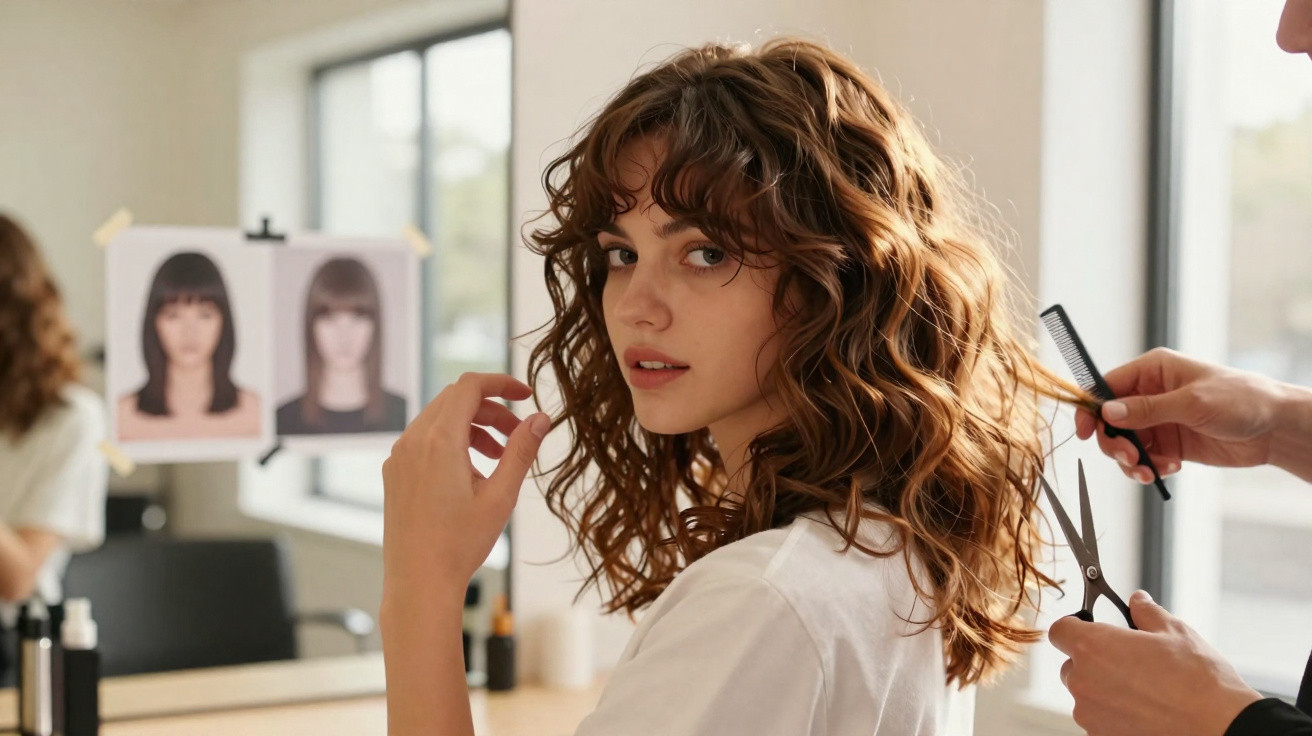
Her hair is clipped up in sections, and the gown crackles every time she shifts in the chair. “I want a shag,” she tells the stylist, “but I don’t want a mullet.” The room laughs - a touch too hard - because everyone understands that particular worry. The stylist gives a calm nod, lifts a panel of hair, and starts explaining layers, weight, and exactly where the length should sit.
In the chair beside her, another client is scrolling Instagram, flicking past pictures of soft, air-dried waves and that floaty, lived-in fringe. She raises her phone and asks, “Is this a shag? Or a mullet? Or… both?” The images melt together: choppy, tousled, beautiful - and oddly hard to pin down. What looks relaxed on a screen can feel like a real-life risk.
Somewhere between those two chairs is a near-invisible difference in shape - the kind that decides whether you leave feeling like a rock star… or like you need to buy a hat.
The almost-invisible line between shag and mullet
If you ask three stylists to define a shag and a mullet, you’ll likely end up with five different explanations - but most of them share one quiet guideline. A true modern shag keeps its momentum at the front and through the crown; a mullet lets the “party” travel too far into the back. With a shag, layers are distributed throughout the cut, taking out weight while avoiding a long, isolated tail. The overall impression is rounded, soft, and slightly untamed.
A mullet - including the newer, polished versions - is built on contrast. It’s shorter on top, longer at the back, with a clearer “step” between the two zones. The crown tends to sit flatter, while the drama gathers at the nape. On the right person, with the right styling, it can look brilliant - but for plenty of people the back-heavy length is precisely what feels like a gamble. A modern shag, by contrast, is about equilibrium: texture everywhere, with no single section dominating.
A London colourist shares a simple way to settle anxious clients. One woman arrived with a Pinterest board full of “modern mullets,” stressed because she didn’t want to look “like an 80s throwback.” Together they looked at each image and traced an imaginary line from fringe to nape. In the photos she genuinely loved, that line was a gentle slope rather than a cliff: the longest point blended into the shape instead of hanging there on its own. They shifted her search terms from “mullet” to “shag with fringe” and the whole feeling changed - same vibe, different framework.
That’s the underlying logic separating the two. The mullet leans into disconnection: short beside long, sudden shifts, the deliberate sensation of “two haircuts in one.” The shag - particularly the newer, softer takes - is about diffusion: layers that melt together so the hair can wave the way it naturally wants to. Weight stays closer to the head, which allows texture to lift and form instead of being pulled down. That’s why so many people with waves realise a shag doesn’t give them waves; it simply stops smothering the ones they already had.
Why the modern shag loves natural waves
Here’s what most wavy-haired people only learn after a few disappointing cuts: your pattern is incredibly sensitive to where the weight sits. A modern shag is designed to remove heaviness from the places that commonly squash waves - the mid-lengths and crown - while leaving enough length for bends and coils to develop. Instead of a single heavy curtain, you get light, overlapping panels. Each panel can move independently, so your natural wave has space. Think less triangle, more halo.
With a straight, one-length cut, waves can look like a half-hearted kink that’s gone by lunchtime. In a modern shag, those same strands suddenly appear to “understand” what to do. Shorter pieces around the face pick out the cheekbones, and crown layers prevent the top from collapsing into a flat helmet. The length at the back is still there - so you don’t feel overly exposed - but it’s broken up enough to swing and shift. We’ve all had the experience of scrunching, diffusing, doing everything “right”, and still ending up with a limp blob; a shag quietly changes the outcome.
It also works on a psychological level. Wavy hair rarely behaves like a neat set of symmetrical curls. It’s temperamental, uneven, and highly responsive to humidity. A modern shag is designed for that unpredictability rather than against it. The silhouette is meant to look a little undone. If one side flips out while the other flips in, it reads as part of the character. Let’s be honest: hardly anyone keeps up the whole wash-day ritual, precision styling, and careful diffusing every single day. A cut that still looks intentional when it air dries imperfectly is a small daily kindness.
How to ask for (and style) a shag without drifting into mullet territory
Begin with language your stylist can translate into technique, not just mood. Bring two or three reference photos you do love - and, just as importantly, one you definitely don’t. Then be specific: “I like the soft fringe and layers near the face, but I don’t want the back to drop much longer than the front.” Ask them to keep the perimeter - the outer outline of the haircut - largely even or softly rounded. The more the “hemline” echoes the front length, the further you stay from mullet territory.
Next, talk about your real routine. How often do you rough-dry? Do you ever sleep on damp hair? Are you genuinely willing to use a diffuser, or will it mostly air dry while you commute? A wave-friendly shag isn’t only about where layers sit on a mannequin; it’s about how they behave when you’re rushing out with wet hair and no time. Explain what your hair does in humidity, and what happens when it grows out - the cut can be tailored looser or tighter to match your habits.
People with waves tend to make the same mistakes. They see a razor-cut, rock-star shag on TikTok and request it without accounting for the reality of their own hair - finer, flatter, or much thicker. Or they chase maximum crown volume and accidentally remove too much weight at the nape, which is exactly how you creep towards mullet. Be cautious with debulking, particularly at the back. If your hair is thick, ask for “graduated” removal rather than big chunks - lots of small reductions instead of one dramatic carve-out. If your hair is fine, request soft internal layers rather than ultra-choppy ends, so you keep density where it matters.
“The modern shag isn’t really about being edgy,” says one Paris-based stylist. “It’s about letting hair be how it secretly wants to be, but in a shape that flatters your face instead of hiding it.”
For day-to-day ease, aim for small, repeatable habits instead of a 12-step routine. After washing, squeeze - don’t rub - with a T-shirt or microfibre towel. While your hair is still very wet, work in a lightweight cream or foam, then scrunch from ends to roots and either diffuse on a low setting or leave it alone. Touch it less than you think you should. If you wake up with flat patches, re-wet only those areas with a spray bottle, add a pea-sized amount of product, and coax them back into shape. Done.
- Keep the back length close to the front to avoid accidental mullet vibes.
- Ask for soft, blended layers through the crown and mid-lengths.
- Work with your real styling habits, not an ideal routine you’ll never stick to.
- Use light products that enhance movement instead of weighing waves down.
- Plan for grow-out: a good shag should look interesting for months, not weeks.
Living with a shag: growth, identity, and that “is this really me?” moment
The strange thing about a shag is how it changes your relationship with your own face. The openness around the cheekbones, the piecey fringe brushing your lashes, the slightly feral lift at the crown - it redirects the eye. Some people describe it as meeting a version of themselves they’d been quietly editing away for years. Others need time to settle into it, especially if they’ve spent a lifetime straightening every hint of a wave. Hair adjusts quickly; identity can take longer.
As it grows, a well-executed shag moves through several different - and equally wearable - phases. In month one, it feels springy and defined. By month three, it softens into something gentler and more romantic. By month five, you might be edging into that longer “wolf cut” zone. The difference from a harsh mullet grow-out comes down to placement. Because a modern shag spreads texture evenly, you don’t hit that awkward stage where the back suddenly reads as a tail. Instead, it gradually becomes longer, looser, more dimensional waves.
On a human level, the modern shag is a quiet permission slip. It suggests you don’t have to pick between polished and messy, or between “grown-up” and playful. You can turn up to a meeting with air-dried hair that isn’t perfectly symmetrical and still look put together, because the cut is doing a share of the styling for you. Some days the waves will show off; other days they’ll merely suggest themselves. The point is that both outcomes look deliberate. And that tiny difference between shag and mullet - where the weight sits and how the outline flows - can be the difference between feeling like you’re wearing a costume and feeling like yourself, just slightly turned up.
| Key point | Detail | Why it matters to you |
|---|---|---|
| Shag vs mullet: the line of length | Shag keeps a soft, blended perimeter; mullet has a sharper short-to-long jump. | Helps you explain clearly what you want and avoid haircut regret. |
| Weight and natural waves | Modern shag removes bulk from crown and mid-lengths, not just the ends. | Shows why your waves suddenly look better without extra effort. |
| Real-life styling habits | Cut should match how often you air-dry, diffuse, or “wash and go.” | Makes the haircut workable on busy mornings, not just Instagram-friendly. |
FAQ:
- How do I tell my stylist I want a shag and not a mullet? Show photos, then say clearly: “I want soft layers all over, no obvious ‘tail’ at the back, and the back length close to the front.” Ask them to keep the perimeter rounded rather than V-shaped.
- Is a modern shag good for fine, wavy hair? Yes, if the layers are kept soft and internal. Ask for minimal thinning at the ends, so your hair doesn’t look stringy; the goal is movement, not holes.
- Will a shag make my hair frizzier? It can reveal frizz you were hiding under weight, but with light hydration and less touching while it dries, most people find their waves look more defined, not more frizzy.
- How often should I trim a shag haircut? Every 8–12 weeks works for most. The shape grows out gracefully, so you can stretch it longer if you like a looser, more bohemian feel.
- Can I still straighten my hair if I have a shag? You can, though the layers will create more movement than a blunt cut. Straightened, it reads as a soft, face-framing cut with texture rather than a stick-straight sheet of hair.



Comments
No comments yet. Be the first to comment!
Leave a Comment