
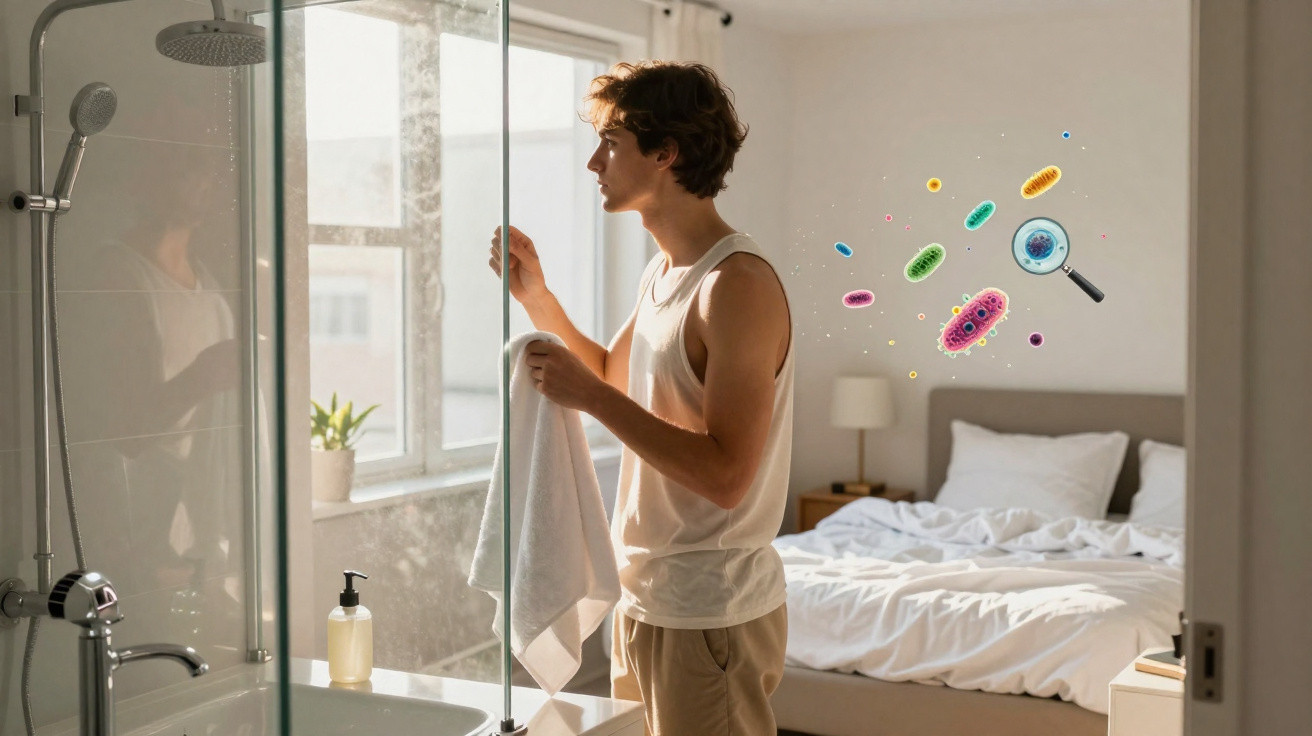
The question has been argued over for years: is it better to have a shower in the morning or at night?
People who favour a morning shower often say it’s the clear winner because it helps you wake up and feel ready for the day. Those who prefer showering at night, meanwhile, will tell you it’s best to "wash the day away" and unwind before sleeping.
So what does the evidence actually show? Speaking as a microbiologist, I can say there is, in fact, a fairly clear answer.
Why showering matters for hygiene
Whatever time you choose, it’s worth underlining that showering is a key part of a solid hygiene routine.
A shower helps clear away dirt and oil from the skin, which in turn can reduce the risk of skin rashes and infections.
It also rinses off sweat, which can lessen body odour.
Body odour: sweat, bacteria and thioalcohols
Many people assume sweat is what causes body odour, but the smell is actually produced by bacteria living on the surface of our skin. Fresh sweat itself is odourless.
Skin-dwelling bacteria-particularly staphylococci-use sweat as a nutrient source. As they break sweat down, they produce sulphur-containing compounds known as thioalcohols, which create the strong BO smell many of us recognise.
Morning or night shower? What builds up on your body
Day or night?
Over the course of the day, your body and hair naturally pick up pollutants and allergens (including dust and pollen), alongside the usual build-up of sweat and sebaceous oil. Some of these particles stay in your clothing, but others will inevitably end up on your sheets and pillow cases.
Sweat and oil on the skin also encourage the growth of the bacteria that make up your skin microbiome. These bacteria can then be transferred from your body onto your bed sheets.
If you shower at night, you may remove some of the allergens, sweat and oil accumulated during the day-meaning less of it ends up in your bedding.
However, even if you shower immediately before bed, you will still sweat overnight-regardless of the temperature. Your skin microbes will feed on nutrients in that sweat. As a result, by morning you’ll have left microbes on the bed sheets and you’ll likely wake up with some BO.
A major factor that undermines the cleanliness benefits of showering at night is not washing bedding often enough. The odour-causing microbes in your sheets can transfer back onto your freshly cleaned body while you sleep.
Night-time showering also doesn’t prevent your skin from shedding cells. Those shed skin cells can become a food source for house dust mites, and their waste can be allergenic.
If your sheets aren’t washed regularly, dead skin cells can build up and support more dust mites. Their droppings can trigger allergies and worsen asthma.
By contrast, a morning shower can remove dead skin cells along with any sweat or bacteria picked up from your bed sheets overnight. This is especially relevant if your bedding wasn’t freshly washed when you went to bed.
A morning shower means you’re more likely to put on clean clothes with fewer night-acquired skin microbes on your body. You’ll also begin the day with less sweat available for odour-producing bacteria to break down-which will probably help you stay fresher for longer than someone who showered at night.
As a microbiologist, I am a day shower advocate.
Of course, shower timing is a personal choice. But whichever you prefer, remember that how effective your shower is depends on other parts of your hygiene routine-such as how often you wash your bed sheets.
So whether you opt for a morning shower or an evening shower, it’s important to clean your bed linen frequently. You should launder sheets and pillow cases at least weekly to remove the sweat, bacteria, dead skin cells and sebaceous oils that have accumulated.
Washing will also get rid of any fungal spores that may be growing in the bed linen-along with the nutrient sources these odour-producing microbes need in order to grow.
Primrose Freestone, Senior Lecturer in Clinical Microbiology, University of Leicester
This article is republished from The Conversation under a Creative Commons licence. Read the original article.




Comments
No comments yet. Be the first to comment!
Leave a Comment