
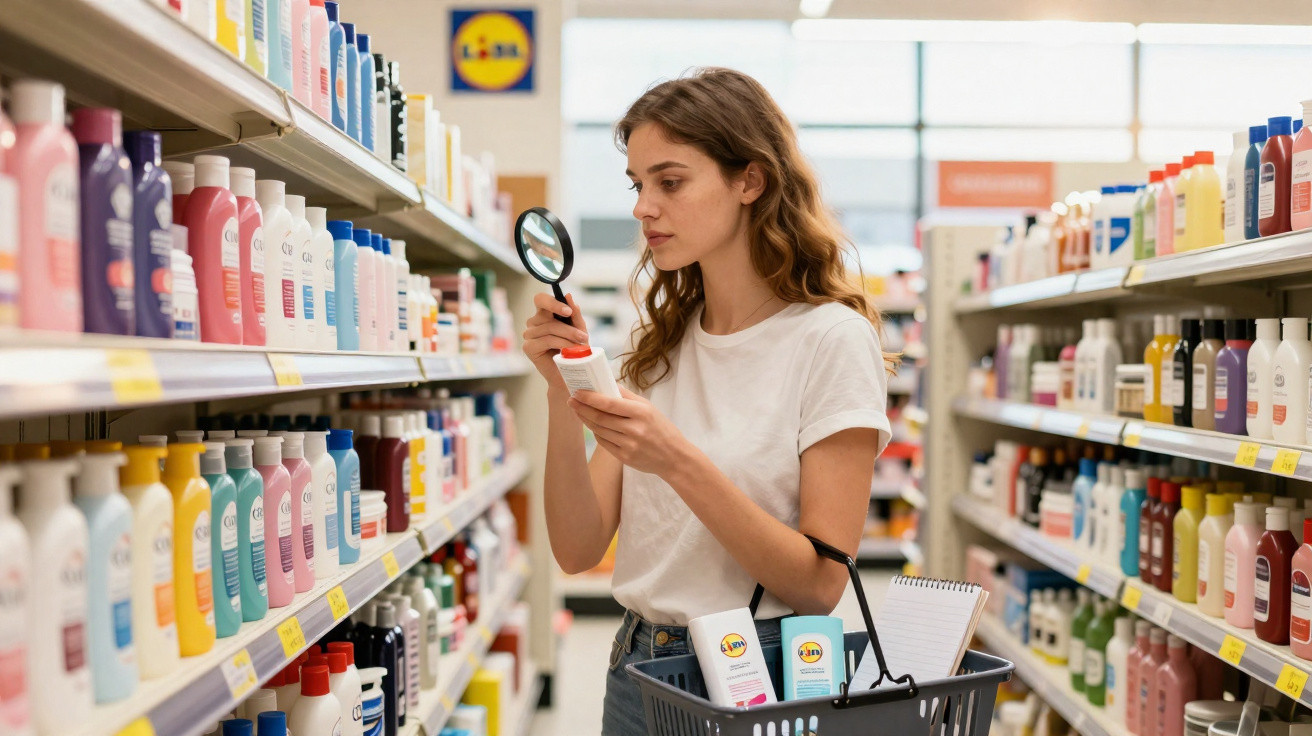
Behind these budget-friendly bottles sits a European industrial player that manages the formulas, manufacturing and quality checks. This article sets out who is involved, what evidence supports product quality, and what to pay attention to so you can shop with value for money in mind.
Who is behind Cien
Cien cosmetics are not produced out of thin air. Lidl relies on the Dalli Group, a German family business founded in 1845 in Stolberg. Dalli manufactures hygiene and personal-care products for major European retailers, supplying chains such as DM and Aldi. Its private-label focus is built on high volumes, well-honed production lines and tight product specifications negotiated for each individual item.
That industrial setup allows Lidl to offer a broad range, with more than 70 products sold under the Cien name. Formulas are based on standardised ingredients, repeatable processes and quality checks at each stage. The aim is to keep costs stable while still delivering measurable performance, from deodorants to facial care.
"Cien skincare comes from a long-established manufacturer geared for mass retail, not from an obscure workshop with no traceability."
Quality and price: a deliberately managed balance
Dalli reduces costs by buying ingredients in bulk, sharing packaging components across products, and optimising production lines. Lidl then leans on in-store exclusivity to lock in the final shelf price. This approach shows up in independent testing: some deodorants in the range, such as Puro Frescor 48h and Nature Bio-Citrus, received favourable feedback in 2021, as reported by the German specialist press. These mentions do not apply to the entire brand, but they do support specific formulas.
Low pricing does not mean technical standards are ignored. Teams check cream viscosity, sensory feel, stability in heat and cold, compatibility with packaging, and shelf life after opening. This network of tests is designed to keep the experience consistent from batch to batch, even under strong price pressure.
What the regulations really guarantee
The European cosmetics market is governed by strict rules. Every product falls under Regulation (EC) No 1223/2009. A “responsible person” must be stated on the label. That party maintains the Product Information File (PIF), commissions a safety assessment by a qualified expert, notifies the product via the CPNP portal before placing it on the market, and retains evidence supporting any claims shown on the packaging.
Checks include microbiological testing, stability studies and safety assessments. Labels list ingredients using the INCI format, a period-after-opening (PAO) indication and, where relevant, additional logos (organic, vegan, recyclability). The European Union bans animal testing for finished cosmetics and their ingredients. As a result, “not tested on animals” statements add nothing from a regulatory standpoint in Europe.
"Each Cien product placed on the shelf must have a complete quality file and an identified responsible party, like any brand sold in Europe."
Trust, but choose carefully: the consumer’s eye
Comparison sites and consumer organisations regularly point out that not every product performs equally well. UFC-Que Choisir has flagged certain Cien items to keep an eye on, while others come out very well. The practical takeaway is to assess each product line by line rather than judging the brand as a whole. A heavy fragrance load or a poorly rated UV filter can pull down a formula, whereas a minimalist product may suit reactive skin.
- Read the INCI list and spot common fragrance allergens (limonene, linalool, citronellol, coumarin, geraniol).
- Match the claims to real-world use: texture, any residue, skin tolerance and how well it lasts through the day.
- Check the PAO and store products away from heat and direct light.
- Favour references rated positively by independent bodies when that information is available.
Market impact and what happens behind the scenes
Cien reflects a wider shift: the rise of private-label brands in health, hygiene and beauty. Lidl agrees a detailed specification with Dalli, secures shelf exclusivity, and splits its offer into segments (facial care, hair care, hygiene, sun care). This puts pressure on national brands, which have to innovate in “natural” positioning, packaging or sensory appeal to justify higher prices. Shoppers often compromise-pairing an affordable moisturiser with a more technical serum, or choosing a cost-effective family sun cream alongside a targeted dermatological product.
Current economic conditions strengthen the trend. Inflation in raw materials and energy has pushed many households towards cheaper alternatives. Dalli and Lidl respond with proven formulas, regular updates and limited editions to keep shelves lively. Cien’s Lidl exclusivity supports a volume-driven model that helps secure supply. It also reduces the spread of variants, making quality follow-up more concentrated.
"The combination of an expert manufacturer + retailer exclusivity makes it possible to keep prices low while maintaining technical safeguards."
What to check by category
| Category | What to check | Quality markers |
|---|---|---|
| Deodorants | Presence of alcohol, fragrance allergens, aluminium salts depending on your preferences | Claimed effectiveness 24–48 h, feedback from independent tests |
| Sun care | UV filters listed, SPF compliance, seasonal expiry date | Water resistance, frequent reapplication, a texture your skin tolerates |
| Face creams | Fragrance if you have sensitive skin, balance of humectants/emollients | Glycerine, panthenol, squalane or ceramides depending on need |
| Shampoos | Surfactants if your scalp is reactive, fragrance | Suitable pH, conditioning agents that are not too heavy |
What manufacturing by Dalli changes
An integrated manufacturer like Dalli works with formula “bases”, modular ingredient sets and production lines that can switch from shower gel to deodorant with minimal adjustment. That flexibility makes it easier to launch new variants quickly (fragrance, size, texture). It also supports reformulations when regulations change or supplies shift. Lidl gains speed on-shelf, using trial runs in pilot countries before rolling out more widely if sales justify it.
Traceability still applies. Batch codes, the responsible person’s address, mandatory regulatory statements and customer-service channels all make it possible to investigate a quality issue. Recalls remain uncommon in this price segment because internal protocols filter out many problems before products reach stores.
Practical tips for a smart beauty basket
Build a simple routine around three products: a gentle cleanser, a facial moisturiser and daily sun protection. Compare the price per litre or per kilogram, not just the headline label. If your skin reacts easily, opt for shorter ingredient lists. Patch test on a small area before using widely. Set aside textures that do not suit your face and use them on the body instead, to avoid waste.
Need a quick label checklist? Look for the PAO (6M, 12M), ingredient order (the first items weigh most heavily in the formula), and fragrance allergens listed at the end. Photograph the INCI and compare calmly at home. If a product works well for you, note the batch number and purchase date so you can aim for similar performance on your next shop.
"A private-label brand can still mean regulated transparency-provided you read the INCI, follow the PAO and choose formulas that match your skin."
Useful extra information
Label language is often misunderstood. “Hypoallergenic” does not promise zero reactions; it means the formula is designed to reduce risk. “Fragrance-free” is not the same as “odourless”: a product without added fragrance can still smell of its raw ingredients. “Dermatologically tested” means it was tested on human skin, not that it is automatically more effective. In practice, judge by your own tolerance and by independent assessments where available.
If you are weighing up a national brand versus Cien, set one clear criterion: skin tolerance, a discreet scent, or your budget per millilitre. Try one Cien reference in each key category, then expand only if the experience suits you. That approach limits disappointing purchases while still benefiting from the savings enabled by Dalli’s manufacturing and Lidl’s exclusivity.


Comments
No comments yet. Be the first to comment!
Leave a Comment