
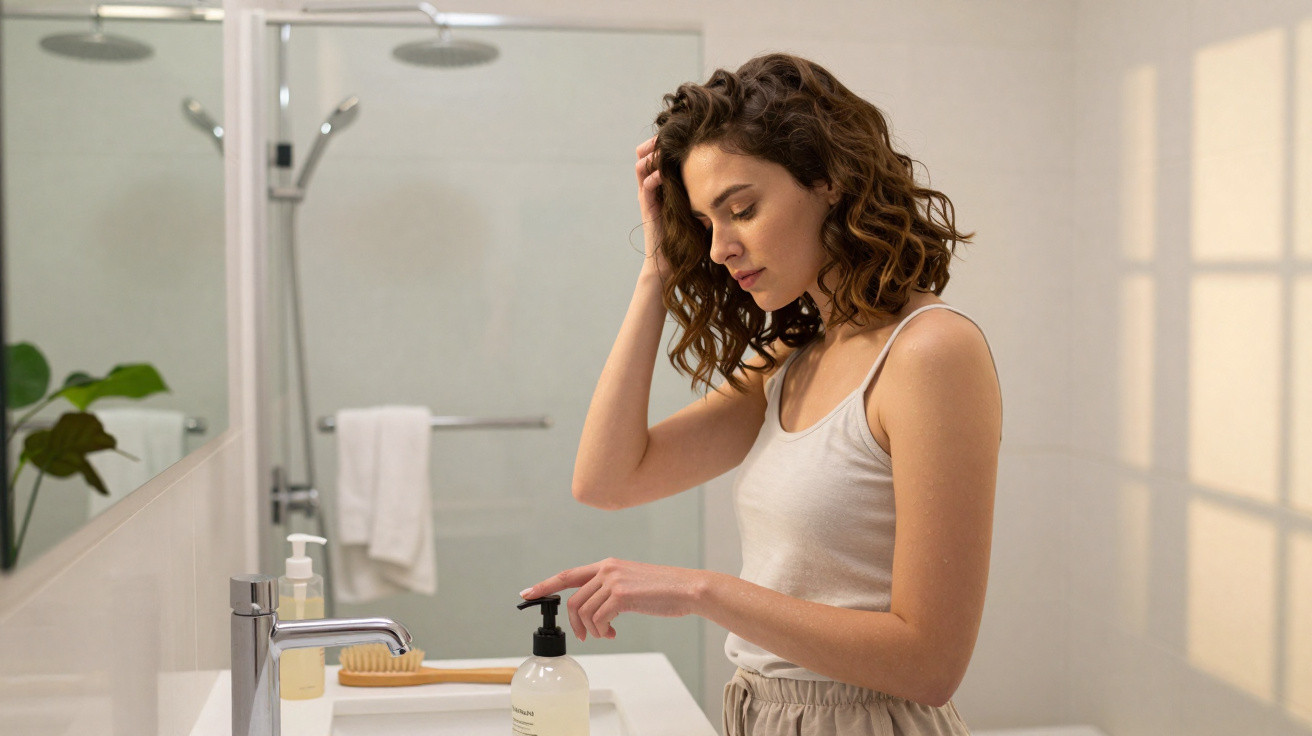
Hot water meets your scalp and, for a moment, it feels as though the entire day is being rinsed away: the nagging guilt about dry shampoo, urban pollution, post‑gym sweat, and that low-level worry of smelling “not fresh enough” at the office. So you shampoo. Then you shampoo again. It might be the third wash this week. Or the fifth. You’ve stopped keeping track.
Then, one morning, you catch yourself in the mirror and your hair looks strangely… worn out. Your roots turn greasy sooner, your ends seem flat and dull, and your scalp feels a bit itchy after every shower. You pick up yet another “purifying” shampoo. Maybe even a scalp scrub. You vow to “detox” your routine. By next Monday, you’re doing exactly what you were doing before.
Dermatologists are increasingly saying the thing many of us would rather not hear.
Maybe we’re washing our hair far too often.
What really happens when you wash your hair every day
Many of us were raised on the same equation: clean hair means newly washed hair. In big cities, where pollution seems to cling to everything, daily shampooing has become almost a modern hygiene ritual. You get home, step into the shower, and your hands go straight to your scalp on autopilot.
But your scalp doesn’t follow trends; it follows biology. And biology doesn’t love being stripped by surfactants day after day.
A Paris-based dermatologist describes a familiar pattern: people turning up with “mysterious” scalp issues. Red patches. Flaking that looks like dandruff but won’t shift with anti-dandruff shampoos. Hair that feels limp again only hours after washing. When she asks how often they shampoo, the reply often makes her pause: “Every day. Sometimes twice if I go to the gym.”
In one case she tracked-a 29‑year‑old fitness coach-the routine was a perfect example. Hard daily training, daily shampooing, and persistent itchiness. Once he reduced washing to three times a week and switched to gentler products, the inflammation was almost gone within a month.
Dermatologists break it down like this: each wash lifts away not only grime, but also some of the protective hydrolipidic film that sits on the scalp. Your skin registers that loss and compensates the only way it can-by making more sebum. You then wash again because your hair feels oily sooner, which can push oil production even higher. Over time, this loop may leave lengths weakened, roots sensitised, and create that frustrating contradiction: oily at the top and straw‑dry at the ends.
It isn’t “dirty hair” that’s driving the issue. It’s a scalp ecosystem that’s drifted out of balance.
Finding your personal rhythm (hint: it’s not your best friend’s)
Dermatologists tend to start with the same advice: drop the idea that everyone should wash a set number of times per week. The right rhythm depends on your scalp type, hair texture, daily habits, and even the climate you live in. The approach they suggest is refreshingly straightforward.
Choose a baseline that feels plausible for you-say, washing every three days. Stick to it strictly for three weeks. No extra shampoo “just because you’re going out”. Pay close attention to how your scalp responds.
If day three is genuinely unbearable every time, shift to every two days. If you notice your hair still looks fine on day four, stretch the gap gently.
Many people quit before the scalp has a chance to reset. In the first week, day three can feel like you’ve turned into a walking oil slick. Often, that’s the old over-washing loop speaking. One dermatologist likens it to a “withdrawal phase” from daily surfactants-sebum production is a bit disoriented at first.
This is where small, practical tricks can help you stay the course without feeling scruffy: a loose bun, a silk scarf, a light touch of dry shampoo applied only at the roots. And yes-washing just your fringe at the sink is a different move from doing a full lather, full-length shampoo.
One blunt line comes up again and again among scalp experts: your hair doesn’t care what Instagram thinks, it cares what your sebaceous glands are doing.
“For most healthy scalps,” explains Dr. Marie G., dermatologist specializing in hair disorders, “anything between two and four shampoos per week is realistic. The rest is personal comfort. What worries me is not frequency alone, but intensity: very hot water, harsh formulas, aggressive scrubbing. That’s where I see damage piling up.”
- Fine, straight hair: can look greasy more quickly and may need more frequent-yet ultra-gentle-washing.
- Curly or coily hair: often runs drier and may do better with weekly or fortnightly washing plus careful conditioning.
- Oily, acne-prone scalp: usually needs targeted dermatological shampoos rather than simply increasing “normal” washes.
- Outdoor workers or heavy exercisers: frequency should be shaped by sweat and dust-not by a vague sense of being “not clean enough”.
The art of washing less… without feeling gross
If washing less feels daunting, think about changing your technique rather than obeying rigid rules. Begin by lowering the intensity of each wash. Swap very hot water for lukewarm. Work a small amount of shampoo with water in your palms before it touches your scalp. Massage using your fingertips, not your nails.
Keep the cleanser focused on the roots, not the lengths. When you rinse, the foam running through is usually enough to freshen the ends. For many people, this tweak alone cuts down dryness and frizz while they experiment with longer gaps between washes.
One easy mistake is swapping too-frequent shampooing for too-frequent dry shampoo. That pale powder can feel like a miracle on day three, but it can also build up, block follicles, and set off irritation if you rely on it heavily. If you do use it, use a little, keep it on the scalp only, and wash it out properly at the next real shampoo.
Another quiet culprit: touching your hair all day. Each time you run your fingers through the roots, you transfer skin oils onto the strands. That habit alone can cut a “clean hair day” in half. And realistically, hardly anyone manages the perfect routine tutorials promise, every single day.
“I tell my patients to think of scalp care like skincare,” says dermatologist Dr. Lila N. “You wouldn’t scrub your face three times a day with a stripping cleanser just because you went outside. Your scalp deserves the same nuance. Listen to it, watch it, and adapt – not out of fear of grease, but out of respect for its balance.”
- When dealing with dandruff or seborrhoeic dermatitis, alternate a treatment shampoo with a very gentle one.
- Rinse for longer than you think you need: leftover shampoo or conditioner can look like dandruff and make the scalp itch.
- On non-wash days, think about a scalp serum or a light tonic instead of immediately reaching for shampoo.
- On those “awkward” in-between days, lean on accessories: headbands, clips, soft caps-things that feel intentional rather than like a punishment.
Living with hair that’s “clean enough” instead of constantly squeaky
Eventually, washing frequency stops being purely about technique and becomes tangled up with comfort, identity, and social pressure. Plenty of people admit they feel “less professional” if their hair isn’t freshly washed at work. Others were brought up with the message that daily shampooing was the only acceptable standard of hygiene. Letting go of that reflex can feel oddly exposing.
Most of us know the moment: you hesitate in front of the mirror, wondering whether slightly flat roots will speak louder than your ideas in a meeting.
Yet the more dermatologists discuss it, the clearer the point becomes: healthy hair isn’t automatically freshly washed hair. It’s hair attached to a scalp that isn’t chronically inflamed, over-stripped, or constantly pushed into overproducing sebum. Once you find your own rhythm slowly, you can gain more than a few extra minutes each week. You often end up with hair that behaves more consistently. Colour that lasts longer. Curls that bounce rather than fray.
Some people even notice a subtle change in how they see themselves: realising that looking “presentable” doesn’t always have to mean smelling like shampoo.
Next time your hand instinctively reaches for the bottle, consider pausing to ask a different question. Not “Do I look clean enough?” but “What is my scalp actually asking for today?” That small moment of attention is often where a new rhythm begins. It won’t match your neighbour’s-or your favourite influencer’s.
It will be the quieter compromise between your biology, your lifestyle, and that private feeling of walking out the door with hair that feels like you, not like a marketing slogan.
| Key point | Detail | Value for the reader |
|---|---|---|
| Scalp balance over rigid rules | Ideal frequency usually sits between two and four washes per week, adjusted to individual biology and lifestyle. | Reduces guilt around “not washing enough” and shifts focus to long-term scalp health. |
| Technique matters as much as frequency | Lukewarm water, gentle massage, root-focused shampooing, and thorough rinsing protect the hydrolipidic film. | Limits dryness, irritation, and breakage while you experiment with washing less. |
| Transition phase is normal | First weeks of spacing washes can feel oilier as sebum production recalibrates. | Helps readers persist through the adjustment instead of giving up too soon. |
FAQ:
- How often do dermatologists really recommend washing hair? Many say two to four times per week suits a lot of people with healthy scalps, but they emphasise that the “right” rhythm is the one where your scalp feels comfortable-not tight, not itchy-and your hair isn’t constantly limp by midday.
- Is washing hair every day always bad? Not necessarily. If your scalp is very oily, you exercise hard, or you live in an area with heavy pollution, daily washing with an ultra-gentle shampoo can be fine. Trouble tends to start when daily washing is paired with very hot water, strong formulas, or aggressive scrubbing.
- Can washing too often cause hair loss? Over-washing on its own doesn’t usually cause true hair loss, but ongoing irritation and inflammation can weaken follicles over time. Harsh routines may also increase breakage and shedding, which can feel like hair loss.
- Does dry shampoo replace real washing? No. Dry shampoo soaks up excess oil and creates a temporary fresher look, but it doesn’t clean the scalp. Used repeatedly without proper washing, it can build up and contribute to irritation or clogged follicles.
- How long does it take for my scalp to adapt if I wash less? Dermatologists often cite a three to six week window. During that period, sebum production gradually settles. Expect a few greasier days at first, followed by a more stable routine as the glands calm down.



Comments
No comments yet. Be the first to comment!
Leave a Comment