
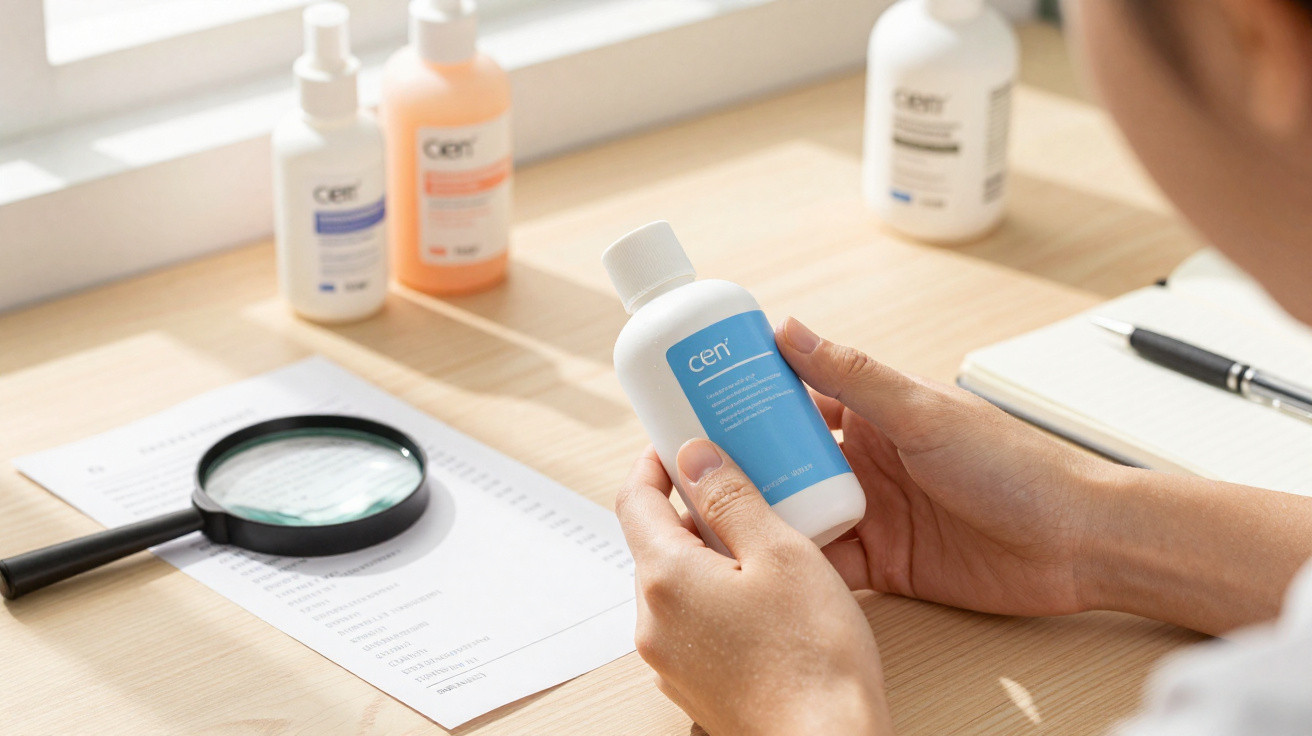
Shelves packed with Cien creams, serum bottles and ampoules - and everyone is asking the same thing: who is actually behind this low-cost pharmacy-style cosmetics range?
Many shoppers swear by Lidl’s Cien products. Prices are low, while the claims on the packaging sound impressive. Yet you won’t see the name “Cien” anywhere outside Lidl. That’s where the real detective work begins: tracking down the manufacturers behind the retailer’s own label.
How private-label brands like Cien really work
Cien isn’t a traditional cosmetics brand with its own factory, its own laboratory and its own marketing department. Instead, Cien is a private label (also known as an own-brand/retailer brand). In practice, that means Lidl owns the brand name, while the formulas and production usually come from external manufacturers.
These contract manufacturers often produce for several well-known brands at the same time - for supermarket aisles, chemists, pharmacies or online retailers. They’re frequently medium-sized cosmetics businesses in Germany or other EU countries, each specialising in certain product categories.
“With Cien, Lidl is primarily doing brand strategy, not building factories - production is largely handled by specialised contract manufacturers in Europe.”
The upshot is that a Cien item can be made on the very same production line as a much more expensive branded cream. The formulation may be similar, but it is not automatically identical. Lidl commissions its own formulas or modifies existing ones - aligned to price targets and the effects the product is meant to deliver.
Who is the actual manufacturer behind Cien?
There isn’t one single company that can be called the Cien manufacturer. Cien is an umbrella under which multiple suppliers operate. Depending on the product type, the country and even the batch, different producers can be involved.
What the packaging already reveals
It’s worth starting with the small print on the back. In the EU, cosmetics must always name a “Responsible Person” - the party legally responsible for placing the product on the market within the EU. For Cien, this is usually Lidl itself, for example “Lidl Stiftung & Co. KG”. However, that does not automatically mean Lidl is the physical manufacturer.
Clues about the real producer often include:
- Small abbreviations or codes near the edge of the packaging
- Statements such as “Made in Germany”, “Made in Italy” or “Made in Poland”
- Similar-looking private-label products with a closely matching INCI list
Through public tenders, industry directories and supplier listings, it has repeatedly been possible in recent years to trace that Lidl works with different European cosmetics manufacturers for Cien products - including contract producers in Germany, Italy and parts of Eastern Europe. The names can change by product line, reformulation and market.
“Cien isn’t a disguise for a single well-known luxury brand, but a modular system of formulas from several European contract manufacturers.”
Why Cien products can be sold so cheaply
Many people wonder: if the manufacturers are comparable to established cosmetics firms, how does Lidl keep prices so low? The explanation sits in the private-label business model.
Economies of scale and lean marketing
Lidl saves money in areas where classic brands spend heavily:
- No expensive TV or billboard campaigns; the focus is mainly on leaflets and in-store shelf visibility
- Very large order volumes that reduce the per-unit purchase price
- Standardised packaging ranges with simple designs
- Standard base formulations that can be adjusted easily
Most of the underlying research work typically happens at the contract manufacturer. They draw on existing expertise, laboratory capacity and established raw-material suppliers. Variants are then developed for Lidl that fit the desired price point.
“The price gap versus expensive brands is often driven less by the factory and more by marketing spend and brand building.”
How good are Cien creams compared with branded products?
Several independent tests over the years have repeatedly found that some individual Cien products perform surprisingly well for moisturising and skin compatibility. Some facial skincare items have even ranked ahead of significantly more expensive brands.
Even so, a strong result for one product isn’t enough to judge the whole range. Cosmetics performance depends heavily on the specific formulation, raw-material quality and stability over time.
Looking at the ingredients: where does Cien stand?
If you read the INCI list (the ingredients list) on a Cien product, you’ll often see familiar building blocks of modern conventional cosmetics:
- Water, glycerin and fats/oils as the base
- Emulsifiers to combine water and oil
- Preservatives to prevent microbial growth
- Fragrance, sometimes including allergens that must be declared
- In some cases hyaluronic acid, urea, niacinamide or vitamin derivatives
People with particularly sensitive skin often react to fragrance or certain preservatives. In that respect, Cien sits alongside many conventional creams sold in chemists and perfumeries. Strictly certified natural cosmetics follow different standards, which Cien does not always aim to meet - or need to meet.
How to narrow down the real manufacturer of a Cien cream
Even if Lidl doesn’t spell out the producer in full on the pack, there are a few practical ways to better understand where a product comes from:
| Method | What you can learn from it |
|---|---|
| Compare INCI lists with other brands | Similarities can point to the same contract manufacturer or a shared base recipe. |
| Check the country of manufacture | “Made in Germany” or “Made in Italy” significantly narrows the likely manufacturer pool. |
| Industry news and trade press | Large contracts and retail partnerships are often reported there. |
| Ask customer services | They rarely provide names, but may share details on region, standards and certifications. |
Rules Cien manufacturers must comply with
Cosmetics in Europe are governed by strict EU cosmetics regulations. That means Cien products must meet specific requirements regardless of their low price:
- Safety assessments by suitably qualified professionals
- Stability and shelf-life testing
- Compliance with limit values for certain substances
- Documentation in a product information file that authorities can request
“A private label doesn’t replace regulation - low-cost creams in the EU must meet the same safety requirements as luxury products.”
So, when you pick up a Cien cream, you are buying something manufactured and controlled under the same legal framework as branded goods.
Risks and limits of private-label cosmetics
It’s still sensible to take a clear-eyed view of potential drawbacks. Private labels like Cien can change their ranges more quickly. Popular lines sometimes disappear or are reformulated because Lidl sets new price targets or appoints a different producer.
For people with very sensitive or compromised skin, that can be an issue. If you tolerate a cream well, a reformulation removes that certainty. And when ranges are short-lived, it can be harder to build a stable long-term skincare routine.
On the other hand, that same flexibility allows Lidl to respond quickly to trends: retinol serums, hyaluronic ampoules or vitamin C concentrates often appear rapidly as Cien versions when those actives gain momentum in the market.
How to use Cien sensibly in your own routine
If you want to use Cien products, it helps to take a strategic approach. One pragmatic set-up might look like this:
- Cover basic steps such as cleansing gel or a simple moisturiser with Cien products.
- For specific skin concerns (rosacea, severe acne, eczema), rely on products recommended by a clinician.
- Patch test new Cien ampoules or serums on a small area first.
- If a formula changes (new packaging, different texture, altered INCI), pay close attention.
If you read carefully, one point becomes clear: more “active” ingredients do not automatically mean better skincare. What matters is concentration, tolerance and how it fits with the rest of your routine.
Terms worth knowing in this context
A lot of industry language sounds more technical than it really is. Three key terms help you judge marketing claims more accurately:
- INCI: The international naming system for cosmetic ingredients. It makes it easier to compare products across brands.
- Private label/own brand (retailer brand): A brand owned by the retailer, while external companies manufacture the goods.
- Contract manufacturer: A company that develops and produces products on behalf of other brands.
With this basic knowledge, you can assess a Cien product on the shelf more effectively - not only by price and promises, but by the actual formulation and what your skin genuinely needs.



Comments
No comments yet. Be the first to comment!
Leave a Comment