
She was scanning ingredient lists with the focus of someone on a mission. One hand steadied her basket; the other kept turning over tube after tube, dismissing the familiar Nivea blue tins and the well-known Neutrogena logos as if they belonged to another era. Then she lifted a plain, almost forgettable tube - the kind you’d barely clock in an Instagram flat lay - read the label twice, and gave a small nod, like she’d just ticked off a personal checklist.
A few minutes later, I caught the pharmacist murmuring to another customer: “That one? Dermatologists are obsessed with it right now.” Not the old household staples. Not the shiny jars many of us remember sneaking from our mums’ bathrooms.
At the moment, the number one moisturiser specialists quietly point people towards doesn’t look like a hero product at all.
The surprising rise of the ‘boring’ tube
Dermatology practices across three continents are echoing the same thing: the moisturiser sitting at the top of their internal favourites lists isn’t Nivea, not Neutrogena, and not a legacy name your grandmother would instantly recognise. Instead, it’s a modest, fragrance-free cream built around ceramides, glycerin and hyaluronic acid - often tucked low on the shelf and typically cheaper than the eye-catching jars beside it.
Doctors talk about it as “a blanket for the skin barrier”. No scent, no sparkle, no hazy claims about “radiance”. Just a formula created to fill the tiny gaps in the skin’s protective barrier and keep moisture where it should be.
It has a clinical, almost bland look. And yet it’s the tube dermatologists are most likely to keep in their own bathrooms.
Ask a handful of dermatologists what they actually use at home and a pattern becomes obvious fast. The same style of formula comes up again and again: a rich, milky cream with 3 essential ceramides, a generous amount of glycerin, and a gentle humectant such as hyaluronic acid. No essential oils. No harsh botanical extracts. Nothing you could smell from across the room.
In private Facebook groups and closed medical forums, specialists swap before-and-after photos showing damaged skin barriers gradually recovering with this sort of product. Redness eases. Flaking settles down. Make-up sits more smoothly. Patients who’ve cycled through ten “hydrating” creams finally stop waking up scratching.
One hospital dermatologist admitted she buys these tubes in bulk and gives them out like bandages.
So why this type of moisturiser - and why now? Skin specialists say it’s straightforward: the skin barrier is worn out. Years of strong cleansers, over-exfoliation, aggressive actives and endless “glow” tricks have left many faces overstressed. This new number one moisturiser isn’t merely adding water back into the skin. It’s repairing the structure that keeps that water inside.
The skin barrier is largely made up of lipids, including ceramides. When they’re depleted, moisture escapes and irritants get in more easily. A moisturiser loaded with ceramides, cholesterol and fatty acids works a bit like mortar between bricks. Then glycerin and hyaluronic acid draw in water and help maintain that comfortable, plump feel.
Specialists put this kind of formula first for one reason: it delivers balance extremely well - quietly, reliably, and without any drama.
How to actually use the new number one like a specialist
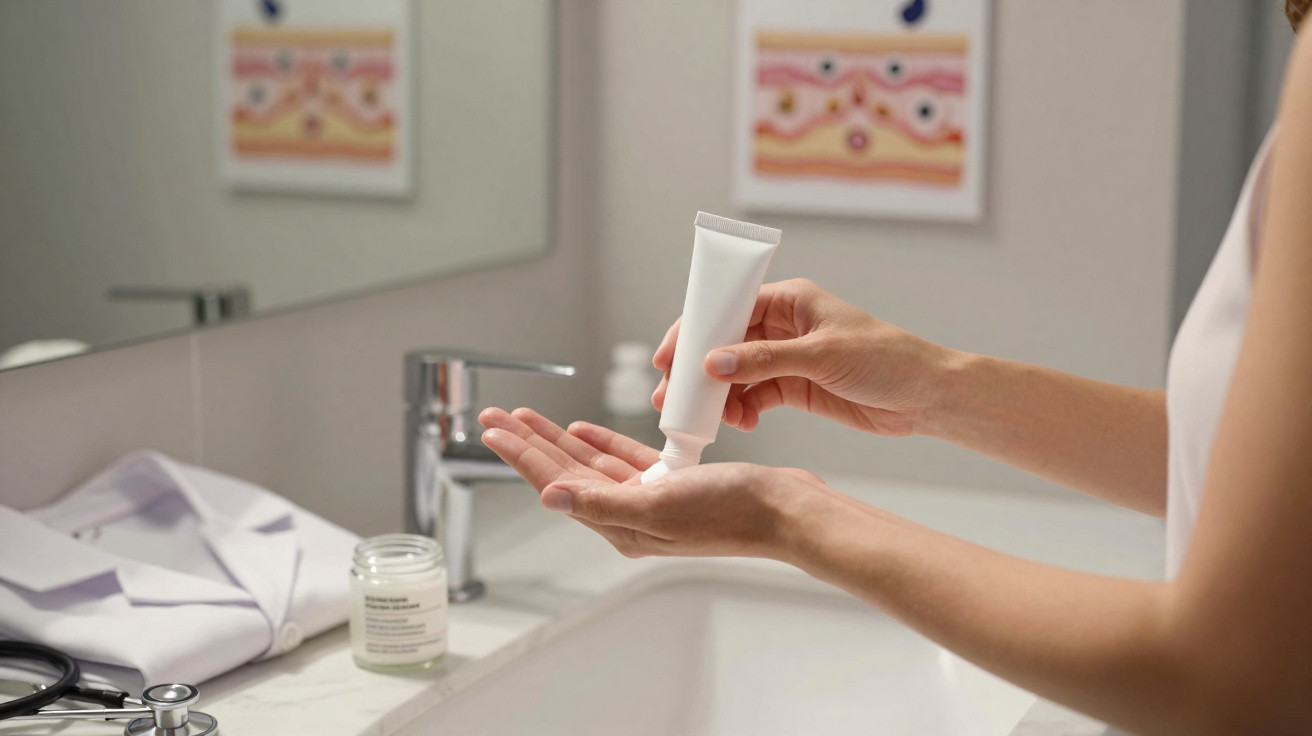
The advice dermatologists repeat is almost comically simple: don’t put it on completely dry skin - apply it while your skin is still slightly damp. After cleansing, pat your face lightly but leave a thin film of water behind. Then squeeze out a generous pea-sized amount into your palm, warm it between your fingertips for two seconds, and press it onto the skin rather than rubbing as if you’re buffing shoes.
Begin where you’re driest: cheeks, around the mouth, and the sides of the nose. Then move to the forehead and chin, where you may be a little oilier. If you’re using stronger actives such as retinol or acids, use the moisturiser as a buffer layer either before or after, depending on how sensitive your skin feels.
That small shift in timing can be the difference between skin that looks bright and skin that feels like it’s protesting.
When your skin has a bad week, it’s easy to panic and pile on everything you own: a hydrating toner, an essence, two serums, a sleeping mask - the whole orchestra. Dermatologists tend to do the reverse. They cut right back to basics: a gentle cleanser, this kind of barrier-first moisturiser, and a mineral or hybrid sunscreen.
They may suggest a ten-day “skin fast”. Pause the fragrances, the essential oils, the scrubs. Focus on feeding the barrier. People return with calmer cheeks, fewer little bumps, and a relationship-saving reduction in mirror-induced stress.
Let’s be honest: hardly anyone manages that every single day. Life happens - work ramps up, you fall asleep wearing mascara. But even using the specialist-approved moisturiser properly for three or four nights in a row can help steady a face that feels like it’s going off the rails.
One dermatologist I spoke with put it this way:
“Most people don’t have ‘problem skin’. They have ‘over-treated skin’ that’s begging for a break and a basic, solid moisturizer.”
Here’s what specialists repeat to patients who feel completely overwhelmed in front of that crowded shelf:
- Ignore the jar design. Choose performance over pretty packaging, every time.
- Read the first 10 ingredients. Prioritise ceramides, glycerin and hyaluronic acid - not perfume and essential oils.
- Match texture to your skin type. Lotion for oily skin, cream for normal-to-dry skin, balm for very dry or compromised skin.
- If it stings badly, stop immediately. A good barrier cream should feel soothing, not spicy.
- Introduce one new product at a time. Let your skin’s reaction be the vote that counts.
What this quiet shift says about our relationship with our skin
There’s something strangely reassuring about a “boring” cream coming out on top. For years, beauty marketing trained us to believe the bigger the promise, the better the product: anti-ageing, firming, contouring, illuminating - all in one glossy jar. Now dermatologists are steering us back to basics with tubes that look like medical supplies and ingredient lists that read like a chemistry lesson.
At a deeper level, the new number one moisturiser reflects a kind of shared fatigue. Our skin is tired of being treated like a project. The rise of barrier-repair creams suggests a quiet move away from punishment and towards care - away from constant “fixing” and towards steady maintenance. It’s less about chasing perfection and more about feeling comfortable in your own face at 7 a.m. under unforgiving bathroom lighting.
On a bus, in front of the mirror, under the pharmacy’s blue fluorescent glow, there’s a tiny mental exhale when something simply works - calming irritation without fuss.
We all recognise that moment when your face feels tight, angry, and slightly betrayed by whatever “miracle” product you tried last week. This is the real-life pocket where dermatologists’ favourite kind of moisturiser proves itself. No filters, no ring-light plumping - just skin that doesn’t hurt when you touch it.
The story travelling from clinic to clinic isn’t about a secret ingredient no one’s heard of yet. It’s about finally respecting the skin’s basic structure and giving it what it lacked all along. That’s why this unassuming tube has climbed to number one in the minds of people who look at skin all day.
Next time you walk past the bright, attention-grabbing jars and pause at the plain white or pale-green tubes, you may feel the same hesitation the woman in the pharmacy did. Do you trust the advert - or the quiet consensus of specialists who see real faces, real reactions, and real burnout?
Maybe the real change isn’t only what sits on your bathroom shelf. Maybe it’s how you decide what deserves to sit there.
| Key point | Detail | Why it matters to the reader |
|---|---|---|
| Priority on the skin barrier | Specialists’ top pick is a cream rich in ceramides, glycerin and hyaluronic acid | Understand why a “simple” formula can outperform the big brands |
| Strategic application | Slightly damp skin, gentle pressing, and a pared-back routine around it | Get the best results without overhauling your entire bathroom cabinet |
| Fewer products, more consistency | Occasional “skin fast”, with a focus on hydration and protection | Cut irritation, waste and frustration in front of the mirror |
FAQ:
- What is the moisturiser dermatologists rank number one right now? It isn’t one specific brand, but a category: a fragrance-free, barrier-repair cream high in ceramides, glycerin and hyaluronic acid, usually sold in a simple tube found in pharmacies rather than on luxury beauty counters.
- Is it really better than Nivea or Neutrogena? For sensitive, over-treated or dry skin, specialists often favour these newer barrier-focused formulas because they minimise fragrance and prioritise skin-identical lipids. That doesn’t mean classic brands are “bad” - just that many weren’t designed for today’s irritation-heavy routines.
- Can oily or acne-prone skin use this kind of moisturiser? Yes - choose the right texture. Many top-ranked options come in lighter lotion versions that hydrate without feeling heavy. Look for “non-comedogenic”, and avoid thick balms if you’re very oily.
- Where should this moisturiser go in my routine? Usually after water-based serums and before sunscreen in the morning, or as your final step at night. If your skin is reactive, you can also “sandwich” retinol between two thin layers.
- How long before I see a difference in my skin? For comfort and less tightness, many people notice improvement within a couple of days. For reduced redness and a stronger barrier, dermatologists typically suggest three to six weeks of consistent use.




Comments
No comments yet. Be the first to comment!
Leave a Comment