
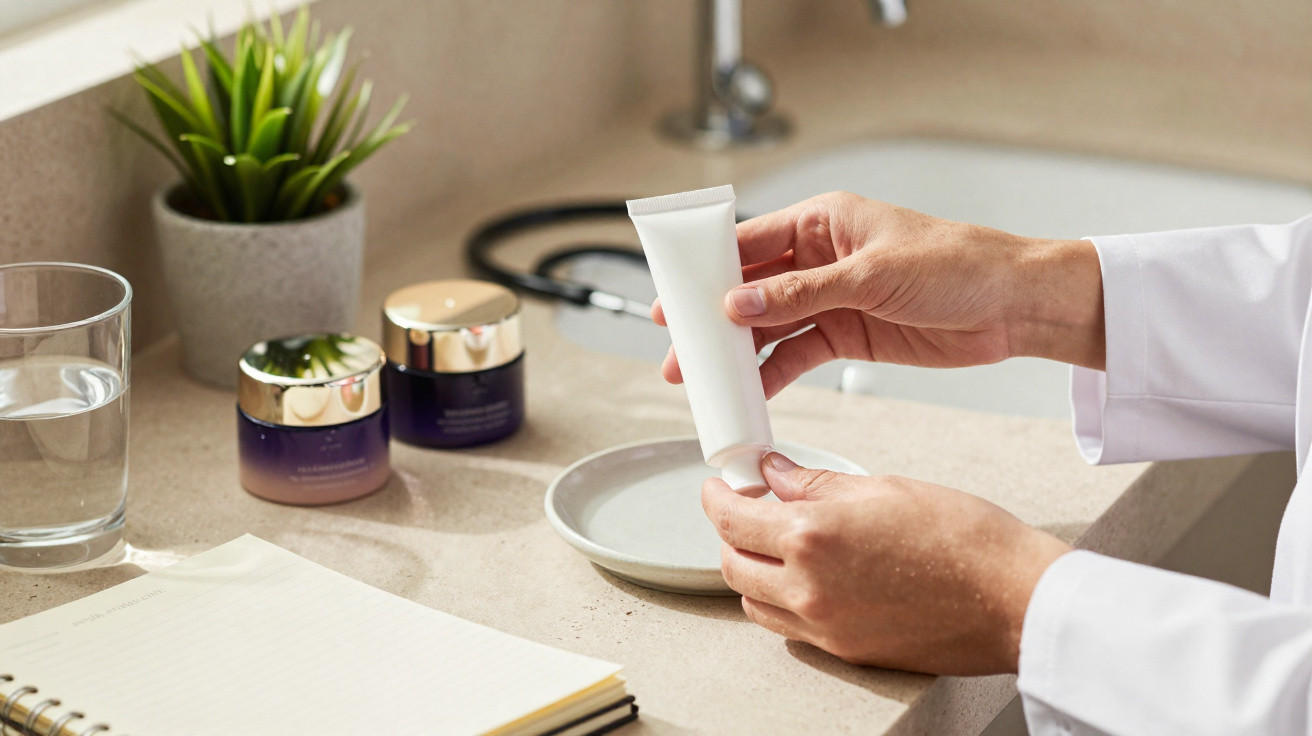
A jar like this barely registers. No frosted glass, no gold-coloured lid, no influencer name splashed across the label. It’s simply a plain white tub tucked on the bottom shelf of a small-town chemist - the sort of moisturiser your grandparents might have picked up without a second thought. And yet, in recent months, this modest, no-name moisturiser has begun to rise quietly in dermatology circles, finding its way into clinic advice and everyday routines while luxury brands continue to shout from billboards.
No fragrance, no shimmer, no claims of “age reversal”. Just a dense, old-school cream in a dull-looking pot.
Even so, dermatologists keep choosing it over the sleek, heavily promoted formulas everyone recognises.
The unglamorous cream that keeps winning
Skin specialists don’t usually point to the prettiest product on your bathroom shelf when you ask what helps dry, reactive skin. More often, they reach for something that looks like it belongs in a 1990s first-aid box. That’s the story with this old-style, no-name moisturiser: it keeps appearing on expert “top picks” lists, while the famous brands fade into the background.
Sometimes the most effective skincare looks less like a luxury candle and more like a dependable chemist staple.
A London dermatologist described what she saw in her clinic last winter. Patients arrived with bags full of pricey, perfumed creams - some costing more than a dinner for two - and still complained their skin felt tight, red and itchy. She would open a drawer, pull out the same anonymous white tub, and watch the scepticism appear. “This?” they’d ask, mildly offended. A month later, a number of those same people came back with calmer faces - and a surprising loyalty to the plain product they’d nearly turned down.
The buzz didn’t start on TikTok; it travelled through waiting rooms and WhatsApp messages between friends.
Dermatologists like formulas like this for a straightforward reason: it works, then leaves the skin alone. There’s no overloaded mix of trendy actives, no punchy perfume, no sparkly mica designed for camera appeal but notorious for upsetting sensitive skin. It’s thick without feeling stifling, nourishing without turning greasy, and it puts its effort into barrier repair - the quiet, invisible work that actually keeps skin resilient. Strip away the promises and the packaging, and that’s what many faces need by the end of the day.
Skincare stops being a marketing story and starts behaving like medicine again.
Why simple creams beat complicated routines
When dermatologists suggest this old-school cream, they often begin with the same approach: cut your routine right back, then add things in gradually. One cleanser, one moisturiser, one sunscreen - full stop. The no-name moisturiser becomes the steady base, particularly in the evening. Put it on slightly damp skin, perhaps after a gentle hydrating serum, and it helps hold water in with a soft, breathable seal.
Used properly, it’s not a miracle product; it’s closer to a good mattress for your face - dependable, quiet and supportive.
Many people turn up at appointments with a routine that resembles a buffet: glycolic acid, retinol, vitamin C, niacinamide, multiple mists, a “glow” serum and another for “texture”. Then they’re baffled when their cheeks sting whenever they cleanse. The reality is that the skin barrier has limits. Dermatologists often recommend what feels like minimalist skincare: pause the strong actives, keep sunscreen in place, and let this unassuming moisturiser do the heavy lifting until the redness and flaking calm down.
And yes - hardly anyone manages to stick to that every single day without drifting back to old habits.
Scientifically, the results aren’t hard to explain. This kind of plain cream is typically built around classic, proven ingredients: occlusives such as petrolatum or mineral oil to reduce moisture loss, emollients like glycerin to soften, and sometimes ceramides to support the barrier. There’s no fairy dust and no “proprietary complexes” - just a formula designed to limit water loss and ease low-level irritation. Fewer extras also means fewer potential allergens, fewer ingredient clashes, and less chance of your face rebelling right before an important occasion.
Underneath the trends, skin still responds best to comfort and consistency.
How to actually use a no-name moisturiser like a pro
Dermatologists rarely advise patients to simply “slap it on”. There’s a small, practical ritual to applying a dense, old-style cream so it feels comforting rather than smothering. Start with lukewarm water and a non-stripping cleanser - your skin should feel clean, not squeaky. While your face is still slightly damp, take a pea-sized amount, warm it between your fingers, and press it into the skin instead of rubbing hard. Pay extra attention to the areas that dry out most: cheeks, around the nose, and sometimes the jawline.
If your skin is extremely dry, you can add another tiny dab on top as a final layer - like a night-time blanket.
Where people often go wrong is pairing this simple moisturiser with too many harsh steps at once: strong acids at night, retinol every day, abrasive scrubs on top, and then a thick cream expected to “repair” the fallout. The outcome is predictable: irritated, confused skin. This old-style cream performs best when the routine around it stays quiet - fewer fragrances, fewer foaming cleansers, fewer last-minute experiments. Treat it as recovery mode. Be gentle for a couple of weeks, notice how your skin responds, and only then decide whether you truly need all the extras again.
Most of us know that moment when the bathroom shelf looks like a skincare museum and your skin still refuses to play along.
Dermatologists can sound almost protective when they discuss this sort of no-frills formula.
“People think paying more will always mean calmer, better skin,” one New York dermatologist told me. “But the skin doesn’t read the price tag. It just knows if it’s being irritated or soothed - and this old-fashioned cream is incredibly soothing.”
They often follow that with a short set of practical rules:
- Use the no-name moisturiser as your main night cream for at least 2–3 weeks before judging it.
- Cut back on strong actives (acids, retinoids) when your skin feels tight, red, or itchy.
- Prioritise texture over marketing: if your skin feels calm and cushioned, you’re on the right track.
- Don’t chase multiple “miracle” products at once - let one change settle before adding more.
- Ask your dermatologist which humble chemist staples they personally use at home.
The quiet rebellion against glossy jars
There’s something quietly rebellious about an anonymous white tub outperforming polished jars from prestige brands. It pushes back against the idea that great skincare must look luxurious - or go viral - to deserve a place in your routine. When dermatology experts put an old-style, no-name moisturiser at the top of their recommendations, they’re making a broader point too: skin responds to ingredients and tolerance far more than it does to packaging and buzzwords. For many people, that’s oddly freeing.
You start to wonder which purchases were truly for your face - and which were for the story you were sold.
That doesn’t mean every expensive cream is pointless, or that you should bin products you honestly enjoy using. It simply opens up a more grounded route: the workhorse moisturiser on the bottom shelf becomes the real hero, and results matter more than an unboxing moment. Once you’ve watched your skin move from inflamed to comfortable with something so unassuming, glossy campaigns can be hard to see in quite the same way.
| Key point | Detail | Value for the reader |
|---|---|---|
| Simple formulas work | Old-style, no-name moisturisers prioritise barrier repair with classic ingredients such as glycerin and occlusives. | Helps you choose products that genuinely soothe and hydrate rather than just looking appealing. |
| Less can be more | Dermatologists commonly pair this cream with minimalist routines: gentle cleanser, moisturiser, sunscreen. | Cuts irritation, saves money, and makes day-to-day skincare easier. |
| Expert-approved doesn’t mean expensive | Many dermatologists use and recommend affordable, chemist-shelf moisturisers themselves. | Confirms that effective skincare is accessible without luxury-brand pricing. |
FAQ:
- Question 1: How can a no-name moisturiser be “number one” if I’ve never seen it advertised?
Because many dermatology “rankings” happen in clinics and professional surveys, not in adverts. Experts compare formulas by tolerance, effectiveness and long-term performance, then recommend what works to patients - often quietly.- Question 2: What should I look for on the label of this kind of simple cream?
Look for terms such as “fragrance-free” and “for sensitive skin”, plus ingredients like glycerin, petrolatum, ceramides, and minimal plant extracts. In many cases, shorter ingredient lists are a helpful sign.- Question 3: Can I use this type of moisturiser if I have oily or acne-prone skin?
Yes - but choose a lighter option labelled non-comedogenic and introduce it gradually. Many people with oily skin still benefit from barrier repair, particularly if acne treatments leave them dry.- Question 4: Will this kind of cream replace all my serums and treatments?
Not always. Think of it as your foundation - the dependable comfort layer. You can still use targeted products like vitamin C or retinoids, as long as your skin isn’t irritated and you add them slowly.- Question 5: How long before I know if it’s really working for me?
Most dermatologists advise giving a new moisturiser at least 2–3 weeks of consistent use. Look for less redness, fewer tight or flaky patches, and an overall sense of softness and comfort.




Comments
No comments yet. Be the first to comment!
Leave a Comment