
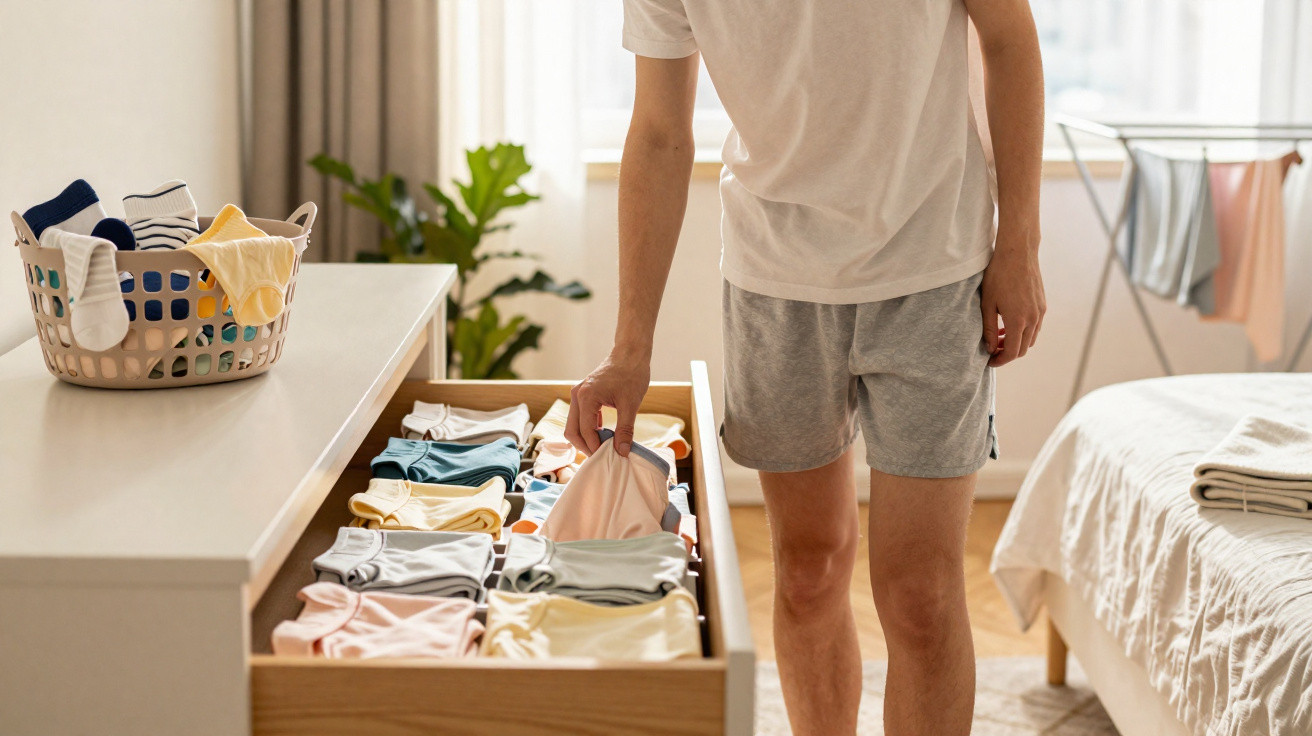
Underwear is one of those quiet essentials of daily life. You pull it on in the morning, rarely give it another thought, and by evening it ends up - ideally - in the laundry basket. The question is what “ideally” actually looks like: every day, every other day, or only once it starts to smell? Clinicians and hygiene specialists give surprisingly firm guidance that may unsettle anyone who relies on habit rather than routine.
Why underwear has a special role
Underpants sit closer to the body than almost any other item of clothing. For hours at a time they rest directly against the skin and mucous membranes around the intimate area - and more is going on there than many people would like to think about: sweat, dead skin cells, bacteria, and sometimes traces of urine, stool or discharge.
"Underwear acts like a sponge for sweat, bacteria and bodily secretions - which is exactly why it needs a clear changing routine."
If your thinking is, “I can’t smell anything, so it must still be clean,” you are underestimating the issue. Smell only reflects part of what is building up. Many bacteria and fungi spread without any obvious odour, can irritate the skin and, under unfavourable conditions, increase the likelihood of infections.
The clear basic rule: one day, then into the wash
Pharmacy publications and health insurers largely agree on one point: for healthy adults, changing your underpants daily is the most sensible baseline routine. Wear for one day, then wash - simple.
- Intimate hygiene: clean underwear helps keep germ levels lower.
- Wellbeing: fresh laundry prevents stale odours and embarrassment.
- Skin protection: less irritation from moisture and friction.
- Infection risk: fewer opportunities for bacteria and fungi to thrive.
If you sweat heavily, do physical work or exercise, you can quickly end up needing more than one change a day - and that is exactly what experts recommend in those situations. After an intense workout or a hot summer day, a clean pair is not a luxury; it is basic hygiene.
When a daily change is especially important
For some groups, the “one-day rule” is almost too generous. These include:
People with sensitive skin
Anyone who is prone to redness, itching or rashes around the intimate area will react more strongly to sweat and friction. If damp, soiled underwear stays against the skin for too long, the skin barrier can deteriorate further. Dermatologists often advise breathable cotton underwear and a strict daily change.
A tendency towards thrush or urinary tract infections
Women who experience recurrent vaginal yeast infections or urinary issues often hear the same advice in the clinic: change your underpants daily, and wash them particularly thoroughly after infections. Warmth and moisture create ideal conditions for fungi. Keeping the same briefs on for too long can prolong symptoms or increase the risk of relapse.
Infections and parasites
For certain illnesses, health insurers advise even stricter rules. A classic example is threadworms in children. Here, health funds recommend changing underwear daily and washing it hot, often at 60 °C. This is one of the most reliable ways to reduce parasite eggs that can remain in the fabric.
"When you’re ill, underwear becomes a hygiene tool - daily changes, sometimes with hotter washes, are then part of the treatment."
What people actually do - and who cuts corners
A GfK survey of 1,500 people in Germany shows how far real life can diverge from the recommendations. According to the study, 84 % change their underwear at least once a day - but the remainder do not.
| Group | Change at least once daily |
|---|---|
| Overall | 84 % |
| Women | 86,9 % |
| Men | 73,9 % |
The striking detail: almost one in four men say they do not change their underpants every day. Among women, the willingness to change is noticeably higher. Reasons range from convenience and not having enough clean laundry to the belief that “it’s not that bad” to wear the same pair for two days.
How unhealthy is it to wear underpants for longer?
If, in exceptional circumstances, you wear the same pair for two days, that does not automatically make you ill. The body can cope with a lot. The risks mainly rise when the “exception” becomes the norm, or when other factors are involved: lots of sweating, tight clothing, heat, or already-irritated skin.
Possible consequences of changing too infrequently include:
- stronger odour as bacteria break down sweat and secretions
- irritated, reddened skin around the groin and intimate area
- heat build-up and chafing, especially with tight briefs or synthetic fibres
- a larger foothold for fungi and bacteria
That is why specialist health sources describe a daily change as “hygienically sensible” - even if a single lazy day does not immediately make you ill.
Material and wash temperature: what you should know
Which fabrics are best suited?
For everyday underwear, many experts recommend:
- Cotton: absorbs moisture well, is skin-friendly and is often suitable for boil-washing or hot cycles.
- Cotton blends: slightly more elastic and comfortable, but check the care label.
- Performance fibres for sport: move sweat away from the skin, but should go into the wash after every training session.
Very tight synthetic briefs can increase heat around the area and absorb sweat less effectively. If you already have intimate-area problems, breathable cotton in a looser cut is often the better option.
How warm should you wash underwear?
In everyday life, a 40 °C programme is often sufficient thanks to modern detergents. With infections or parasite infestations, however, health insurers advise washing at 60 °C to reduce germs and eggs. This applies especially to children’s underwear, but also to adults after stomach bugs or fungal infections.
"Rule: when you’re healthy, 40 °C is usually enough; when you’re unwell, it’s better to wash one step hotter."
Practical tips for daily life - making the change routine stick
Remembering to put on fresh underpants regularly is easier than it sounds if you rely on small routines:
- Change underwear straight after brushing your teeth in the morning, not “at some point later”.
- Keep enough pairs so there is no “emergency day” without a change.
- Always pack a fresh pair in your gym bag for after training.
- When travelling, use small laundry bags to separate worn underwear from clean items.
If you have children, it helps to build the daily change in early - ideally as a fixed step in a morning or evening routine. That way, it is rarely questioned later in adult life.
How age, cycle and season affect things
For women, the menstrual cycle can make a difference. On days with heavier discharge or during a period, underwear often ends up in the wash sooner - sometimes several times a day. That is not excessive; it is simply sensible from a hygiene perspective, particularly if panty liners or sanitary towels are being used.
In summer, heat and sweat add another layer. If you sit a lot on hot days - for instance in an office or in the car - a warm, damp microclimate can develop in the intimate area. In that situation, a midday shower with a change of underwear can be worthwhile not only for comfort, but also for skin health.
Older people with urinary incontinence or faecal soiling benefit greatly from clear routines and, where needed, support from relatives or carers. A daily change is the hygienic minimum standard here; after any accidents, it should of course be immediate, even multiple times a day.
Hygiene, embarrassment and everyday life - why openness helps
Many people dislike talking about underwear and intimate hygiene. That taboo means some simply do not know what frequency makes sense, or they worry unnecessarily - for example, that changing daily is “too much”. Dermatologists emphasise that clean, dry underwear is a protective factor, not a burden.
Ultimately, it comes down to a simple principle: the intimate area is sensitive and depends on a balance of natural flora, air circulation and cleanliness. One fresh pair of underpants per day supports that balance - and, compared with the potential downsides, costs far fewer worries.

Comments
No comments yet. Be the first to comment!
Leave a Comment