
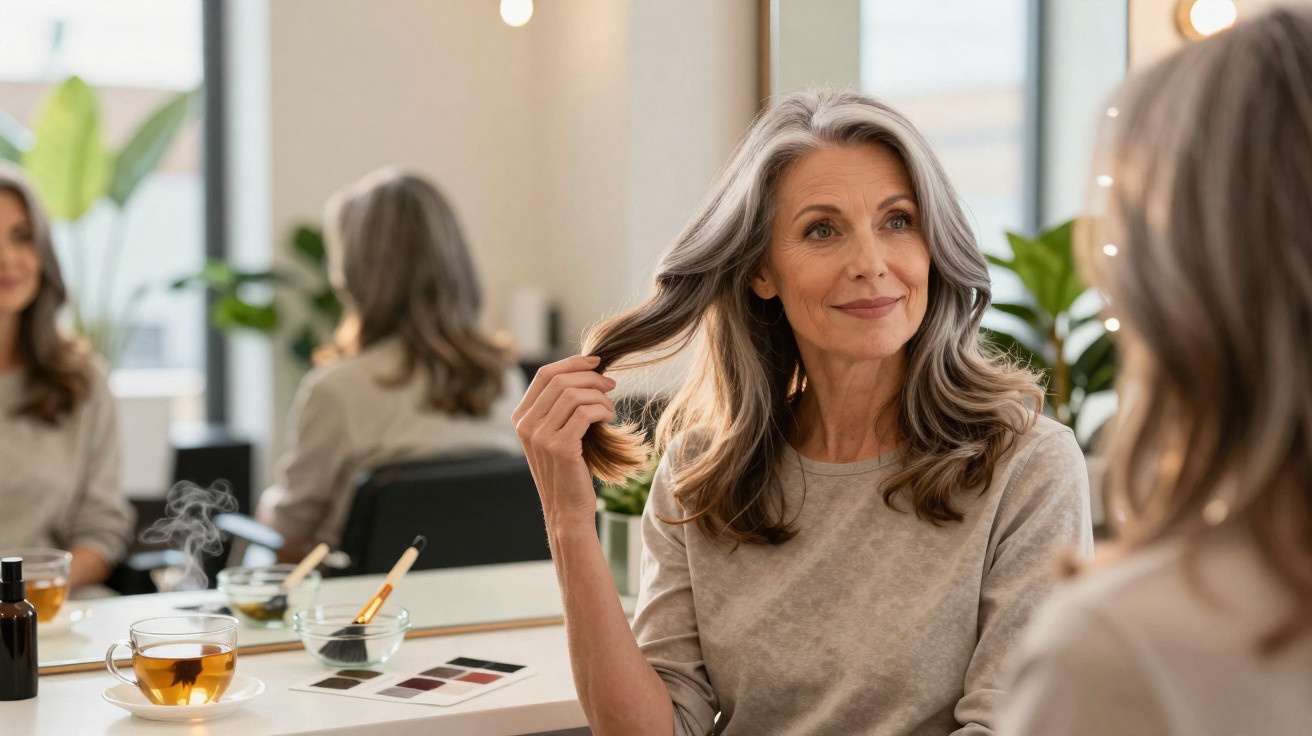
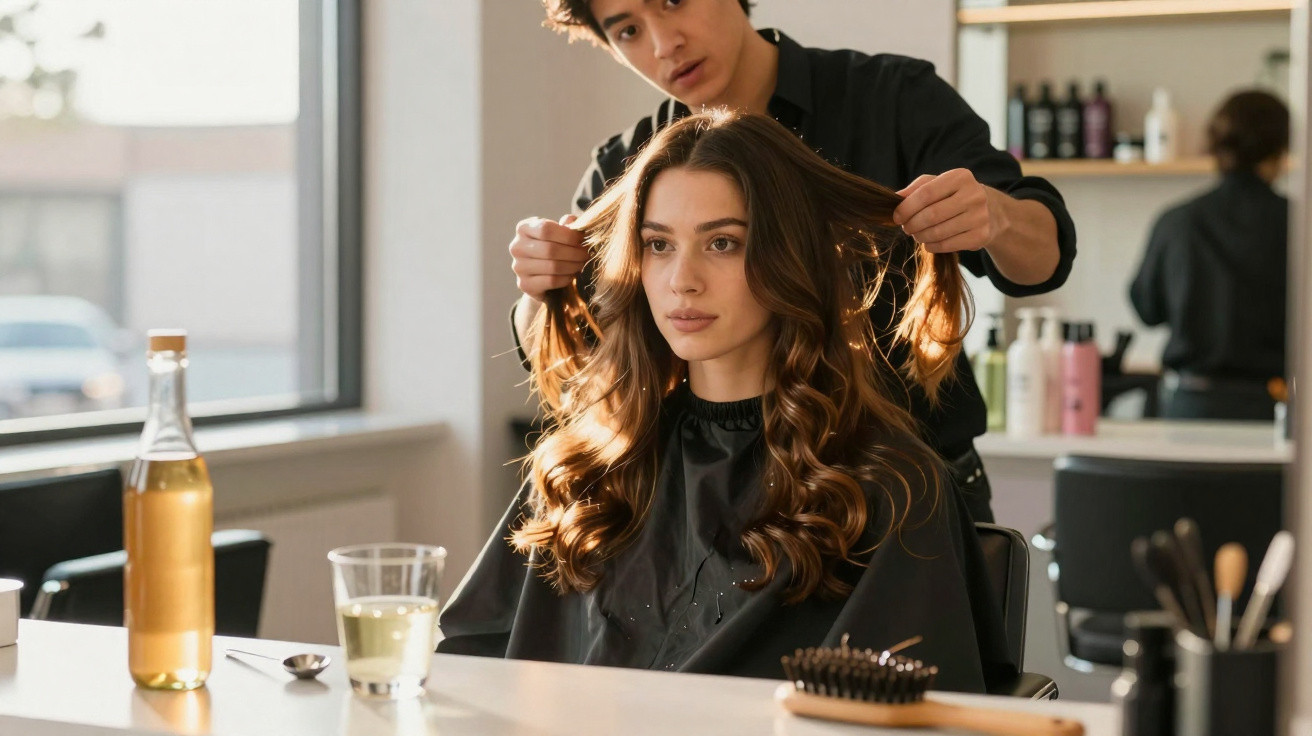
The hairdresser gave a quiet click of her tongue as she picked up a small section by my temple. “You see this?” she said, swivelling the mirror so I couldn’t miss my own face as I clocked it. Under the harsh neon, a scattering of silver strands caught the light - nothing extreme, just enough to murmur, “Time is passing.” The salon air was thick with peroxide, and the steady whirr of dryers filled the background. On my left, a teenager was going full platinum. On my right, a woman in her 50s requested “the usual dark brown, no grey showing, please”.
My stylist grinned. “You know you don’t have to dye everything anymore, right? There’s a new way to wear it. Softer. Younger. Less… fake.”
It sounded odd - almost like breaking a rule.
Could showing a little grey really make you look more refreshed?
Grey hair, but softer: how this new trend is changing the rules
If you pay attention on any city-centre high street, you’ll start noticing it. A woman in her 40s with a sun-kissed bob and only a faint veil of silver melted into the roots. A man in his 50s with salt-and-pepper at the temples that looks deliberate rather than overlooked. The age of flat, single-shade box colour is quietly giving way to something more nuanced.
Rather than treating grey as something to conceal at all costs, this newer approach uses it as part of the palette. It’s more about glosses, toners and “grey-blending” than heavy, full coverage. Often, the effect reads younger than a dense, opaque colour ever could. Oddly, a touch of visible grey can now suggest self-assurance - not “I’ve given up”.
Speak to any colourist and the refrain is familiar. People in their 30s, 40s and 50s are arriving saying: “I’m tired of chasing my roots every three weeks.” One Paris colourist I spoke to even calls it the “roots fatigue revolution”.
She told me about a 47-year-old client who’d been dyeing her hair jet black since her late twenties. In the salon lighting, the contrast against her pale skin looked severe. Eventually, she cracked and said, “I don’t recognise myself. I look like I’m trying too hard.” They moved her to a gentle grey-blending technique, adding warm chocolate lowlights and lighter pieces around the face. People stopped asking if she was exhausted. Her husband was convinced she’d done “something to her skin”. She hadn’t. Just her hair.
There’s a straightforward visual explanation. When a face is naturally softening with age, a single, solid block of dark colour can create a hard edge - and that line can make every shadow and fine crease stand out. Add dimension - lighter ribbons, varied tones, and a hint of grey - and the overall effect becomes more forgiving.
It’s like lighting in a room: stark overhead lights expose everything; a warm lamp smooths the outlines and makes the scene feel gentler. Grey-blending has a similar effect on your features. Hair starts to feel less like a disguise and more like it belongs to your real life. Silver strands stop looking like “missed coverage” and start reading as texture.
Farewell full dyes: new ways to cover (and welcome) grey
What many colourists now champion is selective, partial coverage - not the all-or-nothing approach. Instead of targeting every grey strand, they lift and tone specific areas: the hairline, the crown, and the lengths where the eye naturally lands.
They may reach for a demi-permanent gloss to blur the stark divide between darker lengths and bright roots. Or they’ll weave in ultra-fine highlights that mingle with the greys until the boundary disappears. The grey doesn’t vanish; it simply stops announcing itself with a sharp stripe. The finished look says “youthful hair with dimension”, not “fresh dye on an ageing face”.
For many people, the timeline goes something like this. At 35, the first grey appears. At 38, you choose the standard route: a solid dye close to your natural shade. By 42, the regrowth line becomes your personal nemesis. You’re squeezing in urgent appointments before holidays, weddings, and any occasion involving a camera. Most of us know that bathroom-mirror moment - head tilted, light overhead - when a clean white line parts your hair like a warning.
Then you miss an appointment. Work, life, children, money - it happens. You show up with 3 centimetres of regrowth. A good colourist, rather than judging, will now say: “We can use this. Let’s blend, not erase.”
On a practical level, this shift is also tied to scalp comfort and long-term hair quality. Regular, full-head permanent dyes can leave the hair shaft parched, aggravate the scalp and gradually flatten natural shine. With total coverage, strong pigment is deposited onto every strand - grey or not - each time. Your hair ends up paying the price for a few stubborn roots.
Move instead towards grey-blending, lowlights or glossing, and the hair is put under less strain. The pigment still present in non-grey strands continues to reflect light, and the cuticle takes less of a battering. In short: hair can swing, shine and catch the sun, rather than sitting as a heavy sheet of colour that only looks “new” for roughly ten days.
From trend to habit: how to switch without panicking
If you’ve been colouring your hair for years, inviting grey back in can feel genuinely unnerving. The least stressful approach is to transition in stages. Book an appointment and be explicit: “I want to stop full coverage and move toward blending my grey.” Say it plainly - as if you’re ordering exactly what you came for.
Request a softer base that’s one or two shades lighter than your current dye, then add ultra-fine highlights or babylights in the areas where your grey shows most. That immediately reduces the visual jolt of regrowth. As your hair grows, the roots emerge into a mix of tones rather than a single block of white pushing through a dark band.
Emotionally, the early months can be the trickiest. You’ll catch yourself in shop windows and think, “Is this really me?” Your mind is used to a uniform shade; give it time to recalibrate. You aren’t letting yourself go - you’re giving yourself room to breathe.
Try not to reach for a panic box dye at home the moment a silver patch appears along your parting. Those quick fixes commonly create a fresh headache: uneven bands of colour and dry, frazzled ends. And while no one keeps it up perfectly, spacing out washes, using purple or blue shampoos to tackle brassiness, and leaning on temporary root sprays for big events can help you avoid backsliding.
“Once my clients stop fighting every single grey and start working with them, their whole face relaxes,” says London colourist Marta R. “They don’t look older. They look like themselves, minus the stress.”
- Test first in small zones
Begin blending the grey at the nape or in the under-layers before changing the entire top. If you don’t like it, it’s simpler to tweak. - Use semi-permanent colour instead of permanent
These formulas fade more softly, so you avoid a razor-sharp regrowth line as the grey comes through. - Play with tone, not just coverage
A warm caramel or a cool ash around the face can suit your complexion better than your original natural shade ever did. - Schedule “transition months”
Allow 6–12 months to move from all-over dye to blended grey, so each awkward stage is simply a planned step. - Support the texture, not just the colour
Grey hair can be drier. Moisturising masks, lightweight oils and gentle styling keep it glossy and soft - which nearly always reads younger.
What looking “younger” really means once you stop hiding every grey
Spend time around people who’ve made this shift and a surprise crops up: they don’t mostly talk about the colour. They talk about mood and energy. About feeling less on edge every time they wash their hair. About recognising themselves from morning through to evening, rather than bracing for the next half-centimetre of growth.
This new grey trend isn’t a rejection of beauty; it’s a rethink of what actually makes the difference. Smooth, healthy texture. Light moving across the hair instead of sitting on top of it. A tone that complements skin rather than battling it. A style that still looks good three weeks after the salon, not only on day one. And, quietly, a calmer relationship with the calendar.
The irony is that many people look younger as soon as they stop trying to be exactly the age they were at 25 - not because the years vanish, but because the strain does. That’s the real glow that keeps showing up in our feeds and out on the street.
| Key point | Detail | Value for the reader |
|---|---|---|
| Shift from full dye to grey-blending | Use highlights, lowlights and glosses instead of uniform colour | Softer regrowth and a more natural, youthful look |
| Protect hair and scalp | Reduce permanent dyes, favour demi or semi-permanent formulas | Healthier, shinier hair that ages better |
| Plan a transition period | Allow 6–12 months with gradual adjustments | Less stress, no drastic “before/after” shock |
FAQ:
- Question 1 Does letting some grey show automatically make me look older?
- Question 2 How often will I need salon visits with grey-blending compared to full dyes?
- Question 3 Can I switch from black box dye to this new trend without damaging my hair?
- Question 4 Will this work on curly or textured hair, or only on straight hair?
- Question 5 What can I do at home to keep my blended grey looking fresh between appointments?


Comments
No comments yet. Be the first to comment!
Leave a Comment