
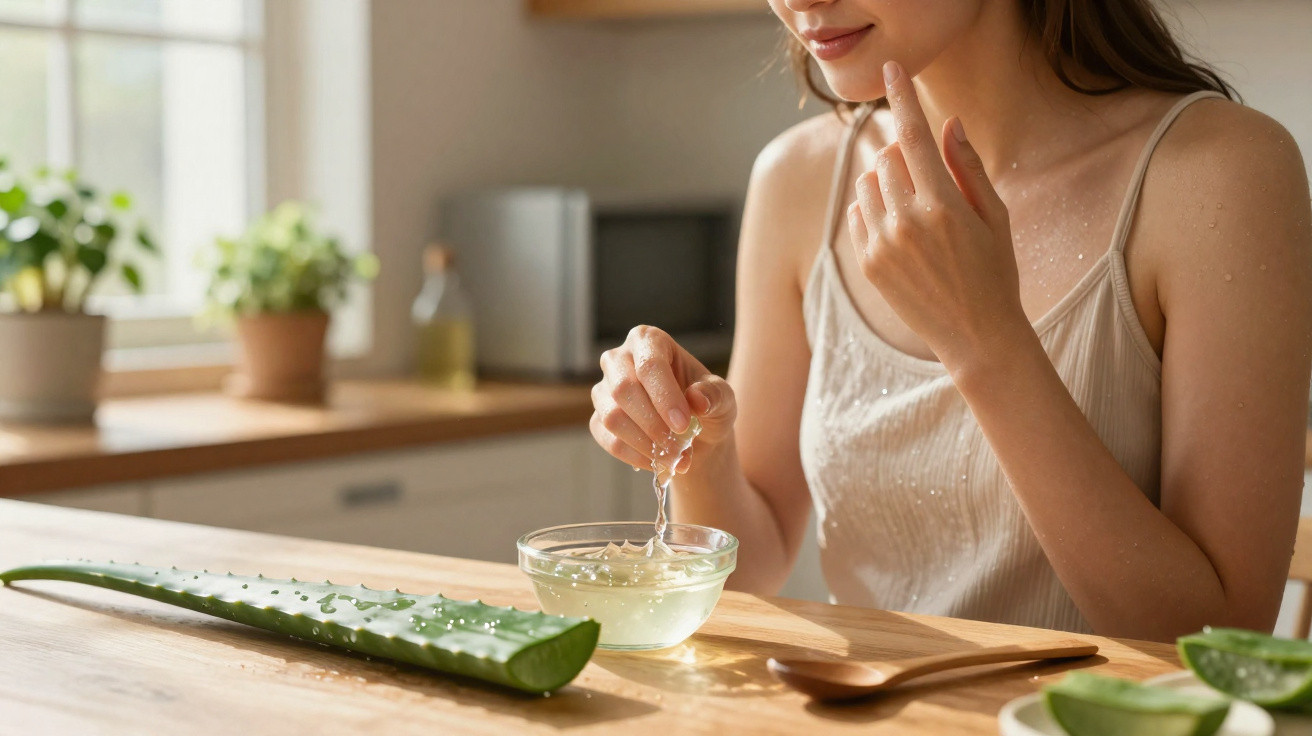
Making an aloe vera facial gel at home takes more than simply slicing an aloe leaf and smoothing it over your face. The plant’s clear gel can support light hydration, feel pleasantly cooling and help soothe mild redness, but the yellowish latex must be removed because it can irritate skin. With good hygiene, proper storage and restrained use, aloe vera can fit into a skincare routine as a gentle, budget-friendly option.
Why is aloe vera so commonly used on the face?
Aloe vera is watery in texture, absorbs quickly and has a cooling feel, which is why it suits skin that needs lightweight moisture. The gel is largely water and includes substances that help keep moisture on the skin’s surface.
That said, aloe vera is not a cure for severe acne, deep pigmentation or pronounced wrinkles. The safest way to use it is as a calming step-especially in hot weather, after sun exposure without serious burning, or when your skin feels dry and tight.
How can you extract the gel from the leaf safely?
The key part of preparation is removing aloin: a yellow liquid that seeps from a freshly cut leaf. This latex sits close to the skin of the leaf and may trigger stinging, itching or redness in sensitive skin.
Take your time and use clean tools:
- Cut a large, healthy aloe vera leaf.
- Rinse the outer skin thoroughly under running water.
- Stand the leaf upright for 10 to 15 minutes so the yellow liquid can drain out.
- Trim off the spiky sides with a clean knife.
- Split the leaf open and scoop out only the clear gel using a spoon.
How do you make a homemade facial gel?
Once you’ve separated the clear gel, blend it briefly or mash it with a fork until the texture looks more even. There’s no need to add fragrance, essential oils or lots of extra ingredients, as strong mixtures raise the chance of irritation.
For a basic version, transfer the gel to a sterilised glass jar and keep it in the fridge. If you want a nicer slip, you can stir in a teaspoon of filtered water or a gentle hydrosol, but avoid alcohol, lemon, bicarbonate of soda and concentrated fragrances on the face.
How should you apply it in your routine without irritating skin?
Apply aloe vera facial gel to clean, dry skin in a small amount. A thin layer is enough for the whole face; using too much can feel sticky and may make it harder to apply moisturiser or sunscreen afterwards.
Before using it all over your face, do a simple patch test:
- Apply a small amount to your forearm or behind your ear.
- Wait 24 hours and check for itching, stinging or redness.
- Use it on your face only if your skin tolerates it well.
- Keep it away from the eye area and mucous membranes.
- In the daytime, always finish with sunscreen.
How long does the gel last, and when should you throw it away?
Homemade aloe vera gel should be stored for only a few days in a clean, sealed container in the fridge. Because it contains no commercial preservatives, it can ferment, develop an odour, darken or take on an unusual texture quickly-especially in warm conditions.
Discard the gel if you notice a sour smell, bubbles, a change in colour or any sign of contamination. What truly helps skin look fresher is a combination of gentle cleansing, light moisturising, daily sun protection and using aloe vera as a cooling support-not as a replacement for dermatological care when irritation persists.




Comments
No comments yet. Be the first to comment!
Leave a Comment