

The WhatsApp notification lands before your alarm does. Straight away, your brain starts running through the list: breakfast, school drop-off, back-to-back meetings, a quick food shop, and that message you’ll end up replying to at 11:37 p.m. Somehow, in the middle of all that, you’re also meant to look like you’ve had eight hours’ sleep, sip green juice, and keep a standing appointment with a celebrity stylist. Instead, you’re eyeing the mirror with yesterday’s messy bun - the one that’s stopped being a hairstyle and started being a personality trait.
You reach for a hair tie, then pause. You’re in your late 30s. Your face is shifting slightly. Your time is already gone by 7:12 a.m. And the haircut that suited you at 25 suddenly feels like it belongs to a different person.
There’s a cut hair professionals keep coming back to when your routine is chaos and your calendar is full.
And, quietly, it makes a big difference.
The low-maintenance “soft lob” stylists keep suggesting
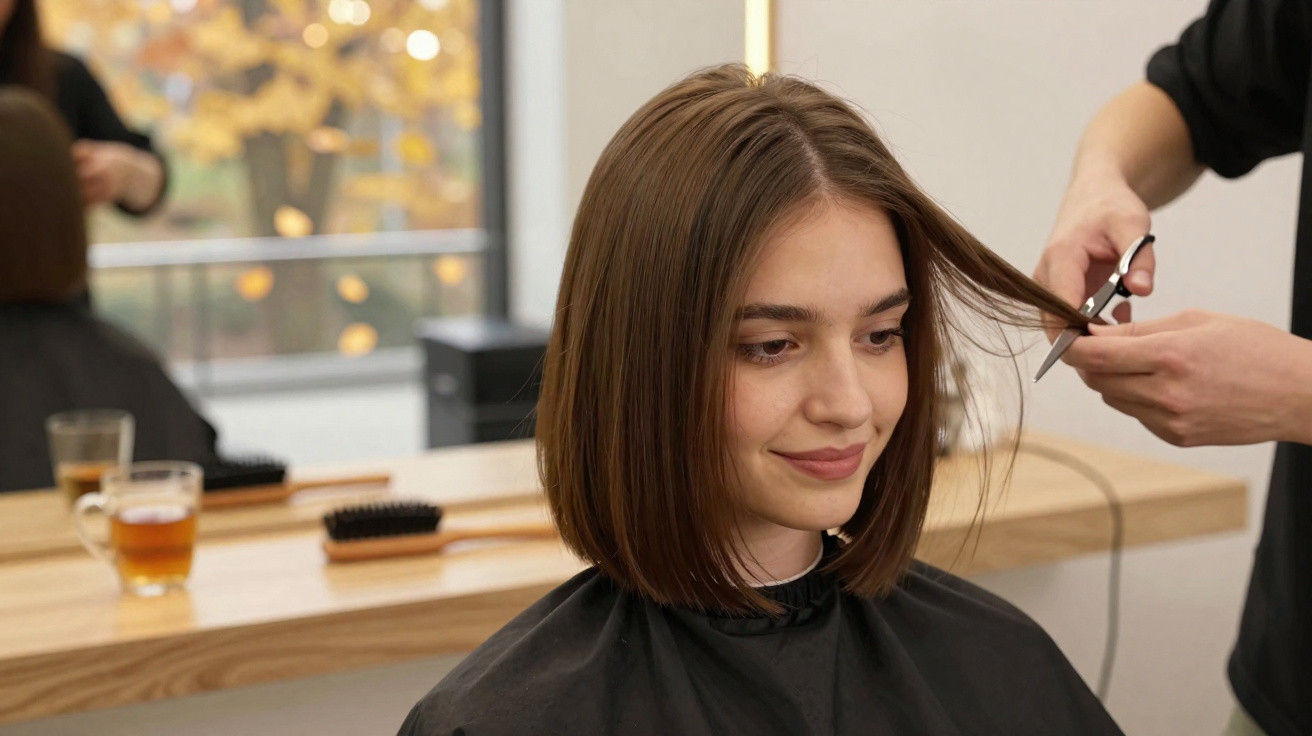
Ask three stylists what actually works for busy women in their late 30s and you’ll hear the same answer in different words: a soft, textured long bob - the “soft lob”. It usually sits between the collarbone and the top of the shoulders, with hidden layers and an easy, natural-looking movement.
It’s not a sharp, graphic bob. It’s not long, high-maintenance mermaid hair either. It’s the in-between option that forgives a rushed blow-dry, a missed trim, and third-day hair held together by dry shampoo and optimism.
The soft lob can read like you’ve made an effort even when you haven’t.
Take this scenario. Emma, 38, a product manager with two children and two emails permanently half-written, used to wear her long hair in a flat ponytail because she “never had time to do anything with it”. Her stylist nudged her towards a collarbone-length soft lob with face-framing pieces and a slightly broken-up line.
On a normal Tuesday, she rough-dries for five minutes, flips her head upside down once, and heads out. No round-brush workout, no 40-minute curling-iron routine. Suddenly, colleagues are asking whether she’s “been sleeping more” or “changed skincare”. She hasn’t. The cut simply matches the life she actually lives.
Hair pros tend to love it for three understated reasons. First, that length softens and balances the face as features change slightly in your late 30s, without the harshness of a blunt bob. Second, it’s light enough to air-dry reasonably well, yet still long enough to tie back on the days that feel like a sprint from 6 a.m. to midnight. Third, the subtle layering adds movement without requiring expert styling skills.
Even on a bad hair day, a soft lob looks intentional - not like you’ve given up.
That’s why stylists steer time-poor women towards it again and again.
How to ask for the cut that actually works on busy mornings
The trick isn’t requesting “a lob” and hoping for the best. It’s the way you describe it while you’re in the chair. Pros suggest asking for a collarbone-grazing cut with soft internal layers and a lightly textured edge - not a heavy, blunt line. Say clearly that you want it to air-dry and still look presentable.
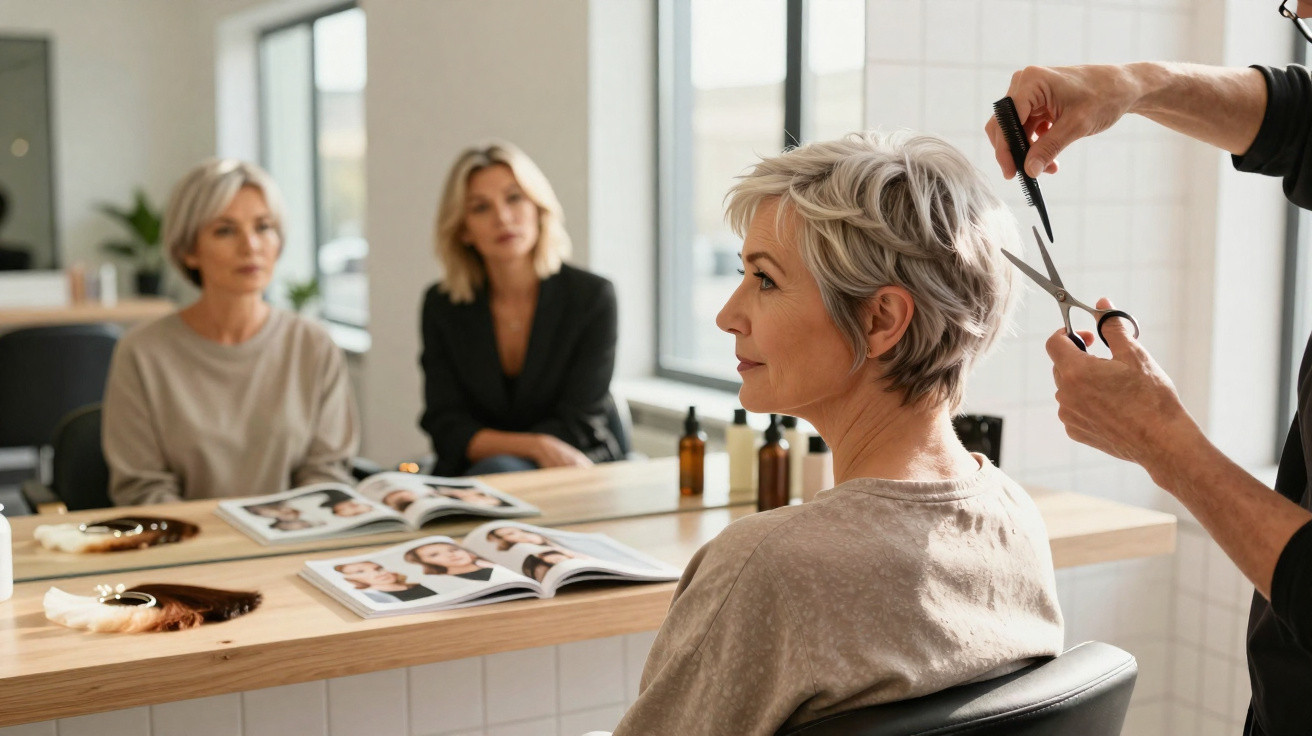
Bring pictures of lobs that look slightly undone and lived-in rather than salon-perfect. Show the texture you like, not only the length. Be specific about where you want it to land when it’s dry: “right at the collarbone” or “just brushing the top of the shoulders”.
You’re not asking for a trend - you’re asking for a shape that fits your routine.
A common mistake is turning up shattered, pointing at a Pinterest photo, and leaving with a cut designed for someone who has a stylist on speed dial. Your life contains meetings, sick days, delayed trains, and school WhatsApps. Your hair needs to slot into that - not compete with it.
So tell your stylist what you’ll genuinely do on a weekday morning. Will you blow-dry? Occasionally? Never? Do you ever use a curling iron, or is that a once-a-month event? Realistically, nobody does the full routine every single day.
The more honest you are, the more your stylist can cut for your real schedule rather than an imaginary one.
“Women in their late 30s come in apologizing for ‘not taking care’ of their hair,” says London stylist Jade M., who specializes in low-maintenance cuts. “I tell them: your hair should serve your life, not the other way around. A soft lob with the right texture gives them options without guilt.”
- Length: Around collarbone, so it still ties back
- Texture: Soft, internal layers for movement, not choppy steps
- Styling time: 5–10 minutes max on a normal day
- Face-framing pieces adjusted to your features and parting
- Subtle shaping at the back so it doesn’t sit like a heavy triangle
- Goal: Hair that still looks “done” on day two… and three
Living with the cut: what changes when the hair routine shrinks
When your hair starts cooperating with minimal effort, something shifts. The morning pressure eases - even if only slightly. You rough-dry (or half air-dry), scrunch a bit of cream through the ends, and the cut drops into place. No complicated updos, no panic-straightening.
You find yourself wearing it down more. You catch your reflection in a shop window and don’t instantly think, “When did I start looking this tired?” The shape quietly reflects how you look on your better days, even when the day itself is doing the opposite.
And that changes how you show up - in a meeting, on the playground, or on date night after a week of reheated dinners.
The soft lob isn’t a miracle cure. You’ll still have rushed mornings, greasy roots, and buns held together by sheer willpower. But the baseline gets better. Instead of bouncing between “just left the salon” and “I’ve given up”, you land in a steady middle: consistently fine, sometimes genuinely great.
For many women, the real surprise isn’t the compliments - it’s the mental space it frees up. One less daily negotiation. Hair choices become: down, half-up, or a low knot. Done.
You stop punishing yourself for not doing “all the steps”. You get on with your life, with hair that quietly plays along.
That’s the real reason professionals keep recommending it. It isn’t about being “age appropriate”. It’s about being life appropriate. Your late 30s are busy: careers, children, ageing parents, friendships maintained by voice notes, and the occasional evening that reminds you who you were at 22.
A soft lob respects that. It doesn’t demand attention, but it frames your face in a way that feels current, grown-up, and grounded. It works with trainers and a blazer, with a slip dress and lipstick, and with leggings plus an old sweatshirt at 10 p.m. on the sofa.
You may realise the real luxury isn’t perfect hair - it’s hair you don’t have to think about every single day.
| Key point | Detail | Value for the reader |
|---|---|---|
| Soft lob shape | Collarbone-length with soft internal layers and gentle texture | Gives a modern look that flatters late-30s features without daily styling |
| Realistic routine | Designed to air-dry decently and still tie back on hectic days | Reduces morning stress and decision fatigue around hair |
| Clear salon request | Ask for lived-in movement, not a blunt, high-maintenance cut | Helps you leave the salon with hair that fits your actual lifestyle |
FAQ:
- Question 1 Will a soft lob work if my hair is naturally wavy or a bit frizzy? Yes - it often works even better. Stylists can shape the cut to follow your wave pattern so it air-dries into natural movement rather than turning into a heavy, fluffy mass. A light cream or leave-in is usually enough.
- Question 2 What if my hair is very fine and flat? Ask for minimal layers and gentle texturising at the ends instead of aggressive thinning. A collarbone-length lob can make fine hair look fuller than long, straggly lengths.
- Question 3 How often should I trim this cut to keep it looking good? Most stylists recommend every 8–12 weeks. Because it grows out softly, you’re not locked into strict appointments when your schedule is chaotic.
- Question 4 Can I still tie my hair back for workouts or lazy days? Yes. That’s one of the main reasons pros recommend this length. You can do a low ponytail, a small bun, or clip it up without losing all the style.
- Question 5 Do I need special products to style a soft lob? No complicated routine required. A light styling cream or mousse, a decent heat protectant if you blow-dry, and perhaps a dry shampoo between washes are usually enough for everyday life.
Comments
No comments yet. Be the first to comment!
Leave a Comment