
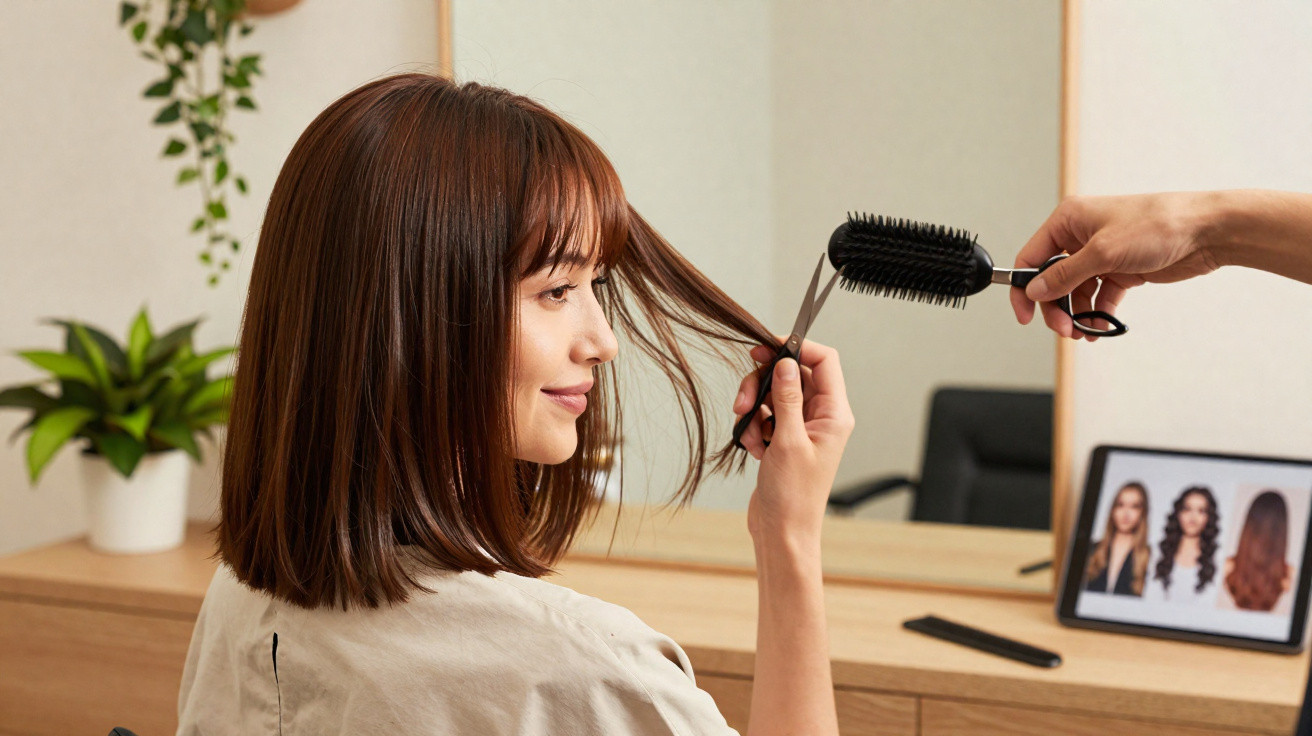
Many people have the same thought when the seasons change: they want their hair to look fresher, without committing to a dramatic new look. That’s exactly where a particular cut length comes in-one that has been requested especially often in salons for months. It’s practical, adaptable and surprisingly low-maintenance day to day.
Why everyone wants this cut length right now
It keeps appearing on catwalks, at film premieres and in street-style shots: a hairstyle that’s neither traditionally short nor genuinely long. Celebrities wear it poker-straight, with soft waves, or simply left to fall naturally. In salons, the same request is coming up more and more: “Shorter, but not too short.”
Stylists say the pattern is clear. Lots of clients are looking for a contemporary middle ground-hair that has movement, frames the face neatly, and is still long enough to tie back. Out of that demand has come a shape that is firmly in the spotlight this spring and summer.
"The on-trend length sits between the chin and the collarbone – the so-called Long Bob, or lob for short."
This length looks intentional without feeling severe. It removes bulk from the hairstyle without sacrificing the whole mane. That’s why it suits people who want a change but feel wary of going for a truly short cut.
What makes the Long Bob so practical
The Long Bob sits between a classic bob and shoulder-length hair. That in-between zone turns out to be impressively versatile-both visually and in everyday life.
- Flexible for daily life: Worn down, the cut looks current; in a ponytail or bun, it stays practical.
- Works for many hair types: Straight, wavy or curly-with small adjustments, it suits almost any texture.
- A modern look with minimal styling: The length and clean outline make it look “put together” with very little effort.
- A good compromise if you’re undecided: If you can’t choose between short and long, you often end up here.
Right now, the trend leans towards a more compact silhouette: the ends aren’t heavily thinned, and the baseline stays clearly visible. That gives the style a defined frame and can make the face look more structured. Many hairdressers are opting for an almost graphic finish-precise cutting, minimal layers, and a crisp edge.
How long the cut should be – and who it suits
Technically, a Long Bob falls between the chin and the collarbone. Exactly where the line sits depends heavily on face shape, neck length and personal preference.
| Face shape | Recommended option |
|---|---|
| Round | Slightly longer at the front, a little below the chin, to visually elongate |
| Square | Softer contours around the jawline, avoiding an overly hard edge |
| Oval | Almost any Long Bob length works, depending on the look you want |
| Heart-shaped | A length between the mouth and the collarbone, optionally with a fringe or Curtain Bangs |
With a round face, a front that’s subtly longer can be transformative. It stretches the proportions and can make the face appear slimmer. If you have a strong jawline, lightly suggested layers around the outline help soften the effect. The overall line looks less harsh and more balanced.
Fringe, Curtain Bangs or none – the fringe makes the difference
One of the key Long Bob decisions is whether to add a fringe. The best choice depends on lifestyle, hair texture and the shape of your forehead.
- Blunt fringe: Clean and fashion-forward, draws attention to the eyes, but needs more styling.
- Curtain Bangs: Soft, centre-parted pieces that fall to the left and right; especially popular with lightly wavy hair.
- Lightly thinned fringe: Reduces harshness in the overall silhouette and works well with dense hair.
- No fringe: The most minimalist option, ideal for anyone who needs to be ready quickly in the morning.
If you rarely spend much time in front of the mirror, you’ll usually be better off avoiding a high-maintenance fringe. A middle parting-or a slightly off-centre side parting-is often enough to give the style personality.
How little effort the trend cut really needs
One of the strongest arguments for a Long Bob is that upkeep is manageable. Most hairdressers suggest a trim roughly every six to eight weeks to keep the shape looking sharp. Day to day, a very pared-back routine is usually sufficient.
"A light leave-in care booster, a texturising spray and, if needed, a styling cream – that’s typically all the cut requires."
Straight after washing, a spray or lightweight lotion worked into towel-dried hair is often enough. It tames frizz, adds shine and provides protection from blow-dry heat. If you prefer air-drying, you can simply let the lengths fall and lightly shape the ends with your fingers.
On day two or three, a texturising spray comes into its own: a few spritzes through the lengths and at the roots, a quick tousle, and the Long Bob looks fresh again-slightly undone, but not messy. For a neater finish, a small amount of styling cream can define sections and emphasise the outline.
Long Bob for fine or very thick hair
Your natural hair texture determines how the cut should be constructed. Many people underestimate how much tailored detail can make everyday styling easier.
Fine hair: more fullness with a strong baseline
With fine hair, a more solid, closed-off baseline is usually best. Keeping the ends compact helps the hair look thicker overall. Too many obvious layers can create gaps and make the hair appear sparse.
For extra volume, the following can help:
- a slightly lifted nape area
- blow-drying with a round brush or drying upside down
- volumising spray used only at the roots, not through the ends
Thick hair: structure instead of a “block”
Very dense or heavy hair can make a Long Bob read like a solid block. That’s why hairdressers often work within the interior-using invisible layers or soft slicing to remove weight without disrupting the clean outer line.
Gentle waves, or using a diffuser while drying, bring out movement and reduce that helmet-like feel. A smoothing cream, applied sparingly through the lengths, adds shine and keeps volume under control.
How to style the cut differently every day
A big reason the Long Bob remains so appealing is how easily it shifts between looks. With a few simple steps, you can create a different style each day.
- Office-ready: Blow-dried straight, a clean side section, ends slightly turned under-instantly looks polished.
- Casual: Air-dried and refreshed with a little texturising spray-ideal for home working or weekends.
- Evening: Use a curling wand or straighteners to form soft waves, lift at the roots, and let the lengths cool in place.
- Sport & everyday: Half-up ponytail, a small knot at the nape, or a low ponytail-the length is easily enough.
For people with packed schedules, that flexibility is exactly what makes the cut appealing: it takes little time, yet it often looks as if a professional has been involved.
What to clarify before your salon appointment
If you’re considering switching to a Long Bob, a little preparation helps. A few phone photos showing your preferred length and variation can prevent misunderstandings. It also matters to be honest about your routine:
- How often do you wash your hair?
- Do you blow-dry regularly, or do you usually let it air-dry?
- Are you keen on tools such as straighteners or a curling wand-or not?
The more straightforward the answers, the more precisely the cut can be tailored. A Long Bob that would need daily, intensive straightening won’t suit someone who needs to be out the door within ten minutes each morning.
Long-term benefits and possible stumbling blocks
If you move from very long hair down to this mid-length, you often notice the difference within days: hair dries faster, feels lighter and can be restyled on impulse. The nape feels less covered, and scarves or roll-necks tend to snag less in the lengths.
One potential sticking point is the so-called in-between phase as it grows out. If you don’t trim it in time, it can quickly land at an awkward, neither-here-nor-there length just around the shoulders, where the ends start to flick out. That’s why professionals recommend the eight-week intervals-so the line stays clean without you living in the salon.
Over the long term, a Long Bob can even support better hair quality. Regular trims remove split ends early, products distribute more evenly, and the hair looks healthier overall. If you keep styling gentle and use heat protection, this cut becomes an everyday option that saves time in the morning yet still looks as though real effort went into it.



Comments
No comments yet. Be the first to comment!
Leave a Comment